

Key Takeaways
Why Engine Overheating Demands Immediate Action
An internal combustion engine operates within a narrow temperature range - typically between 195°F and 220°F. When the cooling system fails to maintain this range, temperatures can spike rapidly, softening metal components, warping cylinder heads, and destroying head gasket seals. Unlike a phone generating excess warmth (phone overheating causes are relatively minor by comparison), an overheating engine is a mechanical emergency with potentially permanent consequences.
The cooling system works as an interconnected circuit: coolant absorbs engine heat, travels through the upper radiator hose to the radiator where airflow dissipates the heat, and returns cooled through the lower hose. A failure anywhere in this circuit - at the thermostat, water pump, radiator, hoses, or coolant cap - can break the cycle entirely.
Stop Driving Immediately if the Gauge Spikes
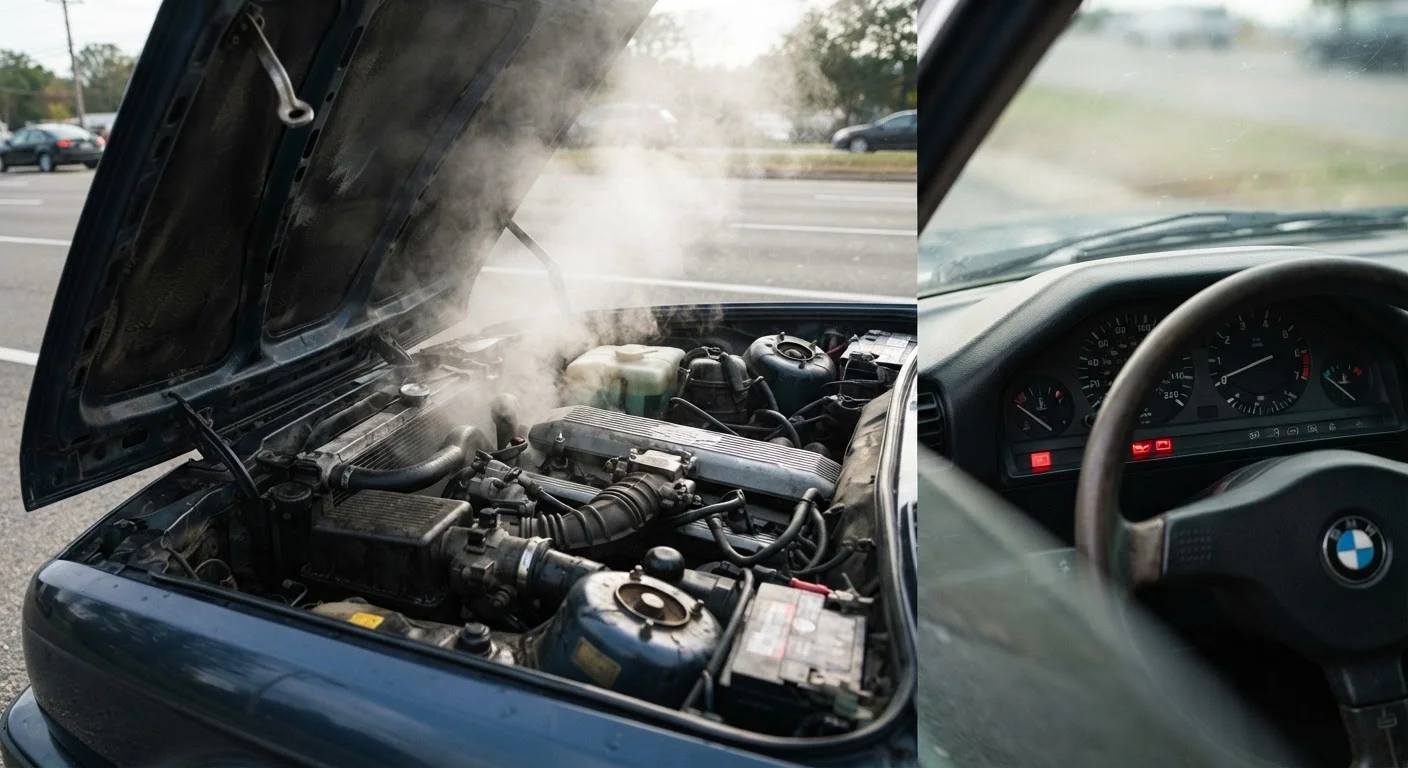
If your temperature gauge enters the red zone or a warning light illuminates, pull over safely as soon as possible and shut off the engine. Every additional mile driven while overheating increases the risk of a cracked engine block or warped cylinder head - repairs that can cost thousands of dollars or total a vehicle.
Understanding the most common causes empowers you to respond correctly rather than guess. The diagnostic steps below are designed for a fully cooled engine and are appropriate for general inspection. Any cause beyond a simple low coolant level should be evaluated and repaired by a qualified mechanic.
What you will need
Common Causes and What to Inspect
Overheating rarely has a single universal cause - context matters. Overheating that occurs primarily in stop-and-go traffic often points to a cooling fan failure (electric fans may stop working; mechanical fans may have a failed clutch). Overheating on highway speeds at sustained loads more commonly indicates a thermostat stuck closed, a weak water pump, or a partially clogged radiator restricting flow.
OBD-II Scanner
Reads diagnostic trouble codes stored by the engine control module, which can point to coolant temperature sensor faults or thermostat issues.
Coolant/Antifreeze
Used to top off the coolant reservoir if the level is found to be low during inspection.
Flashlight
Helps inspect hoses, belts, and the coolant reservoir in a dimly lit engine bay.
Infrared Thermometer
Allows you to check surface temperatures on hoses and the thermostat housing without direct contact, helping identify hot spots.
Head gasket failure is among the more serious possibilities. Warning signs include white smoke from the exhaust, a milky or foamy appearance to the oil on the dipstick, or coolant loss without any visible external leak. These symptoms require immediate professional diagnosis - continued operation with a blown head gasket accelerates engine destruction.
Check Coolant Level as Routine Maintenance
Inspecting the coolant reservoir level takes less than a minute during routine checks. Keeping the coolant at the proper level and replacing it on the manufacturer's recommended schedule helps prevent most common overheating causes before they develop. Always use the coolant type specified in your owner's manual - mixing incompatible types can cause corrosion.
Follow the steps below in order, starting only after the engine has fully cooled and you have the basic protective equipment listed in the prerequisites.
Pull Over Safely and Shut Off the Engine
As soon as you notice the temperature gauge moving into the red zone or a coolant warning light appearing on your dashboard, signal and pull off the road to a safe location. Turn the engine off immediately. Do not idle to "let it cool" with the engine running - this prolongs heat exposure to critical components.
Wait and Inspect for External Leaks
Allow the engine to cool for at least 30-45 minutes. While waiting safely outside the vehicle, look under the car for puddles of coolant - typically green, orange, or pink in color with a faintly sweet smell. Visible drips from hoses, the radiator, or around the water pump are strong indicators of a leak-driven overheating event.
Check the Coolant Reservoir Level
Once the engine is fully cool, locate the translucent coolant reservoir - not the radiator cap itself. Check whether the fluid sits between the MIN and MAX markings on the side of the reservoir. A low or empty reservoir is one of the most common overheating causes and may indicate a leak or that coolant has been gradually consumed over time.
Inspect Hoses and the Radiator Cap Area
With gloves on and the engine cold, gently squeeze the upper and lower radiator hoses. They should feel firm but pliable. Hoses that feel excessively soft, cracked, spongy, or that show bulging near clamps may be close to failure. Also examine the radiator cap for corrosion or a damaged seal - a faulty cap cannot maintain the system pressure needed to raise the coolant's boiling point.
Look for Signs of Thermostat or Water Pump Failure
A stuck-closed thermostat prevents coolant from circulating to the radiator, causing rapid temperature spikes that appear even when coolant levels are normal. A failed water pump - which may announce itself with a whining noise from the front of the engine or visible coolant weeping from the pump's weep hole - stops coolant flow entirely. Both scenarios require professional repair; neither is a safe roadside fix.
Use an OBD-II Scanner for Diagnostic Codes
If your check engine light is on alongside the overheating symptoms, plug an OBD-II scanner into the diagnostic port (typically located under the dashboard near the steering column). Codes such as P0217 (engine over temperature) or P0128 (coolant temperature below thermostat regulating temperature) can help narrow the cause. For a deeper explanation of what stored codes mean, see what your check engine light is actually telling you.
Decide Whether to Drive or Call for Assistance
If you identified and corrected a clear, minor cause - such as topping off a low reservoir with no evidence of a leak - you may be able to drive cautiously to a repair facility while monitoring the gauge closely. In all other situations, particularly if the cause is unknown, if coolant is visibly leaking, or if the engine reached extreme temperatures, have the vehicle towed. Driving further risks compounding damage significantly.
Never Open a Hot Radiator Cap
Coolant in an overheated system is under extreme pressure. Removing the radiator or coolant reservoir cap while the engine is hot can cause scalding fluid to erupt violently. Always allow the engine to cool completely - typically 30 to 45 minutes - before inspecting the cooling system. If you are unsure, leave the cap alone and call for roadside assistance.