

Key Takeaways
Start here
What a Functional Wardrobe Actually Means
Build your base
The Foundation: Pieces That Do the Heavy Lifting
Shop smarter
How to Sequence Your Purchases
Refine your choices
Fit, Fabric, and Other Non-Negotiables
Avoid pitfalls
Common Missteps to Avoid From the Start
What a Functional Wardrobe Actually Means
A functional wardrobe isn't about owning a certain number of items or following a particular aesthetic. It's about having clothes that reliably cover your actual life — work, errands, social plans, and the spaces in between — without requiring a daily search through unwearable options.
The simplest test: open your closet on a rushed morning and ask how many complete, ready-to-wear outfits you can pull together in under two minutes. If the answer is very few, your wardrobe has gaps regardless of how full the closet looks.
Functionality is deeply personal. A wardrobe that works for someone with a formal office job looks different from one built around physical work, freelance flexibility, or an active social life. Before buying anything, spend five minutes mapping out the settings you dress for in a typical week — that list becomes your blueprint.
Versatility
How easily a clothing item can be worn across different settings, occasions, or outfit combinations. Highly versatile pieces do more work per item.
Wardrobe foundation
The core set of basic, neutral, high-utility pieces that everything else in a wardrobe is built around.
Outfit combination
The total number of distinct outfits you can assemble from your existing pieces by mixing and matching them.
Natural fiber
Fabric made from plant or animal sources — such as cotton, wool, or linen — rather than synthetic materials. Generally known for breathability and durability.
Smart-casual
A dress code that sits between formal and fully casual — polished enough for a dinner or meeting, relaxed enough for everyday wear.
The Foundation: Pieces That Do the Heavy Lifting
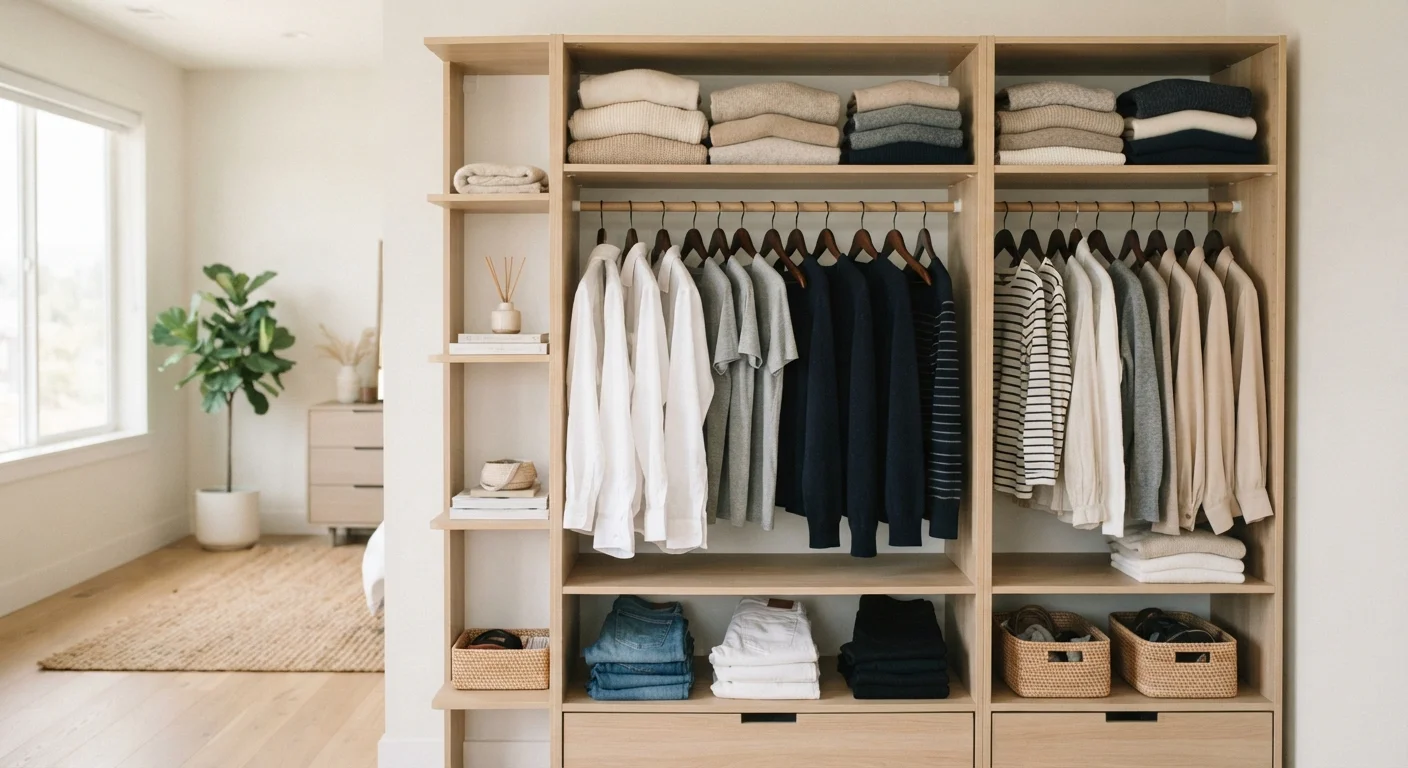
Every functional wardrobe rests on a core set of high-versatility pieces — items that combine easily with almost everything else. These aren't exciting purchases, but they're the reason getting dressed stops feeling like a problem to solve.
For most American lifestyles, that foundation typically includes:
- Well-fitted trousers or jeans in a neutral wash that reads as casual or smart-casual
- Plain crew-neck or V-neck tees in white, grey, and at least one dark tone
- A versatile button-front shirt — worn open over a tee, tucked in, or layered under a jacket
- A mid-layer such as a cardigan, zip sweater, or structured knit
- One reliable outer layer suited to your climate
- Comfortable, clean-lined shoes in a neutral that pairs with both casual and slightly dressed-up looks
For a more detailed breakdown of what each of these staples should look and feel like, the wardrobe essentials reference covers each category in practical depth.
Start With What You Already Own
Before buying anything, pull out every item you currently own and sort by how often you actually wear it. You may already have some foundation pieces — identifying them first prevents duplicate purchases and clarifies exactly what's missing.
How to Sequence Your Purchases
Building a wardrobe all at once is rarely practical or necessary. What matters is the order: fill genuine gaps before adding variety, and add variety before adding statement pieces.
A sensible sequence looks like this:
- Identify your most-worn occasion and make sure that category is fully covered first.
- Fill the obvious gaps — if you have tops but no functional bottoms, or shoes for one setting only, those come next.
- Add a second color or texture once neutrals are solid, giving your existing basics more combinations.
- Introduce occasion-specific pieces — something for formal events, outdoor activities, or workouts — once everyday dressing is handled.
This sequencing prevents the common trap of owning five variations of one item you already have while lacking the basics that would make everything work. For the financial side of building a wardrobe intentionally, general budgeting strategies can help you plan clothing spending without derailing other priorities.
Fit, Fabric, and Other Non-Negotiables
Two factors determine whether a piece earns its place — fit and fabric — and both are worth slowing down for at the point of purchase.
Fit is the single biggest variable in how clothing looks and feels. A garment that fits your actual shoulders, chest, and waist will look more polished than something more expensive that doesn't. Shoulder seams should sit at the edge of your shoulder; waistbands shouldn't pull or sag; sleeve and hem lengths matter. Alterations are often worth the cost for pieces you'll wear constantly.
Fabric affects durability, comfort, and how a piece holds up across seasons and wash cycles. Natural fibers like cotton, wool, and linen tend to breathe better and last longer with appropriate care. Blended fabrics can balance durability with ease of care. Read care labels before you buy — a beautiful piece you can't realistically care for isn't functional.
Understanding how colors interact with each other is also worth the investment early on. The color coordination reference explains how neutrals, accents, and contrast work together in everyday outfits.
Tailoring Is a Wardrobe Multiplier
Even inexpensive basics can look significantly more polished with minor alterations — hemming trousers, taking in a waist, or adjusting sleeve length. Many dry cleaners and local tailors offer these services at modest cost, often less than the price difference between a mediocre fit and a perfect one.
Common Missteps to Avoid From the Start
Some wardrobe mistakes are so consistent they're almost predictable — which means you have the rare advantage of avoiding them before they happen.
Buying for a future version of yourself is the most common one. Whether that's a size you're working toward or a lifestyle you're planning to have, clothes bought for an imagined future rarely get worn in the present. Buy for now.
Ignoring your actual habits leads to a closet full of delicate dry-clean-only pieces worn by someone who mostly loads the dishwasher and runs errands. Dress for the life you have.
Trend-chasing early on pulls budget and space toward items with short relevance windows before the foundation is stable. Trends are fun — they just don't belong at the foundation stage.
For a fuller look at the thinking patterns behind these recurring mistakes, wardrobe decisions people regret goes deeper into why smart people keep making the same calls.
As your wardrobe matures, plan for seasonal maintenance. The seasonal wardrobe transition checklist is a practical tool for keeping things organized and nothing going to waste as the year turns.
Impulse Buying Undermines the Foundation
Sales, trends, and in-store atmosphere are all designed to prompt unplanned purchases. If an item doesn't fill a gap you've already identified, it's worth waiting 24 hours before buying. Most impulse purchases look less compelling a day later — and your clothing budget is better spent on deliberate choices.