

Key Takeaways
Option A
Emotional Spending
The reactive, feeling-driven purchase.
Best for: Understanding when stress, boredom, or social pressure - not genuine need - is driving your financial decisions.
Option B
Intentional Spending
The deliberate, values-aligned purchase.
Best for: Aligning everyday money decisions with what genuinely matters to you, whether planned or spontaneous.
If you frequently regret purchases within 24 hours
Intentional Spending
Post-purchase regret is a reliable signal that emotion, not value, drove the decision. Building a pause-and-reflect habit can reduce this pattern significantly.
If you feel guilty spending money on things you genuinely enjoy
Intentional Spending
Intentional spending explicitly makes room for enjoyment - guilt-free - when a purchase is consciously tied to your actual priorities and budget reality.
If stress or strong emotions regularly precede overspending
Intentional Spending
Identifying emotional triggers and substituting non-financial coping strategies can interrupt the automatic spending response over time.
If you want to understand why your budget keeps derailing
Intentional Spending
Emotional spending is one of the most common hidden culprits behind budget shortfalls. Shifting to intentional habits addresses the root behavior, not just the numbers.
What Actually Separates These Two Spending Styles
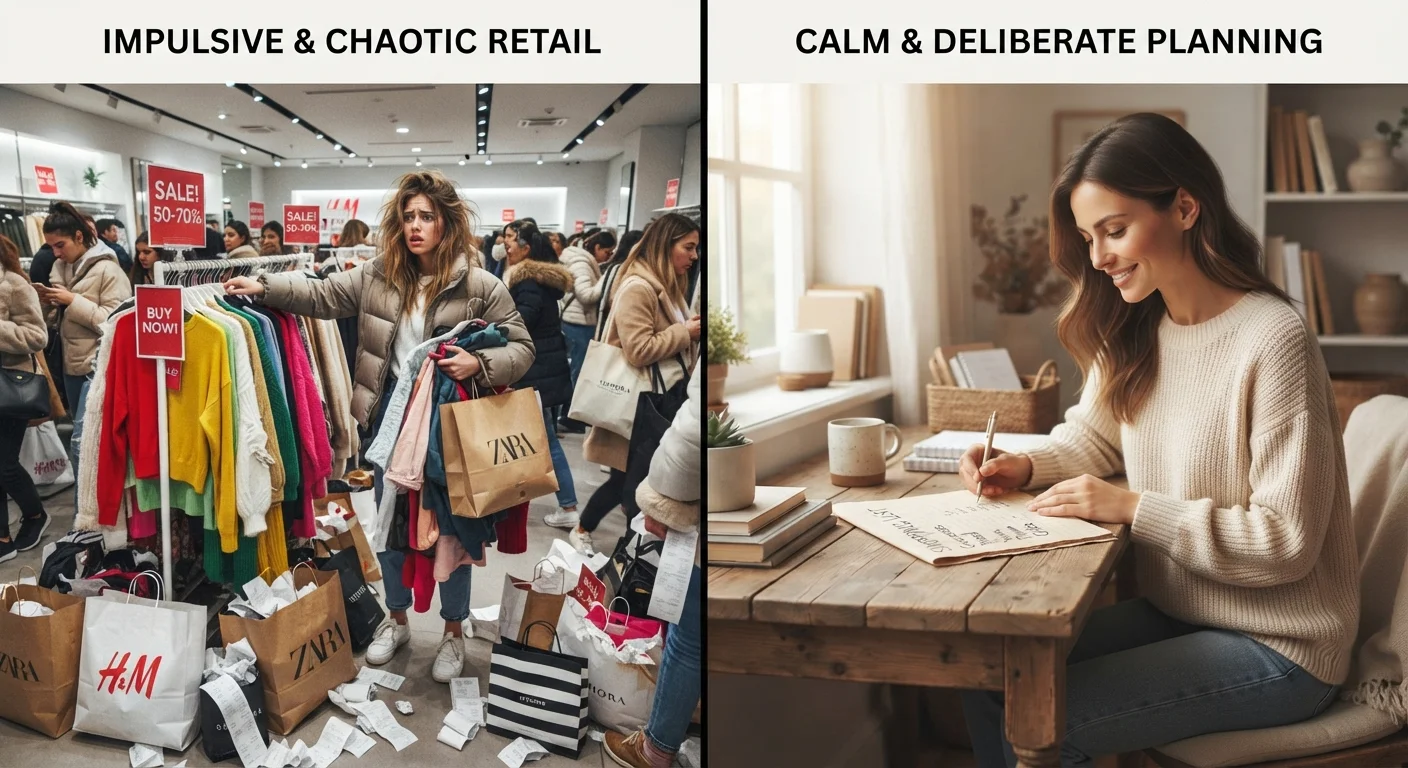
The popular framing - planned spending good, unplanned spending bad - misses the point. A spontaneous dinner out with a close friend, paid for without guilt and well within your means, is not the same as panic-buying skincare at midnight after a hard week. The real dividing line is why you're spending, not whether it appeared on a spreadsheet.
Emotional spending is purchasing driven by an emotional state rather than a clear assessment of need or value. Common triggers include stress, loneliness, boredom, anxiety, or even excitement. The purchase provides temporary relief or stimulation, but the underlying feeling returns - often accompanied by regret or financial strain. Research in behavioral economics consistently shows that emotional arousal impairs deliberative decision-making, making consumers more susceptible to impulsive choices.
Intentional spending means you've made a conscious choice: you know roughly what something costs, you've considered whether it fits your financial situation, and you're buying it because it aligns with something you actually value - comfort, connection, creativity, convenience. This can happen in seconds for small purchases you know well. It doesn't require a committee meeting.
The distinction matters because financial self-sabotage rarely looks dramatic. It often looks like a dozen small, emotion-driven purchases that quietly erode savings goals.
| Criterion | Emotional Spending | Intentional Spending |
|---|---|---|
| Primary driver | Feeling or emotional state | Conscious values or need |
| Decision speed | Reactive, often immediate | Deliberate, even if quick |
| Post-purchase feeling | Often regret or emptiness | Generally neutral or satisfied |
| Planning required | None - bypasses reflection | Minimal to moderate - context-dependent |
| Impact on goals | Tends to undermine savings targets | Aligned with broader financial priorities |
| Can include unplanned purchases? | Yes - most are unplanned | Yes - spontaneous but conscious |
How to Spot Emotional Spending in the Moment
Emotional spending is slippery precisely because it can masquerade as reasoned choice. Here are the patterns most worth watching for:
- Retail therapy reflexes: You feel bad, you shop. The correlation is almost automatic.
- Social comparison triggers: A scroll through social media or a conversation about someone else's purchase creates sudden desire you didn't have before. Social comparison and spending are more connected than most people realize.
- Urgency that evaporates: The item felt essential. Twenty-four hours later, the urgency is gone.
- Avoidance spending: Shopping to delay an uncomfortable task or decision.
- Post-purchase numbness: The item arrives and produces little to no satisfaction.
None of these patterns make you irrational or undisciplined. They make you human. Behavioral economists have documented these tendencies across income levels and education backgrounds - people overspend even when they know better. Awareness, not self-blame, is the productive starting point.
~5 sec
Average impulse purchase decision window
Consumer behavior research suggests many unplanned purchases involve very little deliberative processing before a decision is made.
62%
Americans who report stress-influenced spending
According to the American Psychological Association's Stress in America surveys, a significant share of adults acknowledge that stress affects their financial decisions.
24 hrs
Pause period that reduces impulse regret
A waiting period before non-essential purchases is among the most consistently recommended behavioral strategies for reducing post-purchase regret.
Building More Intentional Habits Without Becoming Restrictive
Intentional spending is not about spending less - it's about spending with more clarity. A few practical approaches that behavioral research supports:
- The 24-hour rule for non-essentials: Waiting a day before completing a non-urgent purchase creates space for the emotional charge to dissipate. If you still want it tomorrow for the same reasons, you have more signal that it's a genuine preference.
- Name the emotion first: Before purchasing, briefly identify what you're feeling. Naming an emotional state - even just mentally - activates more deliberative thinking and can interrupt automatic behavior.
- Clarify your actual values: Intentional spending requires knowing what you value. If security matters more to you than novelty, that's useful data when evaluating whether a purchase genuinely serves you.
- Build in non-financial relief valves: If stress or boredom reliably triggers spending, having alternative responses ready (a walk, a call, a specific activity) gives your brain another option in the moment.
For those who find that rigid category budgets create more anxiety than clarity, it's worth exploring the trade-offs of strict budget categories - structure helps some people and constrains others.
This Is Information, Not Advice
The strategies described here are general educational information about behavioral patterns in personal finance. They are not a substitute for personalized financial guidance. If recurring emotional spending is significantly affecting your financial stability or mental health, consider speaking with a certified financial counselor or licensed mental health professional who can offer individualized support.