

Key Takeaways
Exercise-Induced Dehydration
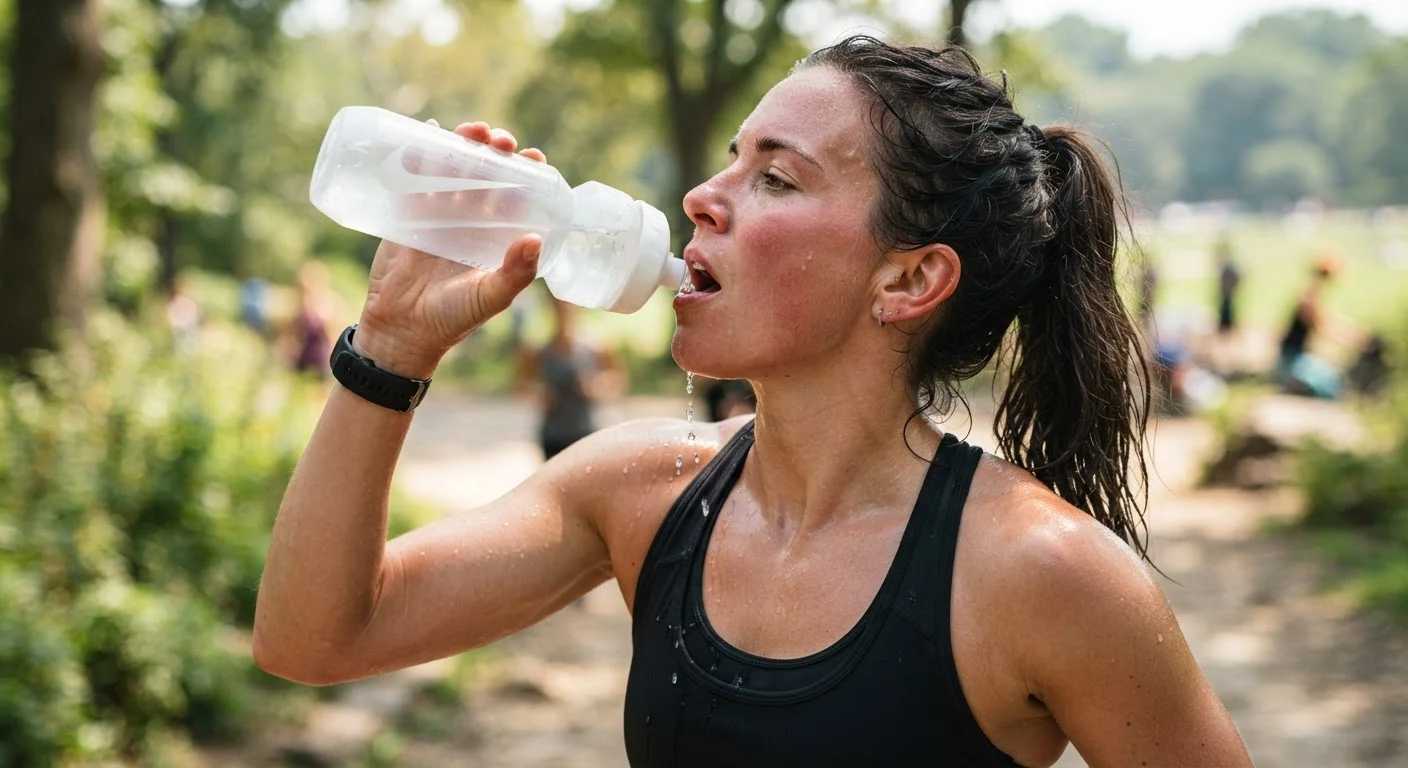
Exercise-induced dehydration occurs when your body loses more fluid through sweat, breathing, and other processes than you take in during physical activity. Even a modest fluid deficit - as little as 2% of body weight - can measurably reduce strength, endurance, and mental focus. It is one of the most common and underappreciated barriers to safe, effective exercise.
Fluid loss during exercise is primarily driven by thermoregulatory sweating; sweat rates vary widely based on intensity, ambient temperature, humidity, and individual physiology, ranging from roughly 0.5 to 2.5 liters per hour in active adults.
Why Fluid Balance Matters During Exercise
Water makes up roughly 60% of the adult human body and plays a central role in nearly every physiological process that matters during exercise: regulating core temperature, transporting oxygen and nutrients to working muscles, lubricating joints, and clearing metabolic waste products. When you exercise, your muscles generate heat as a byproduct of energy production. To keep core temperature in a safe range, your body produces sweat - and that sweat carries fluid and electrolytes out of the body.
The problem arises when fluid losses outpace fluid intake. Unlike a fuel gauge, your body doesn't provide a clear, immediate signal when fluid balance tips into the danger zone. Thirst - often treated as the primary cue to drink - is a delayed response. By the time you feel noticeably thirsty during a workout, you may already be in a meaningful fluid deficit. Understanding how dehydration progresses, and what it does to your body, helps explain why staying ahead of fluid losses is more effective than trying to catch up later. For a broader look at how the body copes with different exercise demands, the difference between aerobic and anaerobic exercise is a useful starting point.
2%
Body weight fluid loss that impairs performance
According to the American College of Sports Medicine, a fluid deficit of 2% of body weight can measurably reduce endurance and cognitive performance during exercise.
0.5-2.5 L/hr
Typical sweat rate range during exercise
Sweat rates vary widely based on exercise intensity, ambient temperature, humidity, and individual physiology, per exercise physiology research literature.
~60%
Proportion of adult body weight that is water
Water is the body's primary fluid medium, essential for temperature regulation, nutrient transport, and muscle function, as established in basic human physiology.
What Dehydration Actually Does to Your Body
The physiological effects of dehydration during exercise are well-documented and follow a roughly dose-dependent pattern - the more fluid you lose, the greater the impact on performance and safety.
Cardiovascular Strain
As blood volume drops with fluid loss, the heart must work harder to deliver the same amount of oxygen to muscles. Heart rate rises, cardiac output becomes less efficient, and perceived effort increases - meaning the same pace or load feels harder. This effect becomes more pronounced in warm environments, where the cardiovascular system is simultaneously managing heat dissipation.
Reduced Muscle Function
Dehydration affects both strength and endurance. Muscles rely on adequate fluid for contraction efficiency and the removal of waste products like lactate. Studies have found reductions in peak power, muscular endurance, and reaction time at dehydration levels as low as 2% body weight loss. Whether you're lifting weights or running, this translates to real-world performance decrements. For context on how training load interacts with recovery, see our guide to strength training volume, intensity, and recovery.
Cognitive and Perceptual Effects
The brain is not immune. Even mild dehydration has been associated with reduced concentration, slower decision-making, and increased perception of effort. This matters for exercise safety, since good judgment during exertion - knowing when to push and when to ease off - depends on a functioning, well-hydrated nervous system.
Use Urine Color as a Daily Hydration Check
A pale yellow color generally indicates adequate hydration, while dark yellow or amber suggests you should increase fluid intake before exercising. Clear urine may indicate overhydration, which can also carry risks. This simple, cost-free check takes seconds and provides useful day-to-day feedback on your hydration status.
Practical Hydration: Before, During, and After Exercise
General public health guidance from bodies like the American College of Sports Medicine emphasizes a three-phase approach to exercise hydration: before, during, and after physical activity. These are not rigid rules but general principles to adapt to your individual needs, environment, and exercise type.
Before Exercise
Arriving at a workout already dehydrated puts you at an immediate disadvantage. A practical pre-workout check is urine color - pale yellow is a reasonable indicator of adequate hydration. Drinking fluids consistently throughout the day, rather than loading up right before exercise, is a more effective strategy. Large volumes consumed immediately before exercise can cause discomfort without meaningfully improving hydration status.
During Exercise
For workouts lasting less than an hour at moderate intensity, sipping water at regular intervals is generally sufficient. For longer sessions, higher-intensity efforts, or exercise in heat, replacing electrolytes - particularly sodium - becomes more important. Sweat is not pure water; it contains minerals that support fluid balance, nerve function, and muscle contraction. Drinking to thirst is a reasonable guide for most healthy adults, though athletes in prolonged events may benefit from a more structured intake schedule.
After Exercise
Rehydration after exercise supports recovery processes including glycogen replenishment and tissue repair - both covered in more detail in our piece on how the body recovers after a workout. A general benchmark from sports medicine research is to consume roughly 1.5 times the volume of fluid lost through sweat over the hours following exercise. Weighing yourself before and after a session (when practical) can give a rough estimate of sweat losses.
Individual Fluid Needs Vary Significantly
There is no single hydration amount that applies to every person, workout, or environment. Factors including body size, fitness level, sweat rate, heat acclimatization, and medication use all influence how much fluid you need. General guidelines provide a starting point, but paying attention to your own body's signals and consulting a healthcare professional or registered dietitian can help you develop a more personalized approach.
This article is for informational purposes only and is not a substitute for personalized medical or nutritional advice. Consult a qualified healthcare professional before making significant changes to your exercise or hydration habits, especially if you have an underlying health condition.