

Key Takeaways
Colorectal Cancer Screening
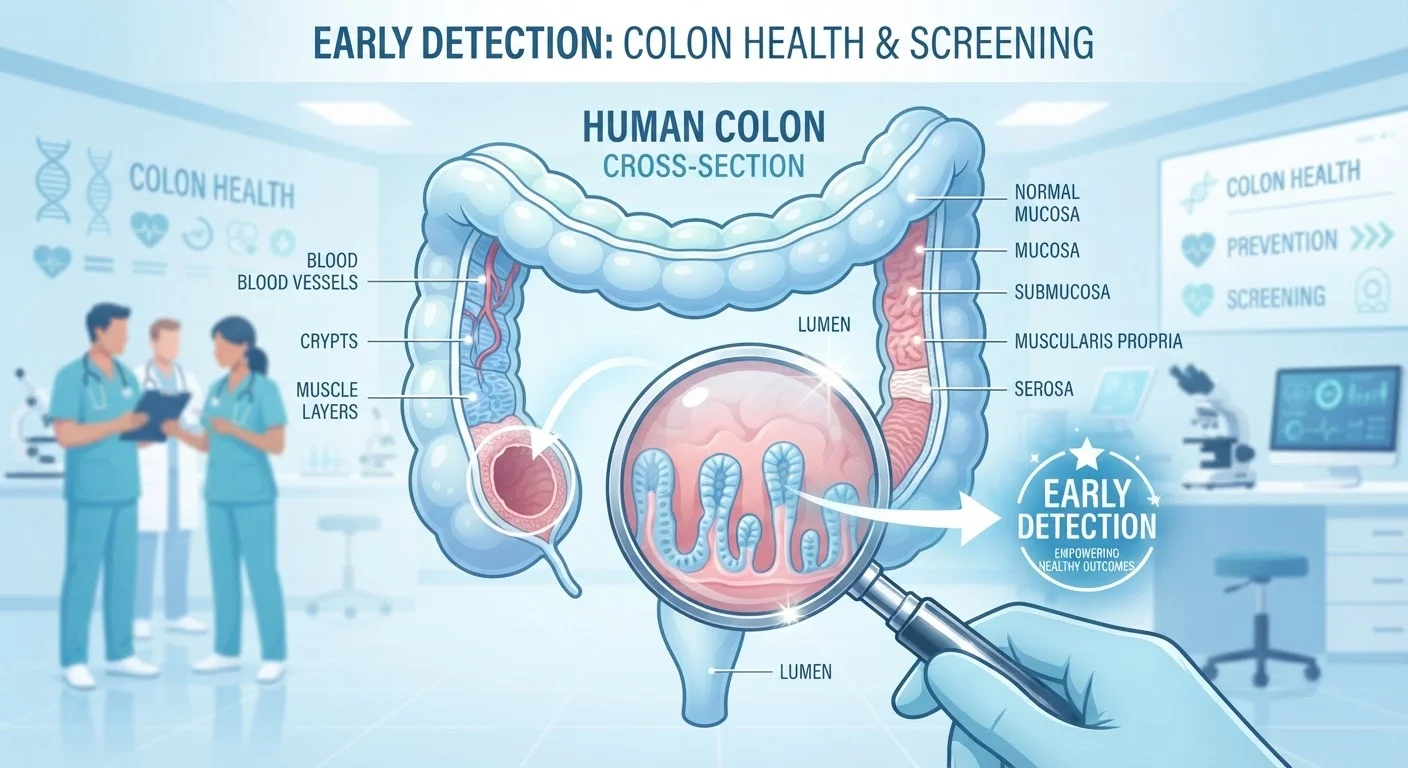
Colorectal cancer screening refers to medical tests performed on people who have no symptoms, with the goal of finding polyps or early-stage cancers in the colon or rectum. Most colorectal cancers develop slowly from small, noncancerous growths called polyps. Screening finds and removes these polyps before they can become cancerous — or detects cancer early enough for effective treatment.
Screening differs from diagnostic testing: it is applied to asymptomatic individuals as a preventive measure, whereas diagnostic testing is triggered by existing symptoms or a positive screening result.
The Silent Nature of Colorectal Cancer
Colorectal cancer — cancer affecting the colon or rectum — is one of the most common cancers diagnosed in the United States, yet its early stages rarely announce themselves. Polyps, the precancerous growths that often precede full cancer development, can exist for years without producing pain, bleeding, or any change in how a person feels day to day.
By the time symptoms such as blood in the stool, unexplained weight loss, or persistent changes in bowel habits emerge, the disease has frequently progressed to a more advanced stage. This biology is exactly why screening — not symptom-watching — is the cornerstone of colorectal cancer prevention. As explored in our guide on preventive care misconceptions that lead people to skip screenings, feeling healthy does not protect against silent disease processes.
Screening vs. Diagnostic Testing: An Important Distinction
Screening applies to people with no current symptoms and is intended to detect disease before it causes problems. Diagnostic testing, by contrast, is ordered when a person already has symptoms such as rectal bleeding or a change in bowel habits. If you have existing symptoms, contact a healthcare provider promptly — do not wait for a routine screening appointment.
Who Should Be Screened and When
For average-risk adults, the U.S. Preventive Services Task Force recommends beginning colorectal cancer screening at age 45 and continuing through age 75. The decision about screening after 75 is typically individualized based on health status and life expectancy, in consultation with a clinician.
Certain factors raise risk above the average level and may warrant earlier or more frequent screening. These include:
- A personal or first-degree family history of colorectal cancer or advanced polyps
- Inherited syndromes such as Lynch syndrome or familial adenomatous polyposis (FAP)
- A personal history of inflammatory bowel disease (Crohn's disease or ulcerative colitis)
For a broader view of which screenings are recommended at each life stage, see recommended health screenings by age and sex.
~1 in 23
Lifetime risk of colorectal cancer for American men
According to the American Cancer Society, colorectal cancer is the third most commonly diagnosed cancer in both men and women in the United States.
90%+
5-year survival rate when caught at localized stage
The National Cancer Institute's SEER data indicate that when colorectal cancer is detected while still localized, the five-year relative survival rate exceeds 90 percent.
~1 in 3
Eligible adults who remain unscreened
The CDC has reported that roughly one-third of adults who should be screened for colorectal cancer have not received the recommended testing.
Understanding the Screening Options
Colorectal cancer screening is not a one-size-fits-all process. Clinicians and patients can choose from several evidence-based methods, each with different trade-offs in terms of preparation, frequency, and what happens if the test is positive.
Stool-Based Tests
- Fecal Immunochemical Test (FIT): Detects hidden blood in the stool. Typically performed annually. No bowel preparation required.
- High-sensitivity guaiac fecal occult blood test (gFOBT): Also detects blood in stool; requires some dietary restrictions before the test. Done annually.
- Multi-target stool DNA test (mt-sDNA): Detects both blood and abnormal DNA shed by polyps or cancer cells. Performed every one to three years, depending on the specific test and guidelines followed.
Visual (Structural) Exams
- Colonoscopy: Allows direct visualization of the entire colon and removal of polyps in a single procedure. Repeated every 10 years for normal results in average-risk adults.
- CT colonography (virtual colonoscopy): Uses imaging to create a picture of the colon. Performed every 5 years; a positive result requires follow-up colonoscopy.
- Flexible sigmoidoscopy: Examines only the lower portion of the colon. Done every 5 years, often combined with annual FIT testing.
A positive stool-based test always requires follow-up with a colonoscopy for diagnosis. The choice of method should be made in partnership with a healthcare provider based on personal health history, access, and preference.
Prepare Questions Before Your Appointment
When meeting with your healthcare provider to discuss colorectal cancer screening, bring a summary of your personal and family health history. Ask specifically about your risk level, which screening method is recommended for you, and what the follow-up process looks like if results are abnormal. Being prepared helps you make a more informed decision together.
What Happens When a Polyp Is Found
Discovering a polyp during colonoscopy is not a cancer diagnosis — it is an opportunity. Most polyps found during routine screening are benign or precancerous, and many can be removed during the same colonoscopy procedure in a process called a polypectomy. Removing polyps at this stage interrupts the progression to cancer entirely.
When a polyp is removed, it is sent to a pathologist to determine its type and characteristics. The result informs how soon the patient should have their next colonoscopy. Patients with certain types or numbers of polyps may be placed on a surveillance schedule with more frequent follow-up exams.
This prevention-within-detection model is unique to colorectal cancer screening and is one of the reasons it has a meaningful impact on both incidence and mortality. Many other cancer screening tools identify disease but cannot remove it in the same step — colonoscopy can.
Closing the Gap Between Knowledge and Action
Despite widely available screening options and clear guidelines, many eligible adults remain unscreened. Research consistently identifies barriers including lack of awareness, cost concerns, access to care, and the discomfort associated with preparation for colonoscopy. Stool-based tests at home have helped lower some of these barriers by eliminating the need for bowel prep or a clinical visit for the initial test.
If you have been delaying a colonoscopy or avoiding a screening conversation with your doctor, you are not alone — but the delay carries real risk. Our article on gaps in preventive health routines outlines why these delays happen and how to address them. Like other silent-onset conditions discussed in our piece on diabetes screening, acting before symptoms appear is what makes the difference in outcomes.
Talk with a healthcare provider about your personal risk factors, your screening history, and which method is right for you. Screening recommendations are guidelines — your individual circumstances may call for a different starting age or interval.
This article is for general informational and educational purposes only and does not constitute medical advice. Always consult a qualified healthcare professional for guidance specific to your health situation.