

Key Takeaways
Why Most Cleaning Schedules Fail
The most common mistake people make when setting up a cleaning routine is building it for the version of their week they wish they had — not the one they actually live. They copy an ambitious schedule, follow it perfectly the first Saturday, then skip it the next two weekends, and quietly abandon it by week three.
Sustainable routines don't require motivation or discipline so much as they require good design. The same principles that help people stick to a monthly budget apply here: realistic expectations, clear structure, and a recovery plan for when you miss a day. A routine that covers 80% of what your home needs — consistently, week after week — will always outperform a perfect system you follow twice.
Microfiber cloths
Used for wiping surfaces efficiently without spreading dust or requiring heavy chemicals.
Vacuum cleaner
Essential for maintaining floors, rugs, and upholstered surfaces on a regular basis.
Multipurpose spray cleaner
Covers counters, sinks, and stovetops without needing multiple product types.
Mop and bucket (or spray mop)
For weekly floor cleaning in kitchens, bathrooms, and hard-surface areas.
Cleaning caddy or tote
Keeps all supplies portable so you can move room to room without backtracking.
Timer or phone app
Helps enforce short, focused cleaning windows so tasks don't expand indefinitely.
Before you follow the steps below, gather your basic supplies and give yourself 15–20 minutes to plan. The planning session is where most of the real work happens.
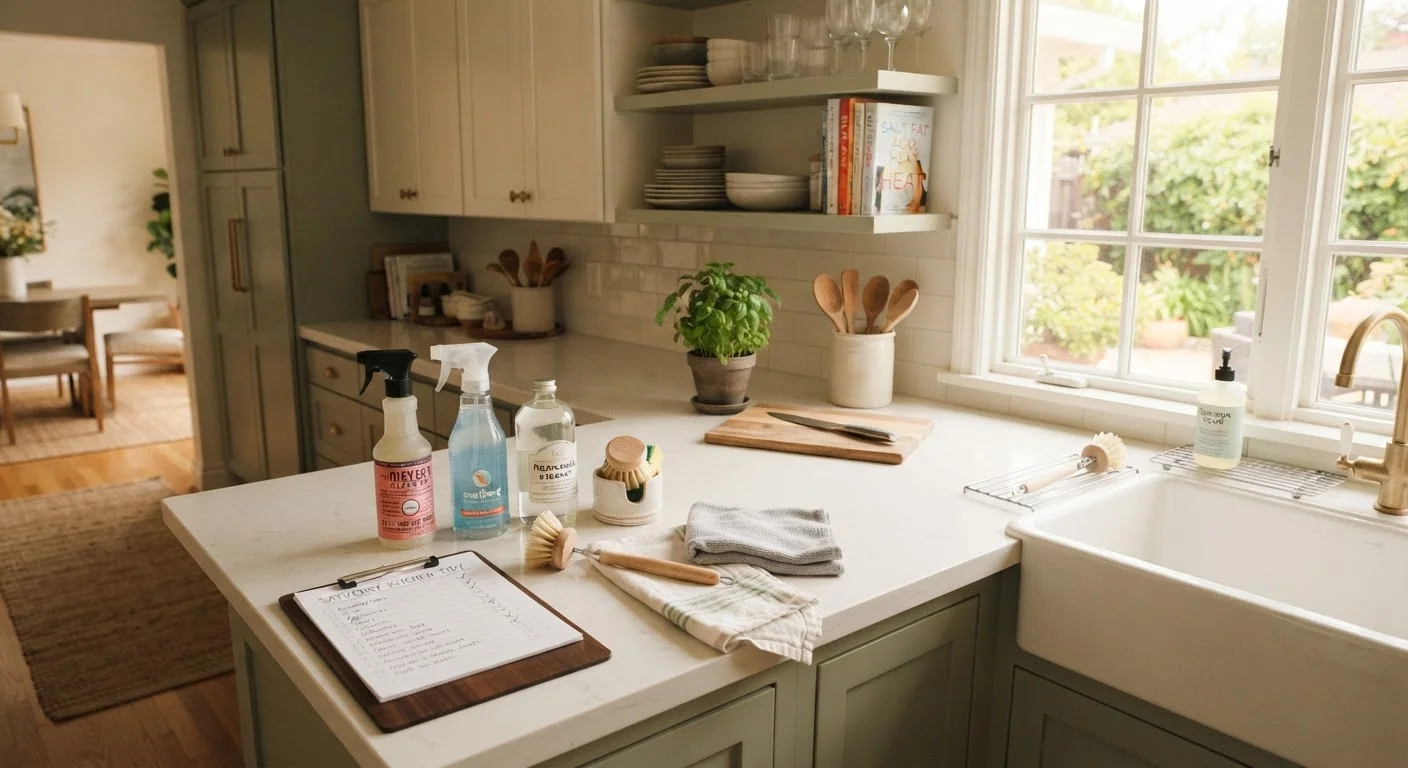
What you will need
How to Build and Sustain Your Routine
Audit how your home actually gets dirty
Before writing a single task on a list, spend two or three days noticing where mess accumulates and how fast. The kitchen counter after dinner, the bathroom sink between Monday and Friday, the entryway after the kids come home — these patterns are unique to your household. A routine built on observation will outlast one copied from a generic template.
Make a simple note — on paper or your phone — of the three to five areas that consistently bother you most. These become your non-negotiable daily targets.
Sort every task into daily, weekly, or monthly buckets
Not every task needs to happen every day. Sorting chores by realistic frequency is what separates a sustainable routine from an exhausting one. Use these general guidelines as a starting point:
- Daily (5–10 min): Wipe kitchen counters, do dishes, do a quick bathroom wipe-down, pick up visible clutter
- Weekly (30–60 min total, split across days): Vacuum floors, mop hard surfaces, clean toilets and sinks thoroughly, change bed linens
- Monthly: Wipe appliance exteriors, clean inside the microwave, dust ceiling fans, wash windows
Assign tasks to specific days rather than leaving them on a floating to-do list. "Vacuum on Wednesdays" is far more likely to happen than "vacuum sometime this week."
Adjust frequency for your household size and pets
A single adult in a one-bedroom apartment and a family of five with two dogs have entirely different cleaning demands. Scale your routine accordingly:
- Homes with pets typically need vacuuming two to three times per week to manage shedding and dander.
- Households with young children often need daily floor spot-cleaning and more frequent bathroom attention.
- Smaller households can often extend weekly tasks to every ten days without visible decline.
There's no universal standard — the right frequency is whatever prevents buildup from becoming a problem.
Keep your supplies stocked and easy to access
One of the most overlooked reasons cleaning routines collapse is friction: the supplies are in the wrong place, the spray bottle is empty, or finding the mop takes longer than using it. Store a basic set of supplies in each bathroom and keep kitchen supplies under the sink or on the counter. A portable caddy lets you move efficiently between rooms without hunting for what you need.
Set a reminder once a month to check supply levels. Running out of paper towels mid-routine breaks momentum and creates an easy excuse to stop.
Schedule a short weekly reset, not a marathon session
Long, whole-house cleaning sessions feel productive but are hard to sustain. Instead, anchor your routine around a 20–30 minute weekly reset — one focused sweep where you address all your weekly tasks back-to-back. Pair this with daily micro-tasks (wiping a counter, hanging up clothes), and your home stays manageable without any single session feeling like a project.
Pick a consistent time slot: Saturday morning before errands, Sunday evening before the week starts. Consistency in timing builds automaticity the same way any habit does. For a deeper look at the behavioral science behind sticking with routines, the same principles that apply to building an exercise habit translate directly to home maintenance.
Build in a quarterly deep-clean session
Even a well-maintained home accumulates grime in places daily and weekly routines don't reach: baseboards, behind appliances, inside the oven, grout lines, and window tracks. Schedule one 2–3 hour deep-clean session per quarter — ideally at the change of each season — to address these areas systematically.
If clutter is making deep-cleaning difficult, that's a separate problem worth addressing on its own. The right decluttering approach varies by personality and schedule — sorting that out first makes every future cleaning session faster and more effective.
Start Smaller Than You Think You Need To
When in doubt, cut your planned routine in half for the first two weeks. It's far easier to add tasks once a habit is established than to sustain an overloaded schedule from day one. Early wins build the momentum that makes the routine self-reinforcing.
Don't Mix Cleaning Products Without Checking Labels
Certain common cleaning products — such as bleach and ammonia-based cleaners — produce toxic fumes when combined. Always read product labels before mixing or layering cleaners on any surface, and ensure your space is well ventilated when using chemical-based products.
Once you have a working routine in place, revisit it every three months. Your household's needs will shift — new schedules, seasons, additional occupants — and your routine should shift with them. A cleaning system that felt right in February may need adjusting in August. Treat it as a living document, not a permanent commitment.
The goal isn't a spotless home at all times. It's a home that's consistently comfortable, manageable to maintain, and doesn't require a full weekend to recover from a busy week.