

Key Takeaways
Why the Introduction Process Matters More Than You Think
Most multi-dog conflicts that develop in the first weeks of cohabitation aren't caused by incompatible animals — they're caused by a rushed introduction process. Dogs are highly attuned to social hierarchy, territory, and resource access. When a new dog appears inside a resident dog's established space without a structured transition, it creates the conditions for anxiety and defensiveness in both animals.
A phased approach — neutral ground first, managed indoor access second, full cohabitation last — gives both dogs the time they need to read each other's signals accurately and build tolerance before building trust. If you're still assessing whether you're genuinely prepared for a second dog, this readiness checklist for new pet owners is a useful starting point.
Parallel Walks Build Trust Faster
Walking both dogs side by side — at a comfortable distance — before any direct greeting allows them to share an activity without the social pressure of face-to-face contact. This technique, sometimes called parallel walking, lets dogs build positive associations through shared movement. Aim for 10 to 20 minutes before attempting a closer introduction.
The timeline below applies to adult dogs. Puppies typically adapt faster, but they can also overwhelm an older resident dog with high-energy play. Monitor the resident dog for signs of stress — withdrawal, reduced appetite, or anxiety-related behavior changes — regardless of the new dog's age.
What You'll Need Before You Start
Successful introductions require preparation, not improvisation. Having the right tools and setup in place before the new dog arrives removes pressure in the critical first hours.
What you will need
Two standard 6-foot leashes
Maintain calm control over each dog during the neutral-territory introduction without restricting movement unnecessarily.
Dog crate or exercise pen
Provide each dog with a secure, separate space during the early cohabitation period when unsupervised.
Baby gate or interior barrier
Allow visual and scent access between dogs in the home while maintaining physical separation during early days.
High-value treats (small, soft)
Reward calm, relaxed behavior during introductions to build positive associations between the dogs.
Drag line (lightweight long line)
Allow off-leash movement in a controlled space during early indoor meetings while retaining the ability to redirect quickly.
Never Force a Face-to-Face Greeting
Pushing two unfamiliar dogs into direct nose-to-nose contact too quickly is one of the most common triggers for early fights. Dogs need to approach on their own terms, at their own pace. If either dog shows stiff posture, raised hackles, a hard stare, or growling, increase distance immediately and slow the process down. Forcing contact despite stress signals can create a negative association that takes weeks to repair.
Step-by-Step: From First Meeting to Shared Home
Follow these steps in sequence. Skipping phases — especially the neutral-ground introduction — significantly increases the risk of a negative first impression that takes time and effort to reverse.
Prepare Your Home Before the New Dog Arrives
Before pickup day, set up two completely separate resource zones: individual food and water bowls, separate sleeping areas, and distinct toy collections. Remove any high-value items — bones, stuffed toys, or chews — from shared spaces entirely during the first few weeks. If your resident dog has a strong attachment to a particular piece of furniture or corner of the room, block temporary access so neither dog can claim it as a flashpoint.
Review the health and safety checklist for new pets to make sure vaccinations, vet appointments, and environmental safety are addressed before the new dog enters the space.
Conduct the First Meeting on Neutral Ground
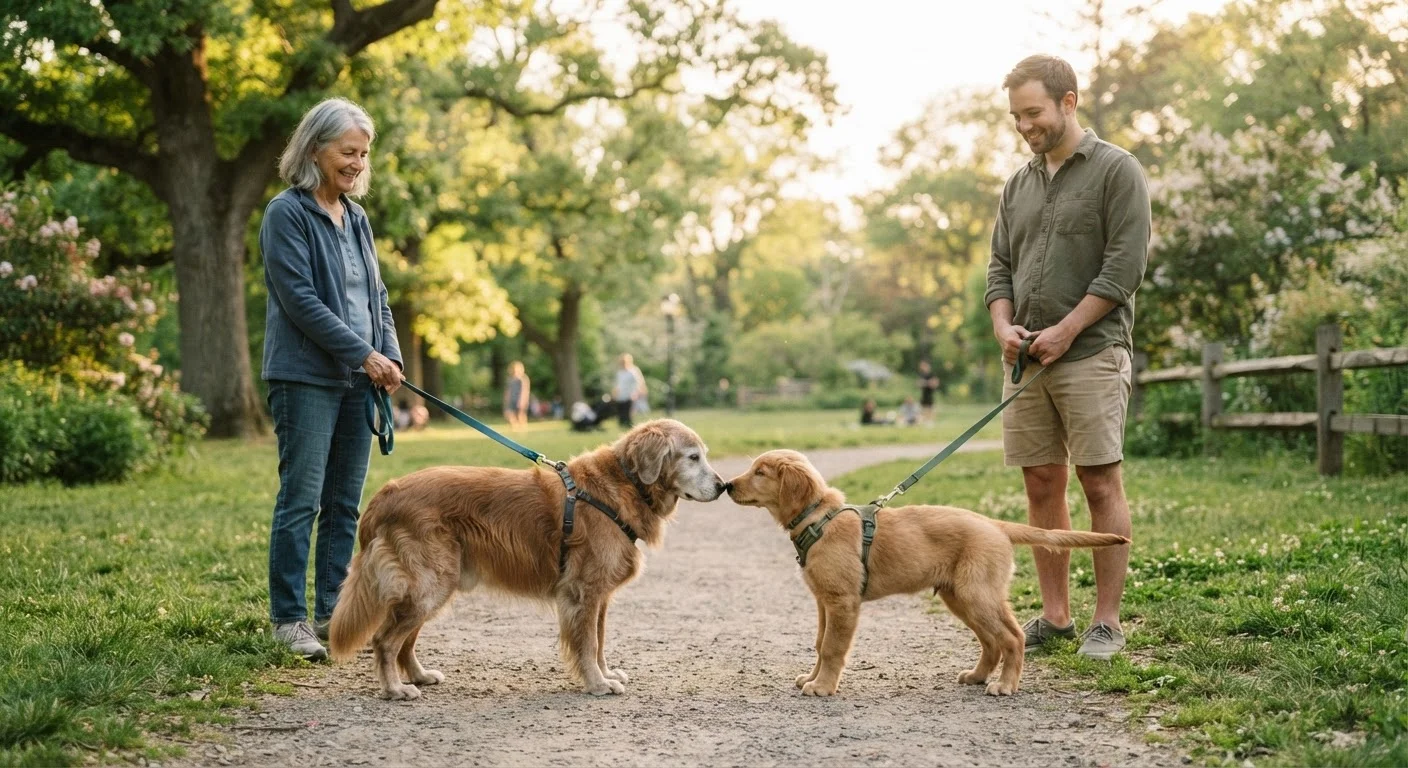
Choose a location neither dog considers their territory — a quiet stretch of sidewalk, a park, or an empty parking lot works well. Arrive with one handler per dog. Begin by walking the dogs parallel to each other at roughly 10 to 15 feet apart, allowing them to observe each other without pressure.
Reward calm, loose-body behavior with small treats and a steady, neutral voice. Gradually close the gap over 10 to 20 minutes as both dogs remain relaxed. Avoid allowing either dog to pull hard toward the other or to mount — redirect with movement rather than correction.
Allow a Sniff and Move On
When both dogs appear relaxed — loose body language, soft tails, easy movement — allow a brief, 3-to-5-second nose-to-tail sniff. Then use movement to break it off naturally by walking forward together. Avoid holding the dogs stationary during a greeting, which can increase tension. Repeat the brief sniff-and-move sequence two or three times before ending the session.
Enter the Home Together With Intention
Bring both dogs home after the outdoor session, when some of the initial excitement has settled. Enter through a less-trafficked door if possible and keep leashes on both dogs inside for the first 30 to 60 minutes. Allow sniffing of shared spaces under supervision. Avoid creating a crowded greeting scenario at the front door — it elevates arousal in both dogs.
Maintain the resident dog's normal schedule as closely as possible. If you're establishing or refining that routine, see our guide on building a daily routine your dog can rely on.
Manage Shared Space During the First Two Weeks
Use gates, crates, and leashes to prevent unsupervised contact during the early adjustment period. Feed dogs in completely separate rooms with doors closed or gates up. Do not leave toys, bones, or high-value chews in shared areas. Rotate which dog has open access to different parts of the home while the other rests in a secured space — this prevents territorial buildup and reduces competition.
Structured crate training can give the new dog a genuinely safe retreat and help the resident dog understand that their space is still respected.
Gradually Expand Freedom Based on Consistent Success
Only increase unsupervised time after both dogs consistently show relaxed, neutral, or playful body language across multiple supervised sessions. This typically takes two to four weeks, though some pairs take longer — particularly if either dog has had limited socialization. Progress is not linear; a minor conflict is a signal to slow down, not a sign of failure.
If tension escalates, resource guarding intensifies, or either dog shows signs of chronic stress, consult a certified professional dog trainer or veterinary behaviorist before the problem becomes entrenched. For new owners navigating this for the first time, the common early mistakes new dog owners make is worth reviewing alongside this guide.
Unsupervised Time Too Soon Is Risky
Even dogs that appear friendly after a few days should not be left alone together without supervision until their relationship is well established — typically after several weeks of consistently positive interactions. Incidents most often happen during unmonitored moments. Crate or gate one dog when you cannot actively watch them both.
This article provides general educational information about dog introductions and is not a substitute for professional guidance from a veterinarian or certified animal behaviorist. If either dog has a history of aggression or fear-based reactivity, consult a qualified professional before proceeding with any introduction.