

Key Takeaways
Start here
Why Small Pets Are Often Misunderstood
Next
Space and Housing: More Room Than You Think
Then
Diet Basics for Rabbits, Guinea Pigs, and Hamsters
Going deeper
Social Needs and Behavioral Health
Health essentials
Veterinary Care and Common Health Concerns
Put it together
Building a Daily Routine That Works
Why Small Pets Are Often Misunderstood
Small mammals are frequently marketed as easy, low-commitment alternatives to dogs or cats. In reality, rabbits, guinea pigs, and hamsters each have specific physiological and behavioral needs that owners can easily underestimate — sometimes with serious consequences for the animal's wellbeing.
These animals are prey species, meaning they instinctively mask signs of illness or distress. That makes attentive ownership especially important. Before bringing any small pet home, it's worth completing a realistic self-assessment — the readiness checklist for new pet owners is a practical starting point for evaluating lifestyle fit and genuine preparedness.
Prey species
An animal that is naturally hunted by predators in the wild. Prey animals instinctively hide signs of pain or illness, making regular observation by owners especially critical.
GI stasis
A dangerous condition in rabbits where the digestive system slows or stops moving. It can become life-threatening quickly and requires immediate veterinary attention.
Malocclusion
Misalignment of the teeth, common in rabbits and other small rodents. It can prevent normal eating and requires veterinary treatment.
Enrichment
Objects, activities, or environmental features that encourage an animal's natural behaviors such as foraging, burrowing, or exploring. Enrichment supports both mental and physical health.
Substrate
The bedding or floor material used inside an animal's enclosure. The type and depth of substrate affects comfort, hygiene, and the ability to express natural behaviors like burrowing.
Vitamin C deficiency (scurvy)
A nutritional condition caused by insufficient vitamin C intake. Guinea pigs cannot produce their own vitamin C, so they must get it through their diet every day or risk serious health problems.
Space and Housing: More Room Than You Think
One of the most common mistakes new owners make is purchasing housing that is far too small. A rabbit living in a hutch designed for short-term transport, or a hamster in a pet-store cage with minimal floor space, will experience chronic stress and restricted natural behavior.
- Rabbits: Need a minimum of 8 square feet of enclosure space plus daily free-roaming time in a rabbit-proofed area. Wire-floor cages are harmful to their feet.
- Guinea pigs: A pair requires at least 7.5–10 square feet of unobstructed floor space. Multilevel cages with ramps are often unsuitable as guinea pigs can fall and injure themselves.
- Hamsters: Syrian hamsters need at least 450 square inches of unbroken floor space — significantly more than most pet-store cages offer — with a solid-surface wheel of appropriate diameter (10–11 inches for Syrians).
Bedding depth matters too. Hamsters in particular burrow extensively and benefit from at least 6 inches of appropriate substrate.
Think Beyond the Pet Store Cage
Many cages sold specifically for small animals fall short of recommended space guidelines. Before purchasing, research minimum size requirements from veterinary or animal welfare sources rather than relying on packaging descriptions. DIY or modular enclosures are often a better option for meeting space needs affordably.
Diet Basics for Rabbits, Guinea Pigs, and Hamsters
Nutrition is one of the highest-impact areas of small pet care, yet commercial marketing often steers owners toward seed mixes and brightly colored pellets that do not reflect these animals' actual dietary needs.
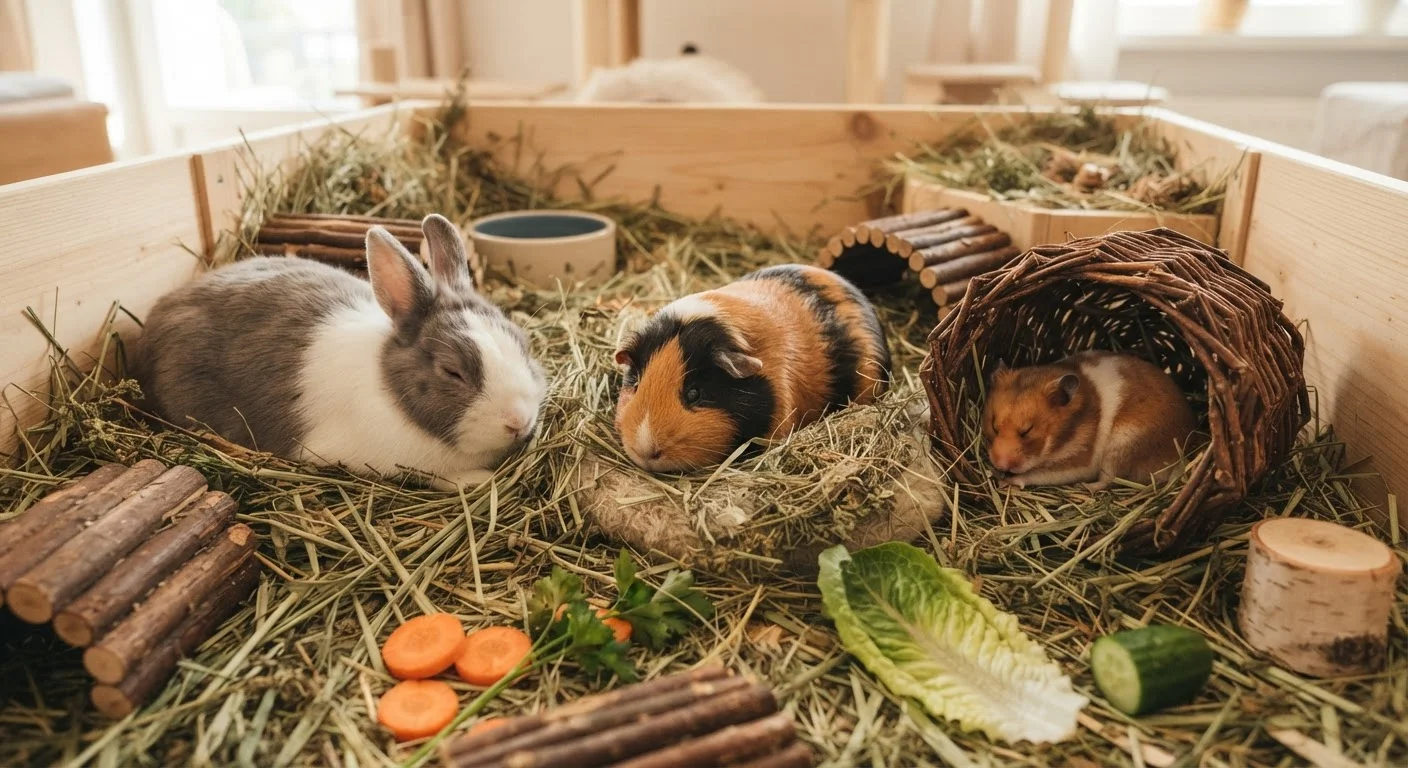
Rabbits and guinea pigs are herbivores whose digestive systems depend on high-fiber grass hay. Timothy, orchard grass, or meadow hay should be available at all times and make up roughly 70–80% of their diet. Fresh leafy greens supplement this, while pellets play a supporting — not central — role. Guinea pigs, unlike rabbits and hamsters, cannot synthesize their own vitamin C and require a reliable dietary source through fresh vegetables such as bell peppers and leafy greens.
Hamsters are omnivores and can eat a wider variety of foods, but their base diet should be a good-quality, low-seed hamster mix or lab blocks, supplemented with small amounts of fresh vegetables and occasional protein sources like plain cooked egg. Seed-heavy mixes encourage selective feeding and nutritional imbalance.
For deeper guidance on building species-appropriate diets, the Pet Nutrition & Diet hub covers feeding principles across companion animals.
Avoid Feeding Muesli-Style Seed Mixes
Colorful seed and grain mixes designed for rabbits and guinea pigs are often high in sugar and low in fiber. Animals fed these mixes selectively eat their preferred components, leading to nutritional imbalance and dental problems. Hay-based diets are strongly recommended by veterinary and animal welfare professionals.
Social Needs and Behavioral Health
Understanding the social nature of each species directly affects how you house and interact with your pet.
- Guinea pigs are highly social and generally do best in same-sex pairs or small groups. A lone guinea pig is at real risk of loneliness and stress-related health issues.
- Rabbits can live alone if they receive consistent human interaction, but many welfare organizations recommend bonded pairs. Introductions must be handled carefully.
- Hamsters — particularly Syrian hamsters — are solitary and will fight if housed together. Dwarf species can sometimes coexist, but introductions require monitoring.
Beyond companionship, all three species need environmental enrichment. Tunnels, foraging opportunities, chew toys, and regular exploration time all support cognitive and physical health. The evidence behind enrichment is well-established — see the article on mental stimulation and exercise for pets for a fuller look at why this matters.
Veterinary Care and Common Health Concerns
All three species benefit from care provided by a veterinarian experienced with small mammals or exotic animals. General-practice vets vary widely in their small-mammal expertise, so it is worth asking about experience before your first appointment.
Common concerns to watch for include:
- Rabbits: GI stasis (a life-threatening slowdown of the digestive system), dental malocclusion, and respiratory infections.
- Guinea pigs: Vitamin C deficiency (scurvy), upper respiratory infections, and bladder stones.
- Hamsters: Wet tail (a severe bacterial diarrhea), dental issues, and skin conditions.
Because these animals mask illness, any sudden change in eating, droppings, posture, or activity level warrants prompt veterinary attention. Preventive check-ups — typically once or twice a year — help catch problems early. For a broader look at what to expect in your pet's first year of care, see Your Pet's First Year: A Health Roadmap for New Owners.
This article provides general educational information about small pet care and is not a substitute for professional veterinary advice. Always consult a qualified veterinarian for guidance specific to your animal's health.
Building a Daily Routine That Works
Consistency is one of the most valuable things you can offer a small pet. Prey animals are sensitive to environmental change, and a predictable routine reduces baseline stress while helping you notice when something is off.
A workable daily rhythm typically includes:
- Morning: Fresh water, hay replenishment, and a health check (eyes, posture, activity).
- Daytime or evening: Free-roaming or exercise time, with supervised interaction and enrichment.
- Evening: Fresh greens or species-appropriate fresh foods; spot-clean the enclosure.
- Weekly: Full bedding change and enclosure cleaning.
Before your small pet arrives, use the first 30 days health and safety checklist to prepare your home and set up care systems in advance. Small animals thrive when their owners are organized, observant, and genuinely committed to understanding what these animals actually need — not just what a care label on a box suggests.
As Pets Age, Needs Change
Small mammals have relatively short lifespans, meaning age-related health changes can appear sooner than owners expect. Older rabbits and guinea pigs may need dietary adjustments, more frequent vet visits, and modified housing for comfort. The article on senior pet care outlines how to adapt your approach as your pet gets older.