

Key Takeaways
Protective Style
A protective style is any hairstyle that keeps the ends of your hair tucked away and minimizes the amount of daily handling, combing, and environmental exposure your hair experiences. By shielding the most fragile part of the hair strand — the ends — these styles help reduce breakage and support length retention over time. They work for a wide range of hair textures and are especially popular among people with natural, coily, or chemically treated hair.
Length retention occurs because the ends of the hair shaft are oldest and most prone to mechanical damage; limiting friction and manipulation slows the rate of breakage relative to new growth.
The Core Idea: Less Manipulation, Less Breakage
Every time you comb, brush, detangle, or apply heat to your hair, you introduce the potential for mechanical stress. Over weeks and months, that cumulative stress adds up — particularly at the ends of the strand, which are the oldest and most fragile portion of any hair fiber. A protective style interrupts that cycle.
By keeping ends tucked, folded, or secured away from environmental friction (clothing, pillowcases, wind), protective styles reduce the daily wear that leads to split ends and breakage. The hair at your roots keeps growing at its normal rate; the difference is that more of that growth stays on your head instead of snapping off.
This is why protective styling is often described as a length-retention strategy rather than a growth accelerator. It doesn't change your biology — it changes how much of your hair survives long enough to be visible. If you regularly rely on heat tools, pairing protective styling periods with the habits covered in our heat styling damage-reduction guide can make a meaningful difference in long-term hair health.
Prep Your Hair Before You Protect It
Starting a protective style on clean, well-moisturized hair sets you up for a much healthier takedown. Deep condition before installing any braids or twists, and make sure the hair is fully dry before braiding to prevent mildew or odor buildup at the roots. A little prep upfront pays off weeks later.
What Counts as a Protective Style?
There's no single official definition, but hairstylists and trichologists (scalp and hair specialists) generally agree on a few core criteria: the ends should be hidden or contained, daily manipulation should be minimal, and the style should be gentle enough that it doesn't introduce new stress at the scalp or strand.
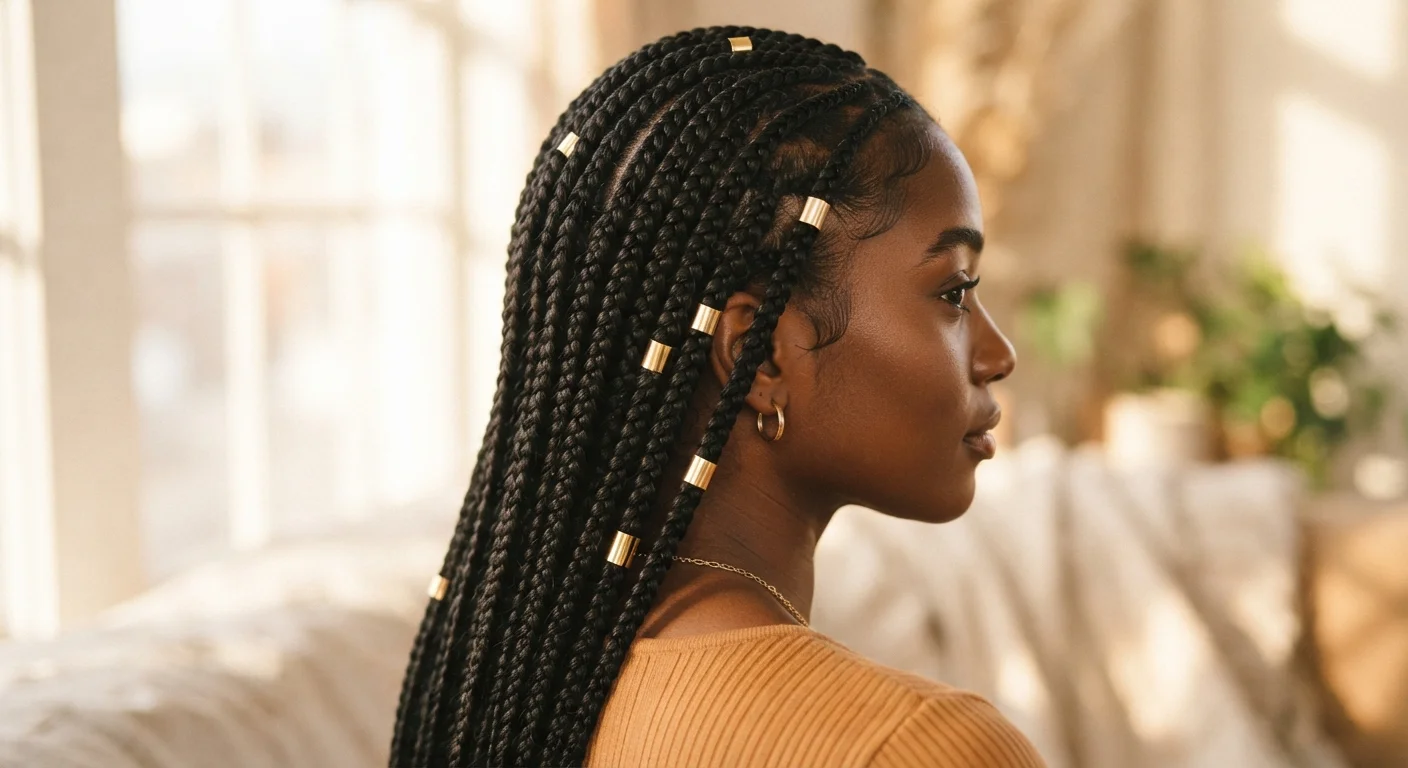
- Braids and twists (with or without extensions): box braids, Senegalese twists, cornrows, flat twists
- Updos and buns: low buns, French twists, chignons — any style that pins ends away without excessive tension
- Wigs and sew-ins: when installed properly and worn over well-moisturized, loosely braided natural hair
- Bantu knots and two-strand twists: shorter-term options that still limit daily manipulation
What typically does not qualify: leaving hair loose and unstyled, high-tension ponytails that stress the hairline, or any style requiring daily heat to maintain. Loose styles aren't bad — they just don't provide the end-tucking protection that defines the category.
How Long Is Too Long — and How to Care for a Style While Wearing It
One of the most common misconceptions is that longer wear always means better results. In reality, a neglected six-week-old braid set can do more harm than a well-maintained two-week one. Here's what to keep in mind:
~0.5 in
Average monthly hair growth rate
The American Academy of Dermatology notes that human hair grows approximately half an inch per month, making retention — not acceleration — the key variable protective styles influence.
4–8 weeks
Recommended wear window for braided styles
Most professional hairstylists advise keeping braided or twisted styles no longer than eight weeks to avoid matting, scalp buildup, and excess tension on the hairline.
Up to 90%
Of breakage attributable to mechanical damage
Research in the Journal of Cosmetic Science has suggested the majority of hair fiber damage in routine grooming comes from mechanical sources like combing and brushing rather than chemical exposure.
Moisture doesn't stop mattering: Hair inside braids still needs hydration. A lightweight water-based moisturizer or diluted leave-in conditioner applied to the scalp and along braid lengths every few days helps prevent the dryness that leads to brittleness and breakage when the style comes down.
Scalp health is non-negotiable: Itching, flaking, or tenderness are signs that product buildup or dryness has reached a level that needs attention — either a scalp rinse or taking the style down. Persistent tightness at the hairline warrants immediate action; prolonged tension is a known contributor to traction alopecia.
A general wear window: Four to eight weeks is a widely cited range for braided and twisted styles. Simpler styles like buns may be refreshed weekly. When in doubt, prioritize scalp comfort over keeping a style in longer.
Who Benefits Most — and Who Should Proceed Carefully
Protective styles offer real advantages across a broad range of hair types, but the benefits and risks aren't identical for everyone.
High-porosity or chemically treated hair tends to lose moisture quickly and is more prone to breakage — making the manipulation reduction of protective styles particularly valuable. Coily and tightly curled textures often shrink significantly, which increases tangling during styling and makes daily combing more abrasive; tucking ends away sidesteps much of that friction.
People with fine or low-density hair should be cautious with heavier extension styles. The added weight can strain follicles, and the tension required to secure braids on finer strands can be higher than the hair or scalp handles comfortably.
Those experiencing active hair shedding or scalp conditions — such as seborrheic dermatitis or scalp psoriasis — should consult a dermatologist or trichologist before committing to a long-wear protective style. Covering an already-irritated scalp can worsen some conditions.
The broader principle is the same one that applies to most good grooming habits: pay attention to how your hair and scalp respond, and adjust accordingly.
Protective Styling Isn't a Magic Fix
Protective styles work best as part of a consistent hair care routine — not as a workaround for neglect. If your hair is already severely damaged or breaking, addressing underlying issues like chronic dryness, product buildup, or an overly aggressive styling routine will matter more than any single style choice. Think of protective styling as one tool in a broader approach to hair health.
This article is for general informational purposes only and does not constitute medical or dermatological advice. If you have concerns about scalp conditions or hair loss, consult a qualified healthcare professional.