

Key Takeaways
Option A
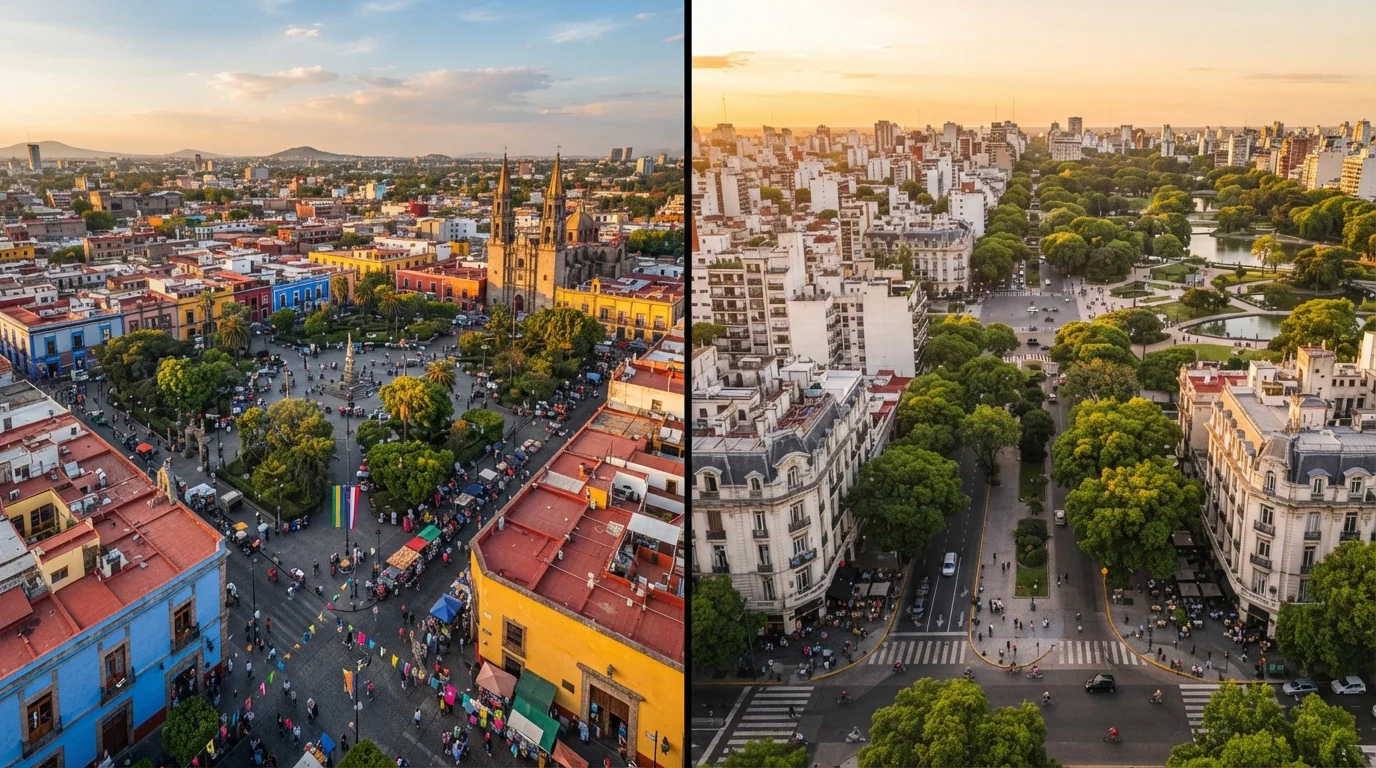
Mexico City
The electric, ancient megacity that never stops moving.
Best for: Visitors craving pre-Columbian history, sensory street food culture, and an energetic urban pulse at an accessible price point.
Option B
Buenos Aires
The sophisticated, European-inflected capital with deep cultural soul.
Best for: Travelers drawn to café culture, tango, architectural grandeur, and a slower, more contemplative pace of discovery.
If you want maximum history and archaeology in an urban setting
Mexico City
The Templo Mayor archaeological zone sits in the heart of the city, and the National Museum of Anthropology is widely considered one of the world's great museums. Pre-Columbian culture is literally beneath your feet.
If you prefer a European café atmosphere and slower, refined travel
Buenos Aires
Buenos Aires' café culture, bookshop scene, and tango milongas reward those who like to settle in and absorb a city rather than rush through landmarks.
If budget and flight accessibility from the US are top priorities
Mexico City
Mexico City is served by numerous nonstop flights from major US hubs and is generally more affordable for accommodation, food, and transport.
If you want a strong food and nightlife scene with fewer crowds
Buenos Aires
Buenos Aires' restaurant scene, especially in Palermo and San Telmo, is world-class and tends to feel less tourist-saturated than Mexico City's most visited areas.
If this is your first Latin American trip and you want cultural depth close to home
Mexico City
The shorter flight, shared time zones with much of the US, and dense concentration of walkable cultural landmarks make it an ideal introduction to Latin American travel.
The Feel of Each City: Atmosphere and Energy
Walking into Mexico City for the first time is genuinely overwhelming — in the best way. The historic center, known as the Centro Histórico, is a UNESCO World Heritage Site where Aztec ruins sit steps from colonial cathedrals and buzzing street markets. The energy is dense, layered, and relentless. Neighborhoods like Roma Norte and Condesa offer a cooler, tree-lined respite, with independent coffee shops and galleries drawing a creative international crowd.
Buenos Aires operates at a different frequency. Its Parisian-style boulevards, ornate theaters, and tradition of long, lingering meals give the city a contemplative quality that Mexico City doesn't quite share. Neighborhoods like Palermo Soho and San Telmo have distinct identities — one feels like a design district, the other like a living antique. The city famously comes alive late; dinner before 9 p.m. is considered early, and tango milongas (social dance events) run well past midnight.
Neither atmosphere is better — they're just genuinely different. Mexico City rewards curious, fast-moving explorers. Buenos Aires rewards those willing to slow down.
| Criterion | Mexico City | Buenos Aires |
|---|---|---|
| Flight time from New York | ~5 hours nonstop | ~10–11 hours nonstop |
| Altitude | ~7,350 feet above sea level | Sea level |
| Language | Spanish (Mexican dialect) | Spanish (Rioplatense dialect) |
| Currency | Mexican peso (MXN) | Argentine peso (ARS) |
| Food culture style | Street food-forward, market-centered | Sit-down, European-influenced |
| Dominant cultural heritage | Indigenous + Spanish colonial | Spanish + Italian + European |
| Iconic cultural experience | Archaeological sites and markets | Tango milongas and café culture |
| General cost for US visitors | Moderate to affordable | Varies; currency dynamics shift costs |
Food, Culture, and What Each City Does Best
Mexico City's food scene is one of the most celebrated on the planet. From tacos al pastor carved from a vertical spit in a market stall to high-end tasting menus reinterpreting indigenous ingredients, the range is staggering. The city has multiple neighborhoods with distinct culinary identities, and eating well rarely requires spending much. Street food culture here is not a budget fallback — it's the main event.
Buenos Aires leans heavily on its Italian and Spanish culinary heritage. Beef, pasta, and empanadas anchor the menu, and the city's parrillas (traditional steakhouses) are rightly famous. The café culture is equally serious — porteños (Buenos Aires residents) have been meeting in historic coffeehouses for well over a century. Food is less about snacking on the go and more about sitting down and making an occasion of it.
On the cultural calendar, both cities punch above their weight. Mexico City's museum density is extraordinary — the Museo Frida Kahlo, the Palace of Fine Arts, and Chapultepec Castle are all within a single day's reach. Buenos Aires counters with Teatro Colón, one of the world's great opera houses, and a thriving contemporary art scene centered in the MALBA (Museum of Latin American Art of Buenos Aires).
150+
Museums in Mexico City
Mexico City is frequently cited as having one of the highest concentrations of museums per square mile of any city in the world.
3M+
Seats at Teatro Colón annually
Buenos Aires' Teatro Colón, inaugurated in 1908, is widely ranked among the top five opera houses globally based on acoustic quality and programming.
7,350 ft
Mexico City elevation
At over 7,000 feet above sea level, Mexico City's altitude can affect visitors unaccustomed to high elevations, particularly in the first 24–48 hours.
Practical Planning: Getting There and Getting Around
From most major US cities, Mexico City is a 3–5 hour nonstop flight. The city's Benito Juárez International Airport is one of the busiest in Latin America, and a newer international airport (Felipe Ángeles) now handles additional traffic. US citizens do not need a visa for tourist stays, and the entry process is generally straightforward. One critical note: Mexico City's altitude of approximately 7,350 feet can cause altitude sickness in some visitors during the first day or two. Staying hydrated and easing into physical activity is worth planning for.
Buenos Aires is a longer haul — typically 10–12 hours nonstop from cities like Miami, Houston, or New York. US citizens also enter Argentina visa-free for tourism. The city sits at sea level, so altitude is not a factor. Getting around Buenos Aires is manageable via its metro system (the Subte), taxis, and rideshare apps. Mexico City similarly has an extensive metro system and rideshare options, though traffic congestion is significant and navigating the city by car is rarely recommended for visitors.
If you find yourself with just a few hours in either city during a connection, don't write it off — as we explore in our guide to making the most of a city layover, even a short window can yield a genuine taste of a destination when you plan ahead.
A Note on Argentina's Currency
Argentina has experienced significant currency volatility in recent years, and exchange rate conditions can shift substantially between when you plan your trip and when you travel. US visitors should check current official exchange rates and consult up-to-date travel resources before departing. Verify conditions with your bank and trusted financial sources — do not rely solely on pre-trip estimates for budgeting purposes.