

Key Takeaways
Why Health Planning Deserves a Spot in Every Itinerary
Most travelers pour energy into booking flights, comparing hotels, and building itineraries — and health considerations often get a last-minute afterthought. That's a missed opportunity. Factoring your medical needs into the planning process early can prevent disruptions, reduce stress, and help you actually enjoy the trip you've worked hard to arrange.
This doesn't mean every traveler needs an elaborate medical protocol. But whether you manage a chronic condition, take daily medications, or are simply heading somewhere with different disease risks, a little upfront attention pays off. Think of it as part of the same smart prep covered in our end-to-end trip planning guide.
This article is general travel and health information only — not medical advice. Always consult a qualified healthcare professional before making decisions about your personal health or medications.
Best Practices for Health-Conscious Travel Planning
The following practices apply to a wide range of travelers — from weekend road-trippers to first-time international explorers. Adapt them to your situation and always loop in your doctor for personalized guidance.
Schedule a pre-trip appointment with your doctor or a travel medicine clinic at least four to six weeks before departure.
Many vaccines require multiple doses or time to become effective, and some destinations carry disease risks that need advance preparation. Leaving this too late can mean missed protection windows or scrambling to find care abroad.
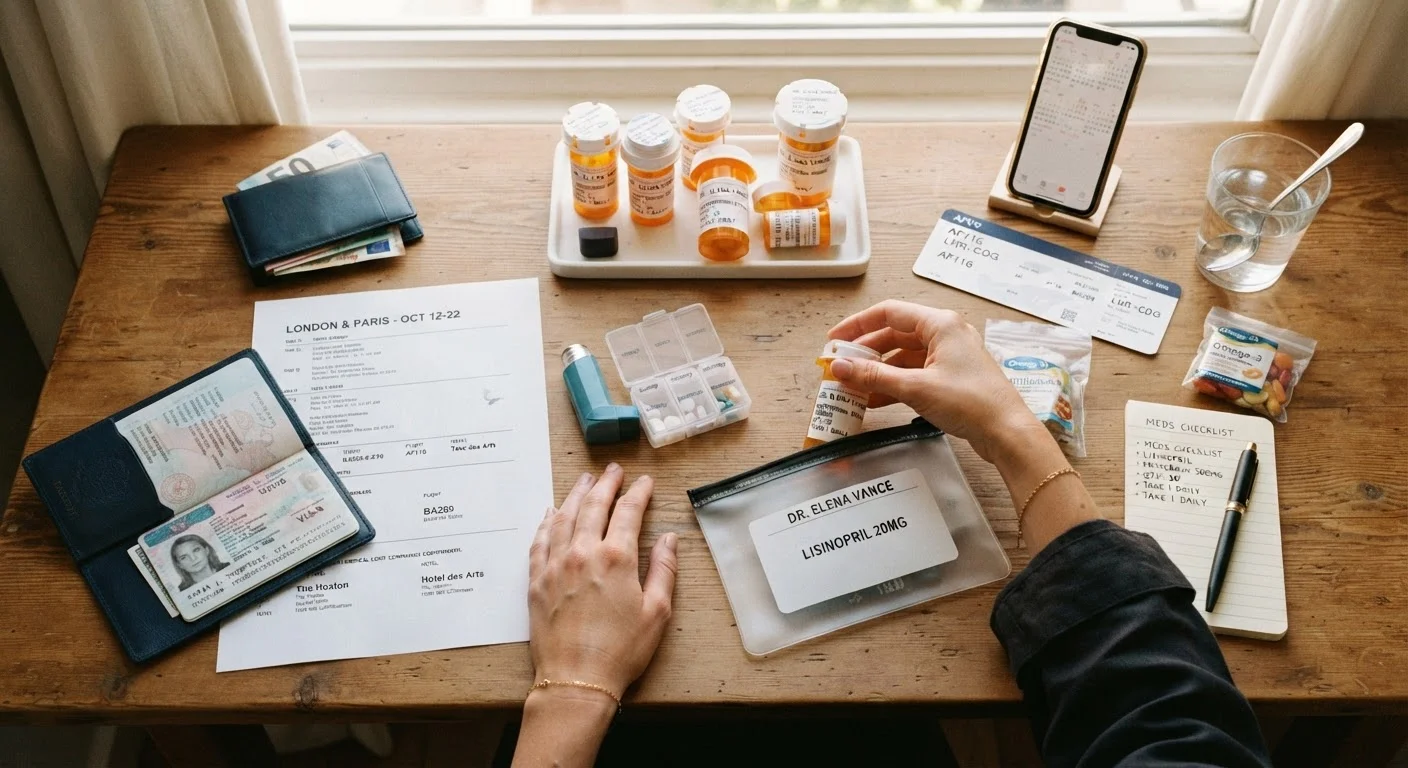
Carry all medications in their original, pharmacy-labeled containers and pack them in your carry-on, never in checked luggage.
Checked bags can be lost, delayed, or exposed to temperature extremes — none of which you want happening to essential medications. Original labels also help at customs and in medical emergencies abroad. For detailed TSA guidance on traveling with prescriptions, see our carry-on medications guide.
Build a written medication and medical history summary to carry with you throughout the trip.
If you need medical attention in an unfamiliar city or country, healthcare providers will be able to help you much more effectively if they know your current medications, allergies, and relevant conditions. A one-page summary is a simple document that can matter enormously in an emergency.
Research your destination's healthcare infrastructure and identify the nearest reputable medical facility before you arrive.
In a health emergency, you don't want to be Googling hospitals under stress. Knowing in advance where to go — and how to get there — removes a major source of anxiety and can speed up care significantly.
Review your health insurance coverage for travel and consider supplemental travel medical insurance if gaps exist.
Many domestic health plans provide limited or no coverage outside the US, and medical evacuation can cost tens of thousands of dollars without insurance. Understanding this before you book — not after an emergency — gives you time to fill any gaps.
Pack a destination-appropriate travel health kit, informed by your doctor and destination-specific risks.
A well-stocked travel kit means you're prepared for common issues — blisters, traveler's diarrhea, altitude headaches — without hunting for a pharmacy in an unfamiliar place. Your doctor or travel medicine clinic can advise on what's appropriate for your specific destination and health profile.
Quick Steps You Can Take Right Now
Not sure where to start? These actions cut through the overwhelm and help you build momentum before departure.
For a broader look at what else tends to get overlooked before departure, our pre-travel checklist covers the easy-to-miss details beyond health prep.
Special Considerations for International and High-Risk Destinations
International travel introduces health variables that simply don't apply to a domestic road trip. Water quality, food safety, altitude, tropical disease exposure, and access to medical care all vary significantly by destination. The CDC's Travelers' Health website and your destination country's entry requirements are the right starting points — not travel blogs or secondhand advice.
Vaccine Requirements vs. Recommendations
There's an important difference between vaccines that are required for entry into a country (such as yellow fever for certain destinations) and those that are recommended based on health risk. Entry requirements are enforced at the border — missing them can result in denial of entry or mandatory on-site vaccination. Recommendations are advisory but reflect real risk. Your travel medicine provider can clarify which apply to your itinerary. Always verify entry requirements directly with the destination country's embassy or official government source, as rules change.
Travelers heading abroad for the first time should also review our guide for first-time international travelers, which covers health prep alongside passports, customs, and currency. If you're traveling with older family members, the multi-generational travel guide addresses mobility, medications, and pacing in more depth.
For destination-specific vaccine requirements or advisories, always verify directly with the CDC, the U.S. Department of State, or your destination country's official health authority before booking — these details change, and no article can substitute for current official guidance.
~80%
Travelers who experience a health issue abroad
The CDC estimates that roughly 80% of travelers to developing regions experience some form of health problem, most commonly traveler's diarrhea — underscoring the value of advance preparation.
$50,000+
Typical cost of medical evacuation without insurance
Medical evacuation from remote or international locations can cost well over $50,000 USD, according to general estimates from travel medicine organizations — a figure most standard health plans do not cover.
Finally, understanding what your travel insurance does and doesn't cover for medical situations abroad is time well spent. Our breakdown of what travel insurance covers can help you ask the right questions before purchasing a policy.