

Key Takeaways
Why RV Listings Leave Out the Important Parts
Buying an RV is unlike buying a car. The stakes are higher, the systems are more complex, and the marketing language is designed to sell a lifestyle, not necessarily to disclose the vehicle's actual condition. Phrases like "well-maintained," "lightly used," or "turnkey ready" appear in nearly every listing - and mean very little without evidence to back them up.
First-time buyers are especially vulnerable because they don't yet know what questions to ask or where problems tend to hide. If you're new to the space, the RV terminology glossary is a useful foundation before you start evaluating rigs. And if you're still deciding whether to buy at all, renting first is one of the smartest ways to stress-test the lifestyle before committing thousands of dollars.
The mistakes below are the ones that consistently cost first-time buyers the most - in money, frustration, and safety.
Skipping a professional pre-purchase inspection.
Why it happens: Buyers assume that a dealer inspection or a visual walkthrough is sufficient, or they don't realize that certified RV inspectors exist.
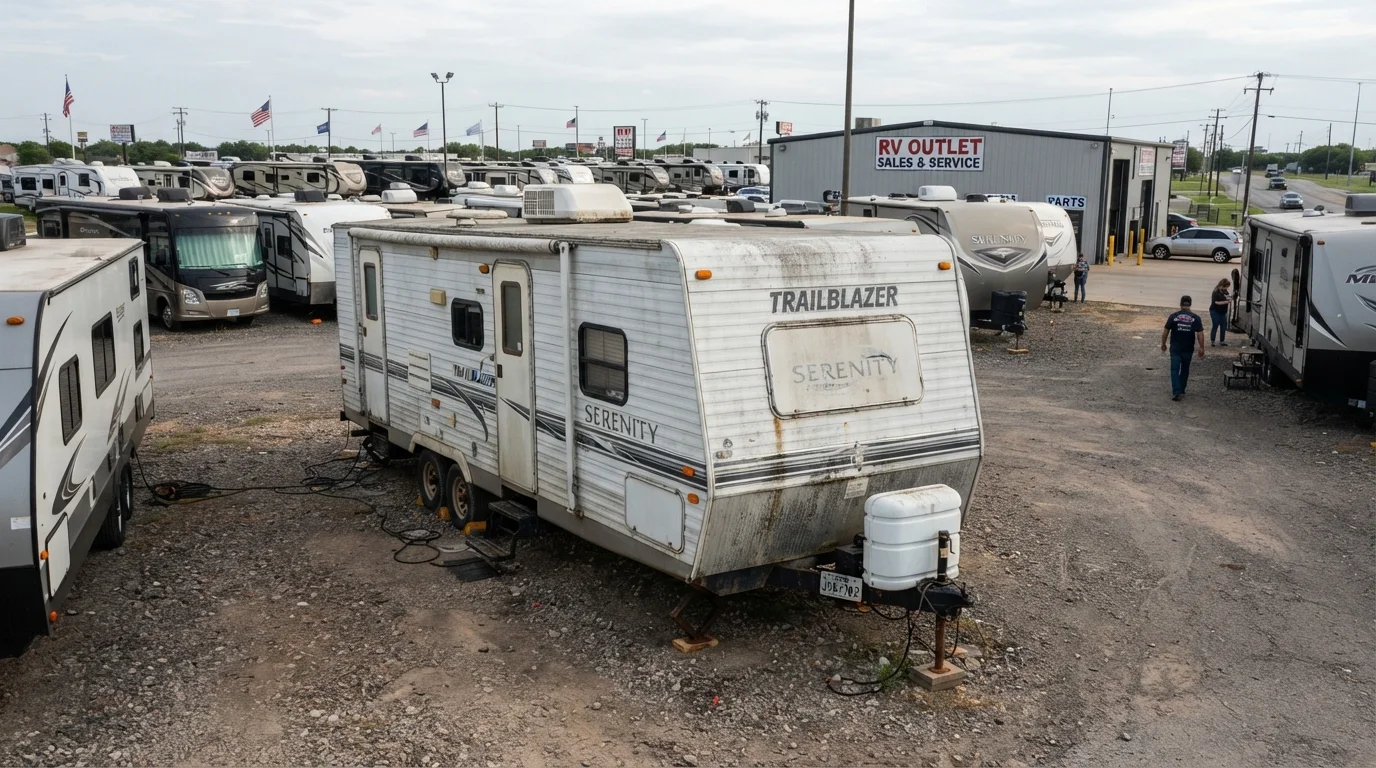
Overlooking water damage, especially in used units.
Why it happens: Water intrusion is often invisible until it's severe. Sellers may not disclose it, and buyers don't know where to look.
Assuming the advertised tow rating means your vehicle can safely tow that RV.
Why it happens: Buyers focus on a single number - the tow vehicle's maximum tow rating - without understanding that payload capacity, tongue weight, and the Gross Combined Weight Rating (GCWR) all factor into whether a tow setup is safe.
Confusing "dry weight" with what the RV will actually weigh on the road.
Why it happens: Listings prominently display dry weight - the unit's weight with no water, gear, fuel, or passengers - which can be significantly lower than real-world loaded weight.
Ignoring the age and condition of the roof and roof seals.
Why it happens: Roofs are easy to overlook during an in-person walkthrough, and listings almost never mention seal age or when the roof was last resealed.
Underestimating total ownership costs beyond the purchase price.
Why it happens: The excitement of the purchase dominates the financial planning process, and many ancillary costs aren't discussed until after signing.
What to Do Before You Sign Anything
Once you've identified a rig you're serious about, slow down. The excitement of an RV purchase is exactly what dealers and private sellers count on to move deals quickly. Pressure to act fast - whether stated or implied - is a signal to pump the brakes, not accelerate.
Urgency Tactics Are a Red Flag
"We have another buyer coming in tomorrow" and "this price is only good today" are common pressure tactics used to prevent buyers from doing proper due diligence. A legitimate seller of a fairly priced RV will not object to a day or two for an independent inspection. If a deal requires you to skip verification steps, treat that as a warning sign.
Budget carefully for total ownership costs, not just the sticker price. Storage runs $100-$300 per month in many markets. Insurance for a Class A motorhome can reach $2,000 or more annually. Campsite fees, fuel, maintenance, and unexpected repairs add up fast. The complete RV lifestyle guide covers these costs in detail and is worth reviewing before finalizing any purchase decision.
If this is your first time towing, note that safe operation takes practice and preparation well beyond the purchase itself. Safe RV driving habits is essential reading before your first trip out. And don't overlook seasonal maintenance - winterizing your RV properly can prevent hundreds of dollars in pipe damage if you park it during cold months.
1 in 3
Used RVs with undisclosed water damage
Industry inspection services report water intrusion is found in roughly one-third of used RV inspections, making it the most common hidden defect.
$500-$3,000+
Typical cost of deferred RV roof repair
RV repair professionals estimate that neglected roof seals, left unaddressed, commonly result in repair bills in this range once structural materials are affected.