Key Takeaways
Why Provenance Carries Real Weight in the Classic Car World
In the classic car hobby, a vehicle is rarely just a machine. It carries decades of decisions - who owned it, how it was driven, whether it survived a restoration or sat untouched in a barn. That accumulated story is called provenance, and among serious collectors, it can be as meaningful as the car's mechanical condition or visual presentation.
Provenance matters for several intersecting reasons. First, it helps establish authenticity - confirming that the vehicle is what it's claimed to be, with the original drivetrain, trim, and factory options intact. Second, a well-documented history reduces uncertainty for buyers, which has a direct effect on how the car is appraised and how confidently it can change hands. Third, for historically significant vehicles - race cars, celebrity-owned cars, limited-production models - documentation can transform a desirable classic into something genuinely irreplaceable.
To understand what qualifies a vehicle as a classic in the first place, see what defines a classic car. The criteria themselves hint at why history matters: age and significance are inseparable from documentation.
Provenance Is Not the Same as Condition
A beautifully restored classic with no documentation and a barn find with a complete paper trail occupy different places in the collector world. Condition affects drivability and appearance; provenance speaks to identity and authenticity. Both matter, but they answer different questions. Collectors should evaluate them separately rather than assuming one compensates for the other.
Core Sources Collectors Use to Build a History
Tracing a vehicle's past is part detective work, part archival research. Experienced collectors draw from several reliable primary sources:
- Factory build sheets and broadcast sheets: These production documents, often found tucked under seats or in door panels, list the exact options, colors, and components ordered for a specific VIN at the factory. They are among the most valuable provenance documents a classic can have.
- Title chains: An unbroken sequence of titles from first sale to present day tells you where the car has been registered and, in many cases, who owned it. Gaps in title history raise questions worth investigating.
- Dealer records and sales invoices: Original purchase paperwork from the selling dealership confirms the delivery configuration and sometimes the first owner's identity.
- Marque registries and club records: Many model-specific clubs maintain registries of surviving vehicles. Being listed - and having that listing corroborated - adds a credible, community-verified layer to a car's story.
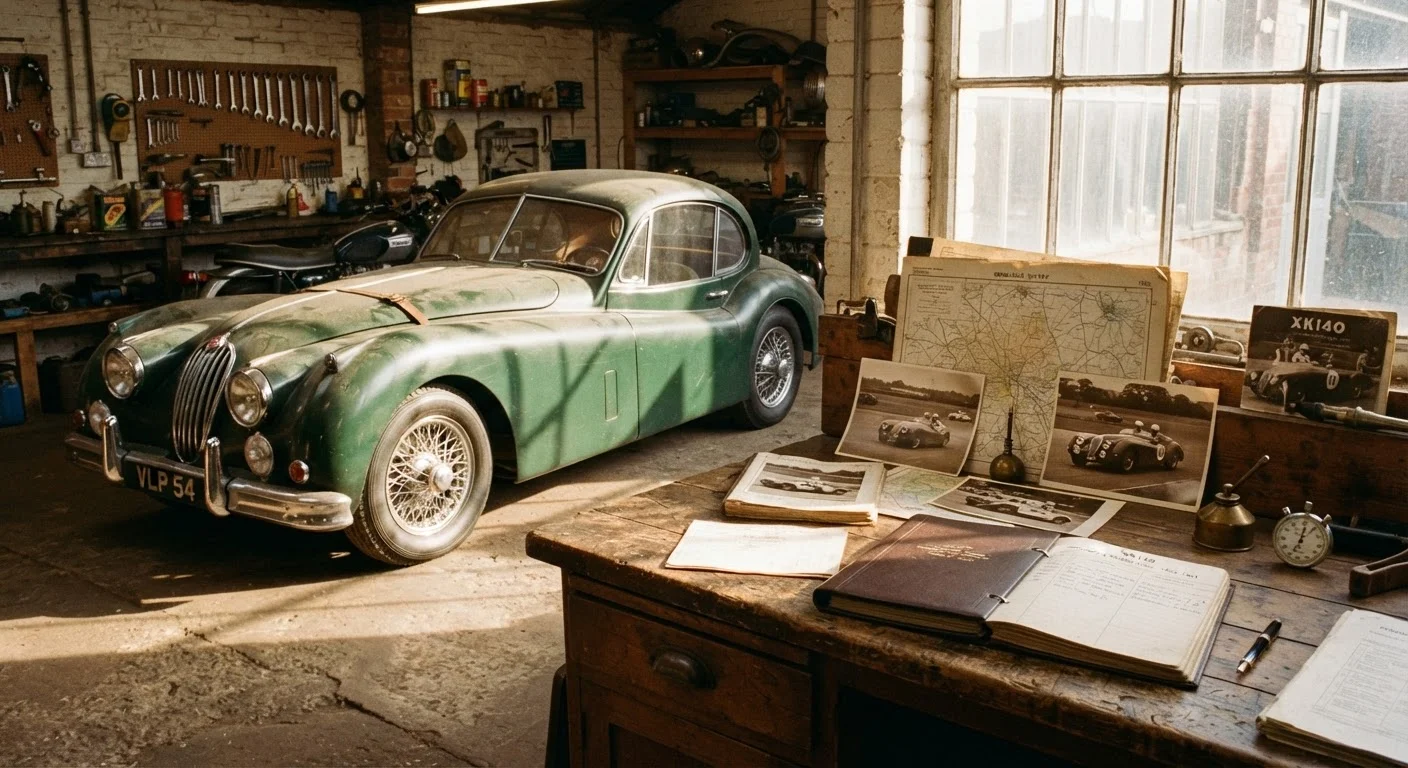
- Photographs and correspondence: Period photos showing the car in original condition, or letters from former owners, can fill gaps that formal documents cannot.
Vehicle history reports offer a useful baseline, but they are rarely sufficient on their own for classic car provenance - their coverage of pre-digital ownership is limited.
How to Preserve and Pass Along What You've Found
Gathering documentation is only half the work. How collectors store, organize, and eventually transfer that history matters just as much.
Physical documents should be stored in acid-free sleeves or folders, away from moisture and direct sunlight. Digital scans serve as backups - not replacements - and should be stored on multiple devices or cloud services. When a vehicle is sold, handing over a well-organized history file not only strengthens the transaction but ensures the next custodian can continue the record rather than start over.
Collectors entering the hobby for the first time often underestimate how much this ongoing stewardship matters. The realities of classic car ownership extend well beyond the garage - documentation is a long-term commitment, not a one-time task.
Understanding how provenance intersects with restoration philosophy also informs how records should be framed. A vehicle with an unrestored, numbers-matching drivetrain carries a different narrative than one that's been sympathetically rebuilt. See how collectors weigh originality against condition for more on that distinction.
Create a Dedicated History File for Your Vehicle
Use a single binder or folder - physical and digital - to consolidate every document related to your car: titles, build sheet, receipts, photos, correspondence, and appraisals. Label everything with dates and context. When you eventually sell the vehicle, this file transfers with it and adds immediate credibility to your asking price and representation.
When Documentation Is Incomplete or Contested
Even significant classics sometimes arrive with thin or fragmented paper trails. A gap in documentation doesn't automatically disqualify a vehicle, but it does change how it must be evaluated. Independent verification becomes essential - and more burdensome.
In these situations, collectors often pursue secondary corroboration: consulting the relevant marque registry, contacting previous owners directly, commissioning a professional appraisal, or engaging a specialist historian. Some cars carry oral histories passed down through enthusiast communities that, while not legally binding, add meaningful context.
For buyers, incomplete provenance should factor into any pre-purchase inspection and verification process. A car claimed to be numbers-matching without supporting documentation should be treated as unverified until confirmed by independent means.
Ultimately, the discipline of tracing and preserving a vehicle's history reflects the broader values of the classic car community: respect for authenticity, commitment to accuracy, and a belief that these machines deserve to be understood as the artifacts they are - not just as vehicles, but as records of automotive culture.