
Key Takeaways
Option A
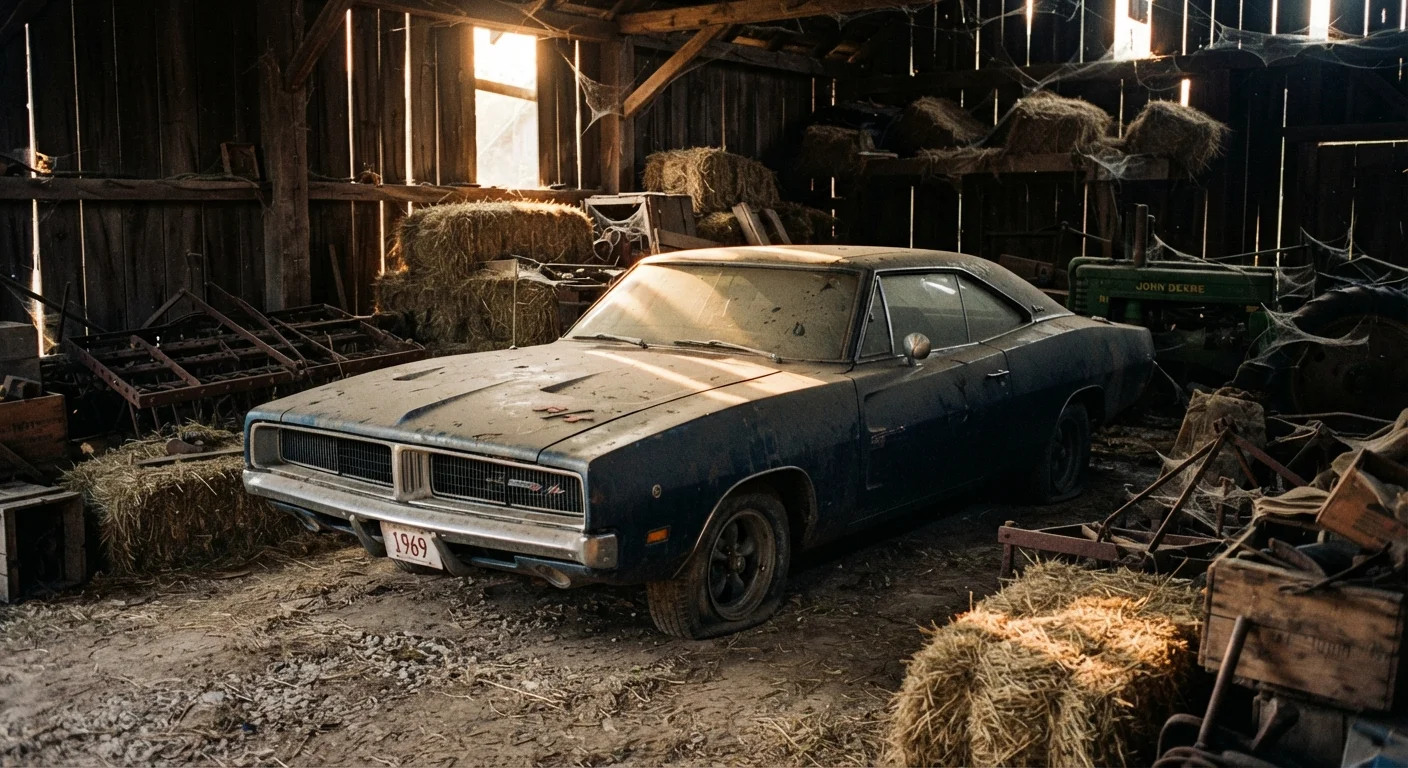
Barn Find
The unrestored survivor prized for its untouched authenticity.
Best for: Collectors who prioritize documented originality, patina, and historical integrity above cosmetic perfection.
Option B
Restored Classic
The meticulously rebuilt vehicle brought back to show-quality condition.
Best for: Enthusiasts who want a visually stunning, mechanically sound vehicle suitable for shows and active driving.
If you value historical authenticity and original factory materials above all else
Barn Find
An untouched survivor with verifiable provenance represents history that cannot be recreated once lost. Originality, once destroyed, is permanent.
If you plan to show the car competitively in traditional judged events
Restored Classic
Most traditional show judging criteria reward panel fit, paint quality, and mechanical correctness - areas where a full restoration has a structural advantage.
If you want to drive and enjoy the vehicle regularly
Restored Classic
A properly restored vehicle is typically more mechanically reliable and safer for road use than a decades-dormant barn find in unassessed condition.
If you're focused on long-term collectibility and rarity
Barn Find
As the pool of unrestored survivors shrinks, well-documented barn finds with intact original components are becoming increasingly scarce and sought-after.
If you're new to collecting and still developing your preferences
Restored Classic
A restored vehicle removes the uncertainty of hidden damage or parts sourcing challenges that can overwhelm newcomers to the hobby.
What Collectors Actually Mean by 'Originality'
In classic car collecting, originality refers to how much of a vehicle retains its factory-issued components - engine, transmission, body panels, interior trim, and even factory-applied finishes. A car described as numbers matching means its major drivetrain components carry VIN-stamped or date-coded numbers consistent with the vehicle's production records. This is distinct from mere appearance: a car can look original while concealing replacement parts underneath.
Barn finds - vehicles recovered after years or decades of dormancy in storage - are compelling precisely because nothing has been altered. The original factory paint, often oxidized and worn, still lies beneath the dust. The rubber seals may have dried and cracked, but they are the seals installed when the car left the factory floor. For a subset of collectors and appraisers, that continuity of material history is irreplaceable.
Understanding the full vocabulary around these distinctions matters. The Language of Classic Cars glossary breaks down terms like 'survivor,' 'unrestored original,' and 'frame-off restoration' - language you'll encounter constantly when evaluating either type of vehicle.
| Criterion | Barn Find | Restored Classic |
|---|---|---|
| Originality | Factory-original components intact | Varies; may include replacement parts |
| Cosmetic Condition | Aged patina, surface wear | Typically show-quality finish |
| Mechanical Reliability | Unknown until assessed | Generally higher if documented |
| Reversibility | Can still be restored later | Original patina permanently lost |
| Show Class Eligibility | Survivor/unrestored classes | Traditional judged classes |
| Collector Appeal | Growing among originality purists | Broad appeal across collector types |
| Documentation Importance | Critical to value | Restoration records essential |
| Road Usability | Requires assessment first | Generally road-ready |
The Case for the Barn Find: Patina, Provenance, and Scarcity
The collector market's appreciation for unrestored vehicles has grown measurably over the past two decades. Major auction houses now recognize dedicated classes for original, unrestored survivors, and some well-documented barn finds have commanded prices that surprised observers accustomed to rewarding pristine restorations.
The argument for the barn find rests on three pillars. First, scarcity: every year, more original examples are either restored, parted out, or scrapped, shrinking the surviving pool. Second, provenance: a vehicle with a traceable ownership history, factory documentation, and intact original components tells a story that no restoration can replicate. Third, patina - the weathered finish, honest wear, and aged character of an untouched vehicle - has become a cultural value in its own right rather than a defect to be corrected.
Why patina has become one of the most debated words in car collecting explores how this aesthetic and philosophical shift has reshaped how enthusiasts and appraisers think about condition. For some collectors, a car with genuine patina carries more credibility than one wearing new paint - even excellent new paint.
Provenance research is inseparable from the barn find's value proposition. How collectors document and verify a classic car's history outlines the tools and methods used to establish that a vehicle's claimed history holds up.
~30%
Proportion of major auctions with unrestored survivor classes
Concours and auction venues including Pebble Beach have formalized 'preservation class' categories, reflecting growing institutional recognition of unrestored originals.
Rarely 1:1
Restoration cost recovery in resale
Automotive appraisers broadly note that full professional restorations seldom return their cost in resale price - the investment is in enjoyment and quality, not financial return.
The Case for the Restored Classic: Condition, Usability, and Show Performance
A high-quality restoration brings a vehicle back to - or in some interpretations, beyond - its factory specification. Done properly, it addresses structural integrity, mechanical safety, and cosmetic correctness simultaneously. For collectors who intend to drive their vehicles, participate in traditional judged shows, or simply own something visually spectacular, a restored classic offers advantages a barn find often cannot match without significant investment.
Traditional car show judging, particularly at the regional and national level, still rewards panel alignment, paint depth, engine bay presentation, and interior quality - criteria that favor restorations. How classic car shows are judged and how entrants prepare explains how scoring systems work across different event tiers, from local cruises to elite concours competitions.
The mechanical reliability argument is also practical, not just aesthetic. A barn find's dormant fuel system, dried gaskets, and aged brake components represent unknowns that require assessment and often replacement before safe road use. A competently restored vehicle removes most of that uncertainty - though buyers should always request documentation of the restoration work performed and parts used.
It's also worth noting that restoration philosophy isn't monolithic. Restomod vs. factory-original restoration examines how even within the world of restored vehicles, collectors disagree sharply about whether modernizing mechanicals compromises authenticity.
Restoration Quality Varies Widely
Not all restored classics are equal. A 'driver-quality' restoration prioritizes function and basic cosmetics, while a 'concours-quality' restoration demands period-correct parts, exact color codes, and meticulous documentation. When evaluating a restored vehicle, always request records of the work performed, parts sourced, and any deviations from factory specification. A car described simply as 'restored' tells you very little without that supporting documentation.
How Appraisers and the Market Weigh the Two
From an appraisal standpoint, neither category automatically outranks the other. Value depends on the specific vehicle, its rarity, documentation quality, and the current state of collector demand for that model. A numbers-matching, well-documented barn find of a low-production muscle car may appraise higher than a restored example of the same model - or it may not, depending on the restoration's quality and period-correctness.
One near-universal principle among professional appraisers: an irreversible decision costs more than a reversible one. A barn find can be restored; a restored vehicle cannot be un-restored. Collectors who acquire an original survivor and then commission a full restoration have permanently eliminated what made the vehicle distinctive to one segment of the market. This is why many knowledgeable collectors advocate thorough assessment before any cosmetic work begins.
For anyone newer to the hobby, understanding these dynamics before acquiring a vehicle is essential. What new classic car enthusiasts should understand first offers grounded guidance on managing expectations around costs, condition assessments, and the realities of collecting. Similarly, common assumptions about classic car ownership that turn out to be wrong addresses how financial and practical misconceptions can affect decisions at the point of purchase.
Whichever path a collector pursues, appropriate insurance coverage matters - and classic vehicle policies differ meaningfully from standard auto coverage. How classic vehicle insurance differs from standard auto coverage explains agreed value policies and the usage considerations relevant to both barn finds and restored vehicles.