Key Takeaways
Patina (in car collecting)
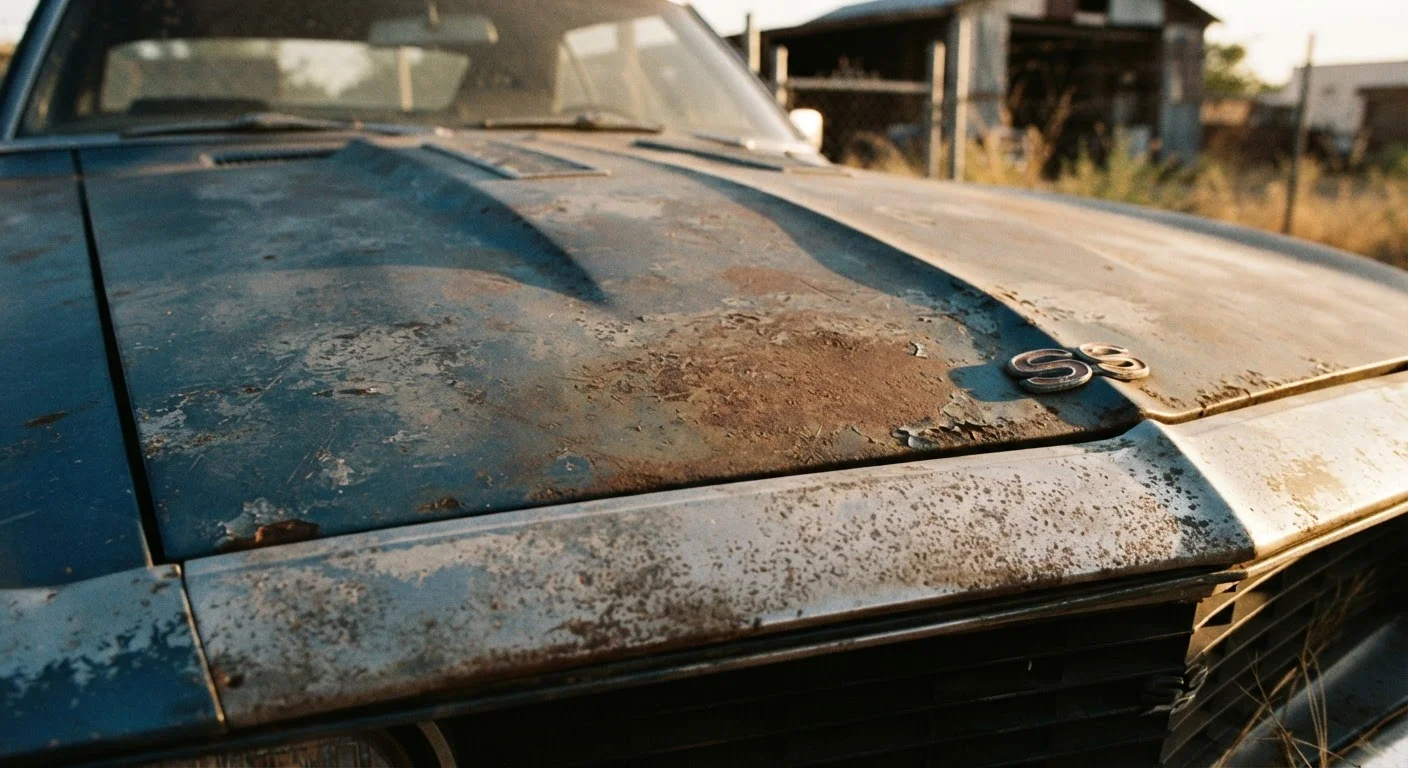
In the context of classic car collecting, patina refers to the natural aging of a vehicle's surface - faded paint, surface oxidation, minor rust, worn upholstery, and other signs of authentic use over decades. Collectors prize it as visual evidence of a car's unaltered history. Unlike damage, patina is the result of time itself, not neglect or collision.
Appraisers often distinguish between 'honest patina' - consistent, stable surface aging - and deterioration that compromises structural integrity or panel metal. Only the former typically adds or preserves collector value.
A Single Word Carrying a Lot of Weight
Few words in the classic car hobby generate as much argument as patina. Walk a show field and you'll hear it used approvingly by one collector and dismissively by the next. To some, a survivor car wearing its original faded paint is a rolling artifact - more honest than any restoration could be. To others, the same car looks like something that should have seen a body shop decades ago.
The disagreement isn't merely aesthetic. It touches on fundamental questions about what collecting is actually for: preserving history as it happened, or returning cars to an idealized factory standard? Understanding why patina divides people requires understanding what the word actually means - and what it doesn't. To understand the broader context around how vehicles earn collector status in the first place, see what makes a car 'classic'.
Preservation Class
Category now offered at major U.S. concours events
Established by several national marque clubs and prominent shows to formally recognize unrestored originals as distinct from restored competition vehicles.
1 of a kind
Original factory finish - once removed, it cannot be recovered
Restoration professionals widely note that refinishing eliminates irreplaceable factory application data, texture, and material composition from the vehicle's surface.
40+ years
Typical age range where stable patina is most valued
Collector consensus and auction results generally reflect stronger interest in original surfaces on vehicles old enough that factory finishes are historically significant.
What Counts as Patina - and What Doesn't
The word originates in art and antiques, where it describes the surface changes that accumulate on metal, wood, or paint over long periods. In car collecting, it has migrated to mean the visible signs of a vehicle's authentic age: original paint that has oxidized or faded, chrome that has dulled, leather that has cracked along natural stress lines, rubber seals that have hardened.
What separates honest patina from simple neglect is stability and consistency. A car that sat in a dry barn for 40 years may have chalky paint and dusty chrome, but the underlying metal is sound and the surface tells a coherent story. A car left outside through decades of freeze-thaw cycles, with rust perforation and bubbling from moisture intrusion, is not wearing patina - it's showing damage.
The line can blur, which is exactly why appraisers and judges spend real effort distinguishing between the two. Barn finds and restored classics each carry different assumptions about what condition means and what buyers are actually paying for.
Stabilizing Patina Without Altering It
If you own a patinated original and want to preserve the surface as-is, consult a professional detailer experienced with vintage vehicles before applying any product. Some modern clear sealants can lock in aged paint and slow further oxidation without changing the appearance. Avoid aggressive machine polishing, which removes the oxidized layer and can permanently alter the surface character collectors value.
Why the Collector Community Is Divided
The traditional standard in competitive showing - the concours d'élégance format - rewards vehicles judged against factory specifications. Points are deducted for anything that deviates from how the car left the assembly line, including aged paint. Under that framework, patina is essentially a defect.
But the hobby has shifted. Preservation classes at major shows, including those sanctioned by national clubs, now celebrate unrestored originals on their own terms. Judges in these categories specifically reward an original, undisturbed surface over a fresh respray, even a technically excellent one. The reasoning: once original paint is gone, it cannot be recovered. A world-class restoration may look better, but it cannot tell you what the car's factory finish actually looked like after real-world use.
That philosophical split - authenticity versus idealization - runs through almost every debate about patina. It also maps onto broader differences in how collector cultures approach the hobby. European and American collector communities tend to weight these values differently, with European markets often placing stronger emphasis on documented originality.
“The moment you repaint a car, you lose something that can never be recovered. The original finish is a primary document of automotive history - not a flaw to be corrected.”
— Ken Gross, Automotive curator and longtime concours judge
Provenance, Documentation, and Why They Amplify Value
Patina alone rarely makes a car valuable. What elevates a worn original is context - the story behind why it looks the way it does. A one-owner car with a documented service history, original window sticker, and build sheet carries its aged surface as evidence, not mystery. The patina becomes part of the provenance rather than a question mark about the vehicle's past.
Without documentation, buyers and appraisers are left guessing. Was the car stored carefully or poorly maintained? Is the surface aging consistent with the claimed mileage and ownership history? Gaps in documentation introduce doubt that can suppress value regardless of how attractive the surface wear appears. Provenance research and documentation has become a discipline of its own precisely because the story behind a car shapes how its condition is interpreted.
Collectors weighing whether to preserve or restore a patinated vehicle face a genuinely complex decision. The restomod vs. factory-original restoration debate adds another layer: some owners update mechanicals while preserving original bodywork, trying to thread the needle between usability and authenticity.