
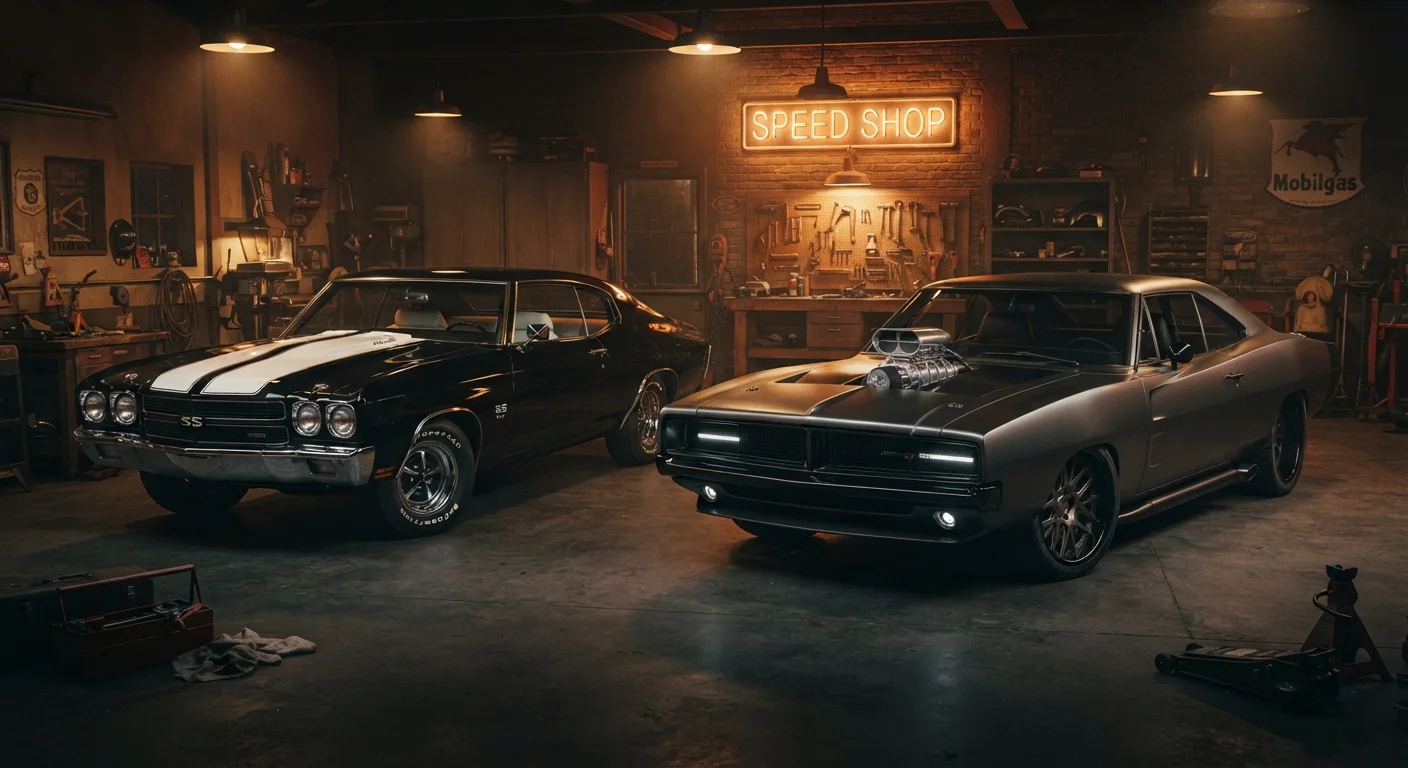
Key Takeaways
Option A
Restomod
The modernized classic - vintage soul, contemporary capability.
Best for: Enthusiasts who want to drive their classic regularly and enjoy modern performance, comfort, and reliability without sacrificing iconic styling.
Option B
Factory-Original Restoration
The time capsule - authenticity, provenance, and historical integrity above all.
Best for: Collectors and historians who prize period-correct accuracy, concours competition eligibility, and long-term investment value.
If you plan to drive your classic regularly on public roads
Restomod
Modern brakes, fuel injection, and updated suspension make daily or weekend driving significantly safer and more reliable than period mechanicals.
If you're building for concours judging or show competition
Factory-Original Restoration
Concours events reward period-correct accuracy; modified vehicles are typically ineligible or scored lower in traditional judging classes.
If long-term collector value and investment potential matter most
Factory-Original Restoration
Documented, numbers-matching original restorations have historically commanded stronger premiums at major collector auctions.
If you want lower ongoing maintenance costs and easier parts sourcing
Restomod
Modern drivetrain components are far easier and less expensive to service than discontinued factory parts, which can require custom fabrication.
If preserving a vehicle's historical and cultural story is your priority
Factory-Original Restoration
Originality protects the vehicle's provenance - its connection to a specific era, factory, or historical moment that a modification permanently alters.
Two Philosophies, One Passion
At the heart of classic car culture sits a tension that has sparked debates at swap meets, car shows, and shop benches for decades: should a vintage vehicle be restored to the exact condition it left the factory, or should it be reimagined with modern mechanicals beneath its period-correct skin? These two camps - purist restorers and restomod builders - share a deep appreciation for classic automobiles but disagree fundamentally on what it means to honor them.
A restomod (short for restored and modified) keeps the classic body, interior aesthetic, and overall silhouette intact while replacing underpinnings - engine, transmission, brakes, suspension, and sometimes climate systems - with modern equivalents. The goal is a car that looks vintage but drives like a contemporary vehicle. A factory-original restoration, by contrast, aims to return every component to its as-built, period-correct specification - the same engine codes, the same paint formulas, the same fasteners that left the assembly line decades ago.
Understanding the tradeoffs requires looking at what each philosophy demands - and what it rewards. As discussed in our look at common misconceptions about classic car ownership, many newcomers underestimate how significantly these choices affect cost, usability, and community reception.
What Each Approach Actually Involves
A serious factory-original restoration is painstaking work. Builders must source period-correct components - sometimes tracking down date-coded parts to match the car's original build sheet. Paint codes must be verified, trim finishes authenticated, and engine stamps decoded. The appeal of tracing and documenting a classic car's history becomes immediately practical here: a car with complete build records, broadcast sheets, and Protect-O-Plate documentation is far easier - and more rewarding - to restore accurately.
Restomods involve an entirely different kind of engineering discipline. Builders must integrate modern components into chassis not originally designed for them - fitting larger disc brakes, rerouting fuel lines for electronic injection, or shoehorning a modern overdrive transmission. Done well, the result is seamless and dramatically more capable. Done poorly, it can compromise both the vehicle's integrity and its safety.
| Criterion | Restomod | Factory-Original Restoration |
|---|---|---|
| Primary goal | Modern performance in classic body | Period-correct historical accuracy |
| Driveability | High - modern mechanicals | Variable - period limitations apply |
| Parts availability | Generally easier, modern sourcing | Can be difficult; NOS or custom fabrication |
| Concours eligibility | Typically ineligible in purist classes | Fully eligible when correctly documented |
| Collector market appeal | Niche but growing enthusiast demand | Broadly recognized; numbers-matching premium |
| Reversibility | Modifications often permanent | Preserves or restores original configuration |
| Typical ongoing maintenance cost | Lower - modern service intervals | Higher - sourcing vintage parts |
The distinction also plays out differently across the Atlantic. European and American collector communities approach modification and originality with different cultural assumptions - European clubs often hold stricter authenticity standards, while the American hot rod tradition has long embraced creative modification as part of the craft.
Value, Usability, and the Originality Question
For collectors focused on long-term value, factory-original vehicles have historically performed well at major auction houses - particularly when documented with matching numbers (meaning the engine, transmission, and body all carry their original, matching factory codes). The rarer the original specification - a high-output engine option, a specific color combination, or a factory performance package - the more that authenticity matters to the market.
Numbers-matching
Key factor in original restoration value
Auction records consistently show that vehicles with matching factory engine and body codes achieve significantly higher sale prices than those with replaced drivetrain components.
~40%
Classic car owners who drive regularly
Surveys from major classic car organizations suggest a large share of collectors drive their vehicles more than occasionally, making driveability a practical - not just philosophical - concern.
Restomods occupy a different and sometimes awkward position in the collector market. Their value is harder to establish through traditional appraisal methods because it depends heavily on the quality of the builder's work, the reputation of the shop involved, and the specific components used. That said, high-quality, thoughtfully executed restomods have developed their own enthusiast following and can command strong prices among buyers who prioritize driveability over purity.
The originality debate also intersects with the growing conversation around patina and unrestored classics. As explored in our piece on why patina has become one of the most debated words in car collecting, some collectors now argue that an honest, unrestored survivor car carries more integrity than either a restomod or a full restoration - a view that complicates the binary framing further. Similarly, the barn find versus restored classic debate reveals just how much weight different enthusiasts place on originality versus condition.
Neither Approach Is Permanent in Culture
It's worth noting that both restomod and purist restoration communities have evolved considerably over the decades. What was considered radical modification in the 1970s is now an accepted craft form with its own judging standards and dedicated shows. Meanwhile, the definition of 'correct' in a factory restoration continues to be refined as research tools and documentation resources improve. Both philosophies are living traditions, not fixed dogmas.