

| Number of standard cab types | 3 (Regular, Extended, Crew) |
| Short bed approximate length | 5.5-5.8 feet (Varies by manufacturer) |
| Long bed approximate length | ~8 feet (Varies by manufacturer) |
| Most common U.S. configuration | Crew cab with short bed (Reflects current full-size truck sales trends) |
| Standard bed approximate length | 6.5-6.6 feet (Varies by manufacturer) |
| Bed needed for 8-ft lumber flat | Long bed (~8 feet) |
Why Pickup Truck Configurations Matter
Pickup trucks are among the most purchased vehicles in the United States, yet their spec sheets can read like a foreign language. Terms like regular cab, crew cab, short bed, and long bed don't always come with explanations at the dealership. Understanding these configurations before you shop - or before you commit to a truck that doesn't fit your actual life - can save you real money and frustration.
A pickup's configuration is essentially the combination of its cab size (passenger compartment) and bed length (cargo area). These two variables define how the truck functions for work, recreation, and daily driving. Neither is universally better; the right combination depends on what you haul, who rides with you, and where you park.
For a broader look at how trucks compare to other vehicle types, see Sedan, SUV, Truck, or Van: Understanding the Core Vehicle Categories.
| Number of standard cab types | 3 (Regular, Extended, Crew) |
| Short bed approximate length | 5.5-5.8 feet (Varies by manufacturer) |
| Long bed approximate length | ~8 feet (Varies by manufacturer) |
| Most common U.S. configuration | Crew cab with short bed (Reflects current full-size truck sales trends) |
| Standard bed approximate length | 6.5-6.6 feet (Varies by manufacturer) |
| Bed needed for 8-ft lumber flat | Long bed (~8 feet) |
Cab Sizes: From Regular to Crew
Cab size determines how many people the truck can carry and how comfortably. There are three standard configurations across most domestic full-size trucks:
- Regular Cab (Single Cab): One row of seating, typically for two to three passengers. The smallest and lightest cab option. Maximizes bed length relative to overall truck length and often costs less than extended options. A practical choice for solo workers and fleets.
- Extended Cab (Double Cab / SuperCab / King Cab): Adds a small second row behind the front seats, accessed via smaller rear-hinged or forward-hinged doors. Rear seating is limited - usually adequate for occasional passengers or extra storage, but not comfortable for adults on long trips. Names vary by manufacturer.
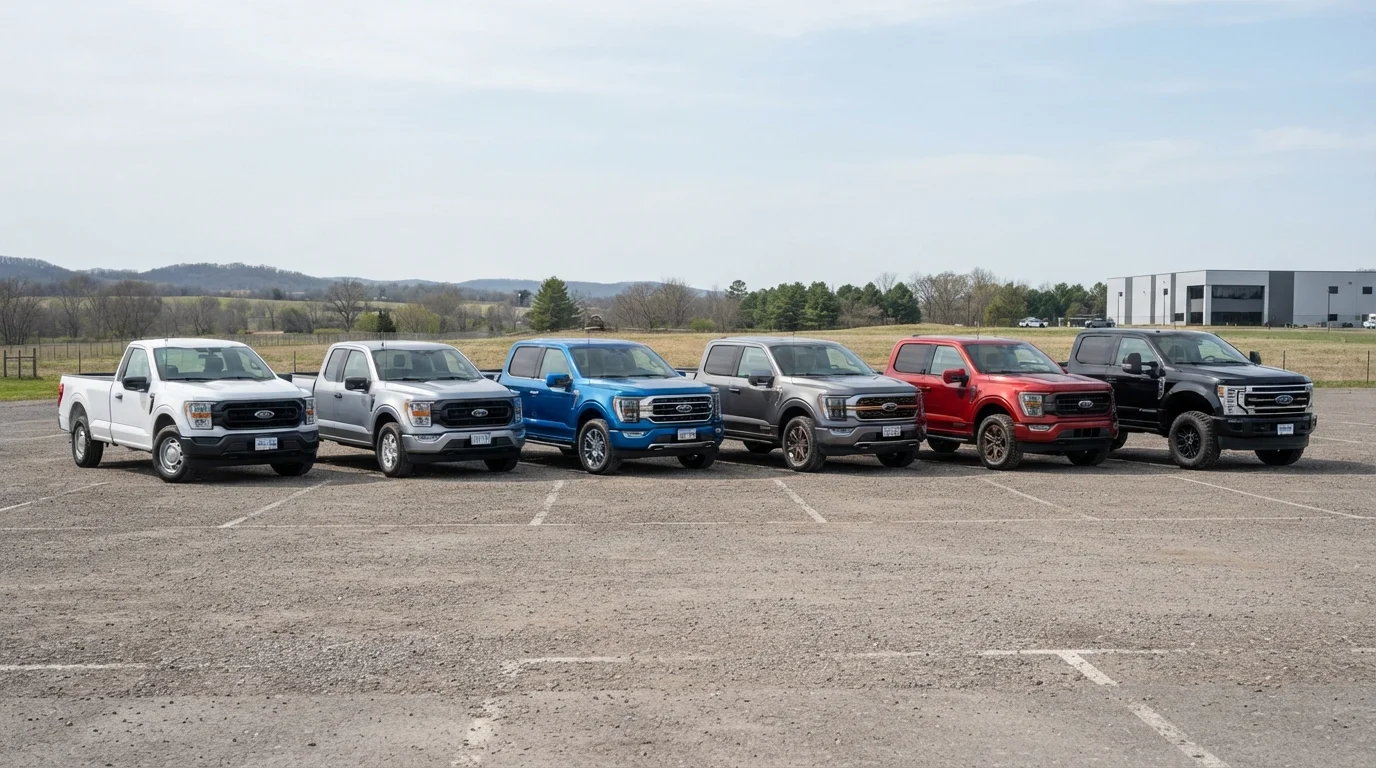
- Crew Cab (Double Cab / CrewMax): Full-size four-door layout with a genuine rear seat capable of accommodating adult passengers in reasonable comfort. The most popular configuration in the current market, particularly among buyers who use the truck as a family vehicle and a work tool. The tradeoff is a shorter standard bed length to keep overall vehicle dimensions manageable.
Some manufacturers also offer a Mega Cab or similar extra-large rear cabin, prioritizing passenger space above all else, though these are less common.
Regular Cab
A single-row cab with one set of doors, seating two to three passengers. It is the simplest, lightest cab configuration and is often paired with a longer bed.
Extended Cab
A cab that adds a small second-row seating area behind the main row, accessed by smaller supplemental doors. Rear space is limited compared to a crew cab. Also marketed as SuperCab, King Cab, or Access Cab depending on the manufacturer.
Crew Cab
A four-door cab with a full-size rear seating row capable of accommodating adult passengers. The most popular configuration sold in the U.S. market today.
Short Bed
A pickup cargo bed approximately 5.5 to 5.8 feet long. Common on crew cab trucks; easier to maneuver but limits the length of materials that can be carried flat.
Long Bed
A pickup cargo bed approximately 8 feet long. Accommodates full-sheet building materials and certain towing configurations, but increases overall vehicle length.
Fifth-Wheel Hitch
A heavy-duty towing coupling mounted in the truck bed, used to pull large trailers. Some fifth-wheel setups require a long bed to maintain adequate clearance between the trailer and the cab.
Bed Lengths: Short, Standard, and Long
The cargo bed is the defining feature of any pickup, and its length has direct practical consequences. Bed sizes are typically described in three broad categories, though exact measurements vary by manufacturer and model year:
- Short Bed (roughly 5.5-5.8 feet): Common on crew cab configurations. Easier to maneuver in parking lots and urban environments. Limits the length of materials you can carry flat - an 8-foot sheet of plywood, for example, will not fit without hanging over the tailgate.
- Standard Bed (roughly 6.5-6.6 feet): The middle-ground option available on extended and some crew cab trucks. Handles most consumer hauling tasks and is compatible with many commercially available bed-length accessories.
- Long Bed (roughly 8 feet): Pairs most often with regular or extended cabs. Accommodates full 8-foot lumber and plywood sheets flat. Required by some fifth-wheel towing setups that need adequate pin box clearance. The tradeoff is overall truck length, which affects garaging and parking.
~8 ft
Minimum bed length for carrying standard plywood flat
An 8-foot sheet of plywood fits only in a long bed; shorter beds require the tailgate down, leaving material unsupported.
3
Standard bed length categories across the market
Short, standard, and long bed options cover the range of consumer and light commercial pickup needs.
If you frequently haul long materials or tow with a fifth-wheel hitch, bed length isn't a preference - it's a functional requirement. For a practical framework on matching vehicle size to your real habits, see Sizing Up a Vehicle for Your Actual Life.
How Cab and Bed Combine: Common Configurations
Manufacturers don't offer every possible cab-and-bed pairing. Here are the combinations you're most likely to encounter:
| Cab Type | Common Bed Pairings | Typical Use Case |
|---|---|---|
| Regular Cab | Standard, Long | Work trucks, fleet vehicles, solo hauling |
| Extended Cab | Short, Standard | Occasional passengers, mixed work/personal |
| Crew Cab | Short, Standard | Family use, daily driving, lifestyle truck |
Crew cab with a short bed is the dominant configuration sold today, reflecting a market trend toward trucks used primarily as family vehicles rather than pure work tools. The long-bed regular cab, once a workhorse standard, is increasingly difficult to find on dealer lots but remains available to order.
Understanding these trade-offs also connects to how trucks fit into the broader commercial vehicle landscape - see A Field Guide to Commercial Vehicle Classes for context on duty ratings and how they interact with configuration choices.
For help thinking through which vehicle type fits your daily reality, Vehicle Types by Use Case offers a practical decision framework.
Overall Length Affects More Than Parking
A crew cab paired with a long bed can stretch to over 22 feet in overall length on some full-size trucks. This affects not just parking and garaging, but also towing maneuverability and turning radius on job sites. If you're considering a long-bed crew cab, it's worth confirming the truck fits your regular routes and storage space before committing.