

| Total Classes | 8 (Class 1 through Class 8) (Federal Highway Administration) |
| Governing Metric | Gross Vehicle Weight Rating (GVWR) |
| CDL Threshold | Required for most vehicles over 26,000 lbs GVWR (Federal Motor Carrier Safety Administration) |
| Max Interstate Weight (Class 8) | 80,000 lbs gross combination weight (Federal Highway Administration) |
| Light-Duty Range | Classes 1-3 (up to 14,000 lbs GVWR) |
| Heavy-Duty Starts At | Class 7 (26,001 lbs GVWR) |
Why Vehicle Classes Exist
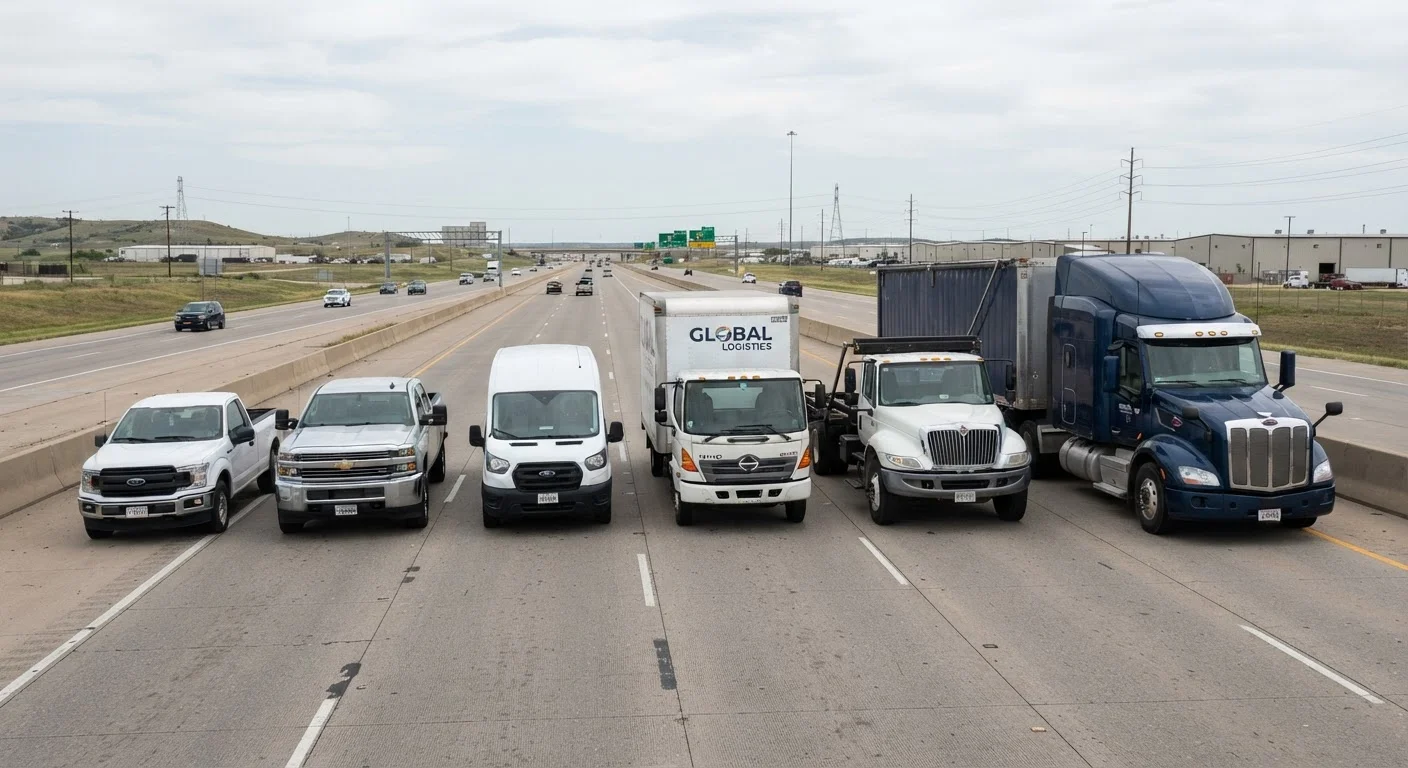
The United States uses a standardized eight-class system to categorize commercial vehicles by their Gross Vehicle Weight Rating (GVWR) - the maximum loaded weight a vehicle is designed to handle safely. These classes were established by the Federal Highway Administration and are used across licensing, emissions regulation, insurance, and transportation policy.
Understanding the classes matters whether you're shopping for a work truck, comparing fleet options, or simply trying to decode what "heavy-duty" actually means at a dealership. The system also intersects with CDL (Commercial Driver's License) requirements, fuel economy standards, and highway weight limits. For a broader look at how vehicle types are categorized beyond weight class, see The Full Spectrum of Motor Vehicle Types in the United States.
| Total Classes | 8 (Class 1 through Class 8) (Federal Highway Administration) |
| Governing Metric | Gross Vehicle Weight Rating (GVWR) |
| CDL Threshold | Required for most vehicles over 26,000 lbs GVWR (Federal Motor Carrier Safety Administration) |
| Max Interstate Weight (Class 8) | 80,000 lbs gross combination weight (Federal Highway Administration) |
| Light-Duty Range | Classes 1-3 (up to 14,000 lbs GVWR) |
| Heavy-Duty Starts At | Class 7 (26,001 lbs GVWR) |
Classes 1-3: Light-Duty Vehicles
Light-duty vehicles make up the bulk of what consumers encounter on U.S. roads, including most personal-use trucks and vans.
- Class 1 (up to 6,000 lbs GVWR): Small pickups, compact vans, and passenger vehicles with a commercial registration. Think half-ton pickups at their lightest trim.
- Class 2 (6,001-10,000 lbs GVWR): Standard half-ton and most three-quarter-ton pickups fall here, along with full-size passenger vans. No CDL is required for personal or commercial operation.
- Class 3 (10,001-14,000 lbs GVWR): Heavy half-ton trucks and some one-ton pickups. Larger cargo vans and walk-in delivery vehicles may also sit in Class 3.
No commercial driver's license is required for Classes 1-3, though some states impose additional weight restrictions on certain road types. For a deeper look at how pickup configurations affect GVWR ratings, see Pickup Truck Configurations: Cab Sizes, Bed Lengths, and What They Mean.
GVWR
Gross Vehicle Weight Rating - the maximum total weight a vehicle is rated to carry, including its own weight, passengers, cargo, and fuel. Set by the manufacturer and used to assign vehicle class.
CDL
Commercial Driver's License - a federally standardized license required to operate commercial motor vehicles above certain weight or passenger thresholds in the United States.
Payload Rating
The maximum weight of cargo and passengers a vehicle can carry, calculated as GVWR minus the vehicle's curb weight. Distinct from GVWR and towing capacity.
Straight Truck
A commercial truck in which the cab and cargo body are mounted on the same chassis, as opposed to a tractor-trailer combination. Common in Classes 5-7.
Tractor-Trailer
A Class 8 combination vehicle consisting of a powered tractor unit and a separate semi-trailer connected by a fifth-wheel hitch. Also called a semi-truck or 18-wheeler.
Classes 4-6: Medium-Duty Vehicles
Medium-duty trucks occupy the workhorse middle ground - heavier than consumer trucks but not yet requiring the full regulatory framework of semi-trucks.
- Class 4 (14,001-16,000 lbs GVWR): City delivery trucks, larger box trucks, and some ambulances. Common in last-mile logistics.
- Class 5 (16,001-19,500 lbs GVWR): Bucket trucks, larger cargo vans, and some tow trucks. Medium-duty commercial chassis frequently used by utilities.
- Class 6 (19,501-26,000 lbs GVWR): Single-axle straight trucks, school buses, and beverage delivery trucks. This is the upper boundary below CDL requirements for many operators.
A CDL is generally not required for vehicles under 26,001 lbs GVWR unless the vehicle is designed to transport hazardous materials or 16 or more passengers. Always verify with your state's DMV, as requirements vary.
CDL Requirements Vary by State and Use
Federal rules set the floor for CDL requirements, but states can impose additional restrictions. Transporting hazardous materials or operating vehicles designed for 16 or more passengers triggers CDL requirements regardless of GVWR. Always verify current requirements with your state's Department of Motor Vehicles and, for interstate commerce, the Federal Motor Carrier Safety Administration.
Classes 7-8: Heavy-Duty Vehicles
Heavy-duty commercial vehicles are subject to the most rigorous federal safety, emissions, and licensing standards. Operating them almost always requires a CDL.
- Class 7 (26,001-33,000 lbs GVWR): City transit buses, furniture delivery trucks, and large refuse trucks. These vehicles operate under strict emissions rules set by the EPA.
- Class 8 (33,001 lbs GVWR and above): The heaviest commercial category, encompassing semi-trucks (tractor-trailers), tanker trucks, and heavy dump trucks. Federal interstate highway weight limits cap most Class 8 combinations at 80,000 lbs gross weight.
Class 8 vehicles are the backbone of American freight - they account for a disproportionate share of commercial vehicle fuel consumption and emissions, which is why they are a primary focus of federal fuel efficiency and zero-emission mandates. It's worth noting that the letter-based classification used for motorhomes (Class A, B, C) is an entirely separate system; see Class A, B, and C Motorhomes: What the Letter Classifications Actually Mean to avoid confusion between the two systems.
Class 8
Largest federally recognized commercial vehicle category
Class 8 encompasses semi-trucks, tankers, and heavy dump trucks with a GVWR above 33,000 lbs, per FHWA classification.
26,001 lbs
GVWR threshold where CDL requirements typically begin
The Federal Motor Carrier Safety Administration sets this threshold for most commercial vehicles not carrying hazardous materials or passengers.
80,000 lbs
Federal gross weight ceiling for most Class 8 combos on interstates
Per Federal Highway Administration regulations governing interstate highway weight limits for tractor-trailer combinations.
Practical Takeaways for Everyday Decisions
For most consumers, the class system becomes relevant in three situations: selecting a work truck, understanding towing limits, and navigating licensing requirements.
When choosing a truck for payload or towing, GVWR is just one figure to watch. Payload rating, tongue weight capacity, and fifth-wheel ratings all interact with the class designation. Vehicle Types by Use Case can help you match load needs to the right category before you start comparing specific vehicles.
If you own or are considering an RV, weight ratings apply there too. RV Weight Ratings Explained: GVWR, GAWR, and Why They Matter for Safety covers the specific terms used in the RV world, which draw on the same underlying federal framework.
For a general orientation to vehicle body styles outside the commercial context, Sedan, SUV, Truck, or Van: Understanding the Core Vehicle Categories provides a clear starting point.
Federal Highway Administration Vehicle Classification Guide
The FHWA publishes the official vehicle classification framework used across U.S. transportation policy, including the eight-class commercial vehicle system described in this article.
FMCSA Commercial Driver's License Information
The Federal Motor Carrier Safety Administration provides current CDL class requirements, endorsement types, and state-by-state licensing resources for commercial vehicle operators.
EPA SmartWay Program Overview
The EPA's SmartWay program tracks fuel efficiency and emissions standards specifically for Classes 7 and 8 trucks, useful for fleet managers and those evaluating commercial vehicle environmental impact.