

Key Takeaways
Motorhome Class Designations
The letters A, B, and C are industry shorthand for three distinct categories of self-propelled recreational vehicles (RVs). Each class is defined primarily by the type of chassis the vehicle is built on, its overall size, and how the living space is constructed. These designations help buyers and renters quickly compare rigs that otherwise vary widely in floor plan, price, and driving experience.
The classifications are established by the Recreational Vehicle Industry Association (RVIA) and are widely adopted by manufacturers, dealers, and registration agencies across the United States.
Why the Letter System Exists
Walk into any RV show and you'll hear the terms Class A, B, and C used as casually as compass directions. But unlike compass points, these letters don't imply a quality ranking - they describe structural categories that have real consequences for how a vehicle drives, what it costs, and what lifestyle it supports.
The classification system emerged as the RV industry standardized around common chassis and body construction methods. Manufacturers needed shared language, and the three-letter system stuck. Understanding what each letter actually signals - rather than assuming A is best and C is entry-level - is the starting point for any serious RV research. For a broader look at how vehicle categories are organized across the industry, see our guide on core vehicle categories.
Class A: The Full Coach Experience
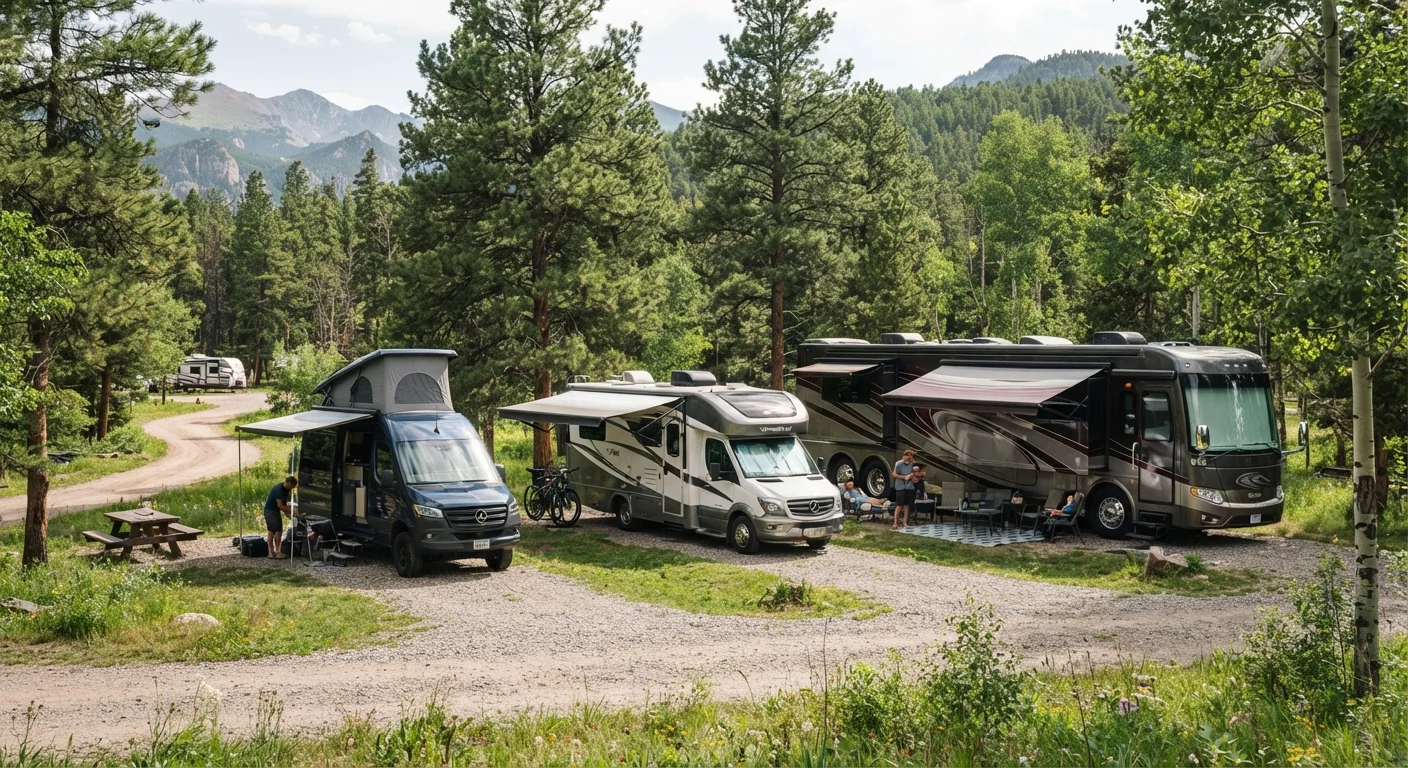
Class A motorhomes are built on a purpose-built motorhome chassis, a heavy commercial truck chassis, or a converted bus platform. The body is constructed directly onto that frame, producing a flat front (no protruding hood), a wide rectangular profile, and interior dimensions that can rival a small apartment.
Lengths typically run from about 24 feet on the compact end up to 45 feet for luxury diesel pushers. Slide-outs - wall sections that extend outward when parked - are common and add significant floor space. Residential amenities such as full-size refrigerators, washer-dryer combos, king beds, and multiple flat-screens are standard on mid-to-upper models.
The tradeoffs are real. Class A coaches command the highest purchase prices in the motorhome segment, consume more fuel, and require larger campsites. Maneuvering in urban areas or tight campgrounds takes practice, and some campgrounds have length restrictions that exclude the longest units.
45 ft
Maximum length of the largest Class A coaches
RVIA guidelines and manufacturer specifications place the upper bound of Class A motorhome length at approximately 45 feet for production diesel pusher models.
18-25 MPG
Typical fuel economy range for Class B camper vans
Gas-powered Class B motorhomes built on modern van platforms commonly achieve 18-25 MPG, significantly outperforming larger classes under typical highway conditions.
20-35 ft
Typical length range for Class C motorhomes
Most production Class C motorhomes fall between 20 and 35 feet, placing them squarely between compact Class B vans and full-size Class A coaches.
Class A is the natural fit for full-time RVers, extended cross-country trips, and travelers who want hotel-level comfort while retaining the freedom to relocate whenever they choose.
Class B: Van Life With a Factory Pedigree
Class B motorhomes - often called camper vans - are built on full-size van platforms (Ford Transit, Mercedes Sprinter, and Ram ProMaster are common foundations) with a raised roof to allow standing headroom inside. Everything - sleeping, cooking, and often bathing - is packed into a footprint not much larger than a full-size cargo van.
What Class B loses in square footage it gains in versatility. These rigs park in standard spaces, navigate city streets without stress, and achieve fuel economy figures that other motorhome classes can't approach. They also function as everyday vehicles in a way that Class A and C rigs simply don't.
Consider Renting Before Buying
Because each motorhome class drives and lives so differently, renting one for a long weekend before committing to a purchase is a practical way to stress-test your assumptions. Many RV rental platforms offer all three classes, and even a two-night trip reveals whether a floor plan actually suits your habits. Rental fees may feel significant upfront, but they're modest compared to discovering the wrong class after a purchase.
The audience for Class B tends to skew toward couples, solo adventurers, and people who value spontaneity over amenities. Weekend warriors who want to keep the rig in a standard garage slot and escape for long weekends find the format especially practical.
Class C: The Middle Path
Class C motorhomes occupy the space between the van-size Class B and the full-coach Class A. They're built on cutaway van or truck chassis - think a Ford E-Series or Ram 3500 with the cab intact and an attached living unit behind it. The most visually distinctive feature is the cab-over section: a sleeping or storage area that extends above the driver and passenger seats.
Lengths generally range from 20 to 35 feet, and floor plans can accommodate families with dedicated sleeping zones, a full bathroom, and a functional kitchen. Many Class C units offer towing capability for a small car or utility trailer, which adds flexibility at the destination.
Class C rigs are often recommended for first-time motorhome buyers because the familiar truck cab gives drivers visual reference points that help with lane positioning and low-clearance awareness. Pricing generally sits between Class B and Class A, though heavily equipped Class C units can overlap with entry-level Class A coaches.
For newcomers still sorting out broader RV terminology, the RV and camping glossary covers the vocabulary you'll encounter across all three classes.
Choosing the Right Class for Your Travel Style
The classification system is most useful when matched against concrete questions: How many people will travel regularly? How long are typical trips? Do you prioritize comfort at the site or flexibility on the road? Will you need the rig to double as a daily driver?
If campsite comfort and living space are the priority and you plan to stay put for days or weeks at a time, Class A makes sense to explore. If spontaneous weekend trips and urban accessibility matter more than square footage, Class B deserves serious consideration. If you're traveling with children or want a balance of livability and maneuverability as a first rig, Class C offers a practical on-ramp.
It's also worth thinking through the full ownership picture - insurance, storage, maintenance, campsite fees, and fuel costs all scale differently across the three classes. Our guide to motorhome vs. towable camper can help if you're still deciding whether a self-propelled rig is right for your situation at all.
“The biggest mistake new RV buyers make is choosing a class based on price alone. The real question is what kind of traveler you are - because the wrong size rig sitting in your driveway is no bargain at any price.”
— Mike Wendland, RV lifestyle journalist and author of multiple books on the RV lifestyle
For anyone ready to go deeper, The RV Lifestyle: A Complete Introduction covers everything from choosing your first rig to understanding campsite hookups and ongoing costs. And once you've selected your class, RV hookups decoded will demystify what campsite listings actually mean.