

Key Takeaways
Our Verdict
Motorhomes offer convenience and a self-contained travel experience that suits frequent travelers and full-timers. Towable campers deliver more versatility and lower entry costs for those who want to keep a separate daily vehicle. Neither wins outright - the better fit depends on how often you travel, your budget, and whether you want your home and your vehicle permanently connected.
| Best for | Recommended |
|---|---|
| Frequent travelers or full-time RV living | Motorhome |
| Budget-conscious buyers who want flexibility | Towable Camper |
| Those who already own a capable tow vehicle | Towable Camper |
| Travelers who prioritize ease of setup and driving comfort | Motorhome |
The Core Difference: One Unit vs. Two
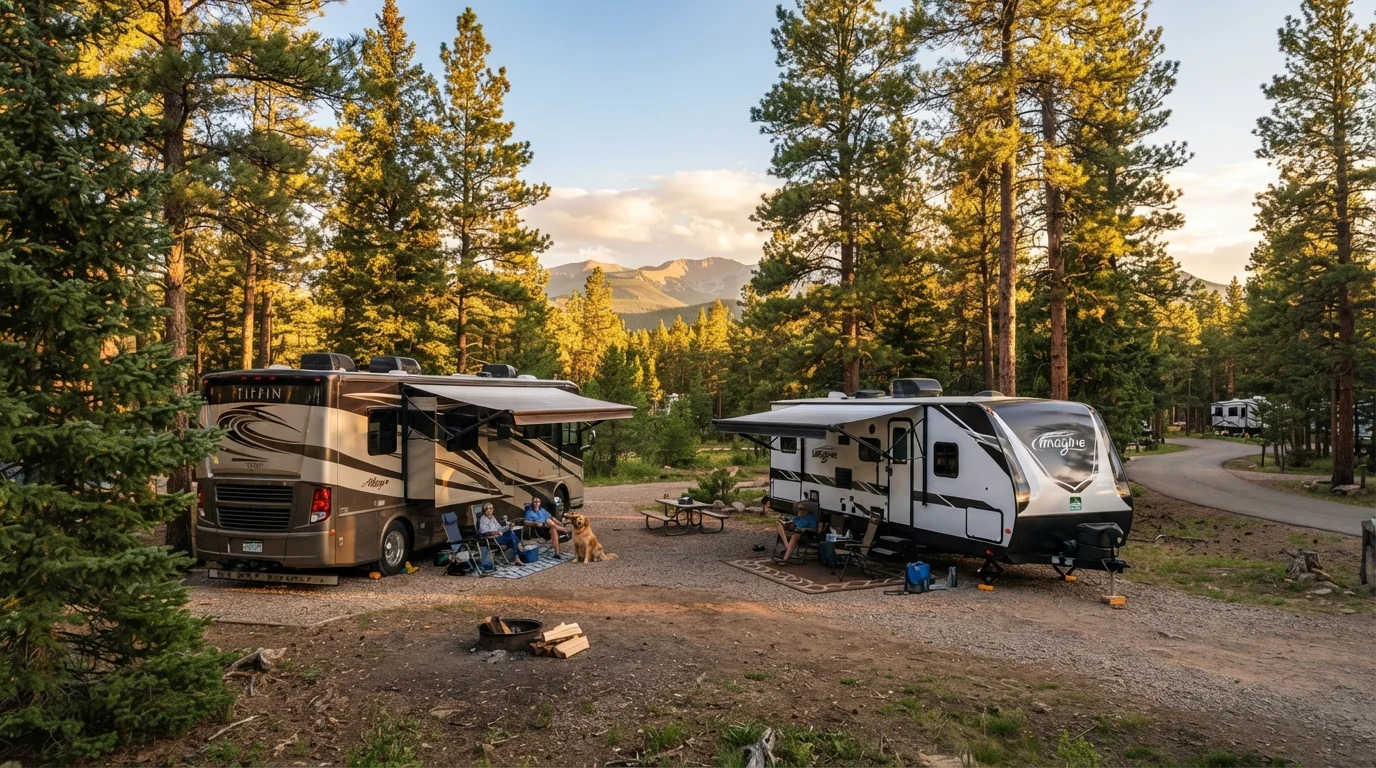
The fundamental distinction between a motorhome and a towable camper isn't just mechanical - it shapes nearly every aspect of your travel experience. A motorhome integrates the living space and the engine into a single vehicle. You drive it, park it, and sleep in it without any additional setup. A towable camper, by contrast, is a separate living unit you hitch to a truck, SUV, or other capable tow vehicle and unhitch when you arrive.
That single difference cascades into implications for cost, maintenance, convenience, and what you can do at your destination. Before diving into specifics, it helps to read up on the broader RV lifestyle to understand what ownership actually entails day to day.
| Motorhome | Towable Camper | |
|---|---|---|
| Vehicle integration | Engine and living space combined | Separate tow vehicle required |
| Upfront cost | Generally higher | Generally lower |
| Daily errand flexibility | Drive the full unit everywhere | Unhitch and use tow vehicle freely |
| Setup at campsite | Minimal - arrive and stay | Unhitch, level, and connect |
| Breakdown risk | One failure affects home and transport | Vehicle and living unit fail independently |
| Driving complexity | Large vehicle, wide turns, height limits | Sway, length awareness, brake controller |
| Best travel style | Frequent moves, full-time living | Base camping, part-time use |
Cost Considerations: Purchase, Operation, and Ownership
Towable campers - including travel trailers and fifth wheels - generally carry a lower purchase price than comparable motorhomes. You're buying the living unit separately from the tow vehicle, which means if you already own a qualifying truck or SUV, your upfront investment is significantly reduced. Motorhomes fold transportation and living into one purchase, which tends to push prices higher across all size classes.
Operational costs tell a more nuanced story. Motorhomes burn fuel at rates comparable to a large truck, often in the range of 7-12 miles per gallon depending on size and class - and they must be driven everywhere, even for a quick trip to the grocery store. With a towable setup, you unhitch at camp and use your tow vehicle independently, which is far more practical for errands and sightseeing.
Maintenance is where motorhome ownership carries an underappreciated risk: a single breakdown can immobilize both your transportation and your home. With a towable, a problem with the trailer doesn't strand your tow vehicle, and vice versa.
7-12 mpg
Typical motorhome fuel economy range
Fuel efficiency varies widely by class and engine type; Class B vans trend toward the higher end, Class A diesel pushers toward the lower end.
~11 million
US households that own an RV
According to the RV Industry Association, RV ownership in the United States has grown substantially over the past two decades.
Driving and Handling: What to Expect Behind the Wheel
Motorhomes - particularly Class A coaches - handle very differently from a passenger car. They're large, require wide turns, and demand heightened awareness of height clearances and bridge weight limits. Class B motorhomes (built on van chassis) are significantly more maneuverable but offer less living space. Class C models sit in between. If you want a clear picture of how those categories compare, understanding motorhome class designations is a useful starting point.
Towing a camper introduces its own learning curve - sway control, brake controllers, weight distribution hitches, and the constant awareness of your combined length. Fifth wheels, which hitch in the truck bed over the rear axle, are generally considered more stable than bumper-pull travel trailers. If you're exploring the towable side, comparing travel trailers and fifth wheels is worth reviewing. Either way, developing safe RV driving habits is essential before heading out.
Rent Before You Commit
Renting both a motorhome and a towable camper for separate trips before purchasing is one of the most practical ways to test your preference. Many RV rental platforms offer a range of unit types. A week in each format will reveal setup preferences, driving comfort, and lifestyle fit far more clearly than any spec sheet can.
Lifestyle Fit: Matching the Format to How You Actually Travel
If you're planning extended trips or considering full-time RV living, a motorhome's all-in-one convenience is hard to overstate. Pulling into a campsite and being ready to cook dinner in minutes - without unhitching, leveling jacks, or running utility connections - suits travelers who move frequently.
Towable campers reward those who prefer to base themselves in one location for several days at a time. Unhitch, set up camp thoroughly, and explore the surrounding area in your tow vehicle. This setup also gives you more flexibility at home: the camper sits in the driveway while your truck or SUV handles daily duties.
For those interested in off-grid camping - known as boondocking - the realities of camping without hookups apply equally to both formats, though your battery capacity and tank sizes will vary significantly by unit. Whichever route you consider, it's worth exploring how it fits into your broader travel decision-making framework as well.
This article is for general informational purposes only and does not constitute purchasing, financial, or mechanical advice. Consult a qualified RV dealer, mechanic, or financial professional before making significant vehicle or lifestyle decisions.