

Key Takeaways
Boondocking
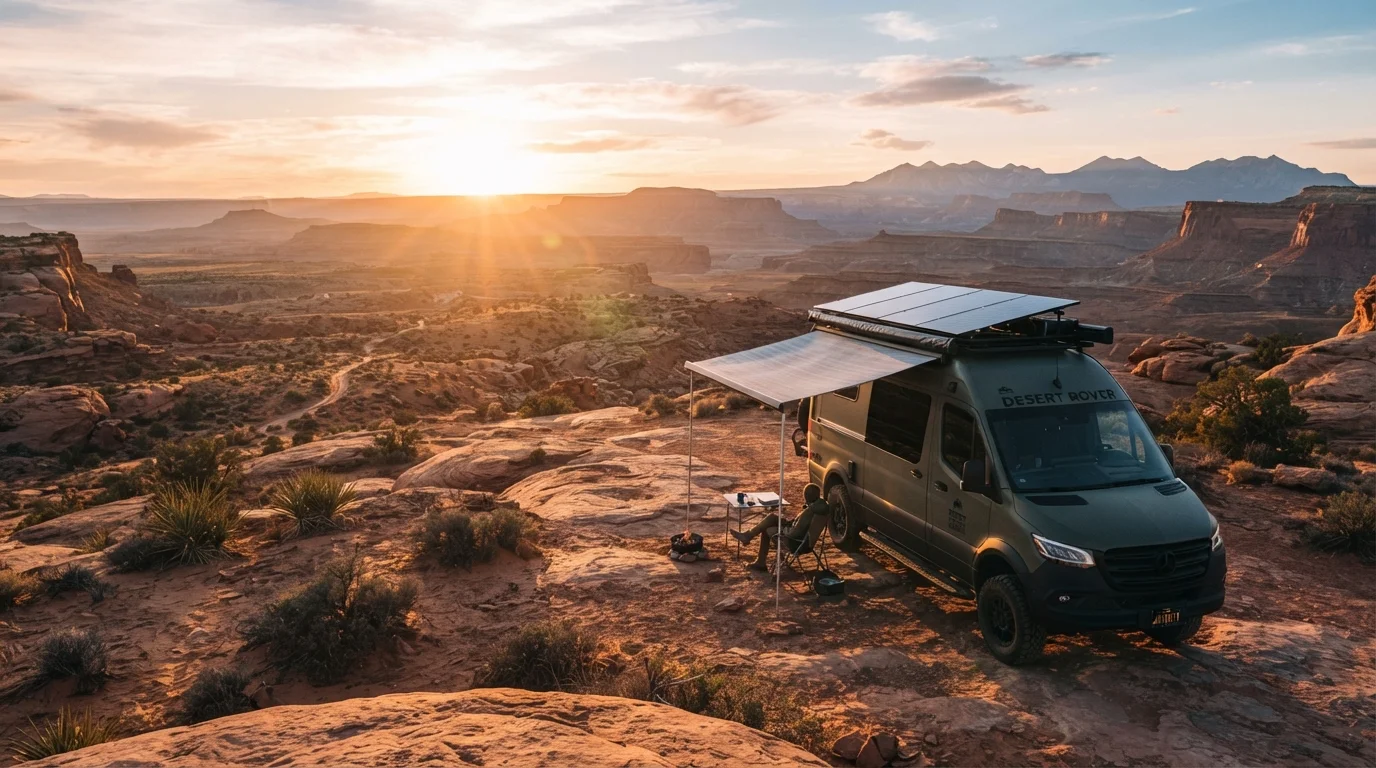
Boondocking is a style of camping where your RV or camper has no connection to external electrical, water, or sewer services. You rely entirely on what you carry with you - your onboard battery bank, fresh water tank, and holding tanks. It's sometimes called dry camping or dispersed camping, and it typically takes place on public land away from developed campgrounds.
Strictly speaking, "dry camping" can include designated no-hookup sites within a campground, while "boondocking" more specifically implies dispersed or remote camping, often on Bureau of Land Management (BLM) or National Forest land with no site infrastructure at all.
What Boondocking Actually Means Day to Day
When you pull into a boondocking spot, there's no pedestal to plug into, no water spigot around the corner, and no sewer cleanout at the edge of your pad. Everything your rig needs to function - power, water, waste capacity - has to come with you or be generated on-site. That's the core reality of boondocking, and it shapes virtually every decision you make during a stay.
Power management becomes an active daily concern. Most boondockers rely on a combination of rooftop solar panels and a battery bank - increasingly lithium iron phosphate (LiFePO4) batteries, which handle deep discharge cycles better than traditional lead-acid alternatives. Running high-draw appliances like air conditioning or a microwave off battery alone is difficult; many boondockers adapt by cooking with propane and managing heat and cooling through ventilation and shade positioning instead.
Water is the resource that most often cuts a boondocking trip short. A typical RV fresh water tank holds 30-60 gallons. With disciplined use - short showers, turning off the faucet while brushing teeth, using paper plates occasionally - a two-person crew might stretch that to three or four days. Your gray water tank (sink and shower drainage) and black water tank (toilet waste) fill up in parallel, and when those are full, the trip ends unless you find a dump station.
Track Your Resources Like a Tank Gauge
Many experienced boondockers check battery state of charge in the morning, again at midday, and before sunset - adjusting usage based on what solar has recovered. Keeping a rough mental log of water consumed per day helps you project when you'll need to move or resupply. Building these habits early prevents the unpleasant surprise of running dry mid-stay.
Where Boondockers Camp
The majority of boondocking in the United States happens on federal public land. The Bureau of Land Management oversees roughly 245 million acres, much of it in the American West, where dispersed camping is permitted in most areas without a reservation or fee. U.S. National Forests offer similar access across 193 million acres. Both agencies publish maps and specific rules by region, and stay limits - typically 14 days in one location - apply broadly.
Popular boondocking regions include the Sonoran Desert around Quartzsite, Arizona, the high desert plateau around Moab, Utah, and dispersed areas throughout Nevada, New Mexico, and Colorado. Access roads vary from well-maintained gravel to rough two-track terrain, which matters significantly depending on your rig's format and clearance.
Some private landowners also permit dispersed camping - sometimes through app-based platforms - but that's a separate arrangement with its own terms and considerations. State trust lands in certain western states offer another option, typically requiring a low-cost permit.
Always Verify Before You Camp
Land use rules change seasonally due to fire danger, wildlife activity, or resource protection orders. What was open last year may be restricted now. Check with the relevant BLM field office or National Forest ranger district before your trip - their websites and phone lines are the authoritative sources, not third-party apps alone.
What You Need to Manage It Well
Successful boondocking is largely a systems problem. Before any trip, it's worth auditing what your rig can actually do independently. Key questions: How many amp-hours of battery capacity do you have? What's your solar charging rate in peak sun? How large are your fresh, gray, and black tanks?
Beyond hardware, habits matter just as much. Boondockers who do it regularly develop routines around monitoring their battery state of charge, rationing hot water, and planning departure timing around tank levels. A portable generator can serve as a backup power source for charging batteries on cloudy days or running high-draw appliances, though noise and fuel logistics are factors to weigh.
Safety and preparedness take on more weight when you're far from help. Cell service is often limited or absent, so downloaded offline maps, a satellite communicator, and awareness of local weather and road conditions are practical investments. See a campsite setup checklist for the kinds of checks that apply whether you have hookups or not.
245M
Acres of BLM land open to dispersed camping
The Bureau of Land Management oversees approximately 245 million acres, primarily in the western U.S., much of which allows no-fee dispersed camping.
14 days
Typical stay limit on public land
Most BLM and National Forest dispersed camping areas enforce a 14-consecutive-day stay limit before campers must relocate at least 25 miles away.
30-60 gal
Typical RV fresh water tank capacity
Fresh water tank sizes vary by rig; careful daily use of 5-8 gallons per person can extend a tank's duration significantly during a boondocking stay.
If you're considering making this a regular or full-time practice, the tradeoffs of full-time RV living are worth understanding honestly before committing. And if you're newer to understanding what hookups even provide, a breakdown of RV hookup types gives useful context for why going without them demands a different mindset.