

Key Takeaways
Why Estimates Deserve More Than a Glance at the Total
Most drivers scan a repair estimate for a single number - the bottom line - and either wince or sign. That approach leaves real money and important decisions on the table. A repair estimate is a contract proposal: each section represents a distinct cost category with its own logic, and understanding that logic puts you in a position to ask informed questions rather than guess whether you are being treated fairly.
This matters beyond a single visit. Repair costs compound over a vehicle's life, and the habits you build now - reviewing estimates, understanding labor billing, knowing what authorization language to look for - protect you across every shop visit. For context on how skipped maintenance can turn small costs into large ones, see our piece on the hidden costs of deferred vehicle maintenance.
What you will need
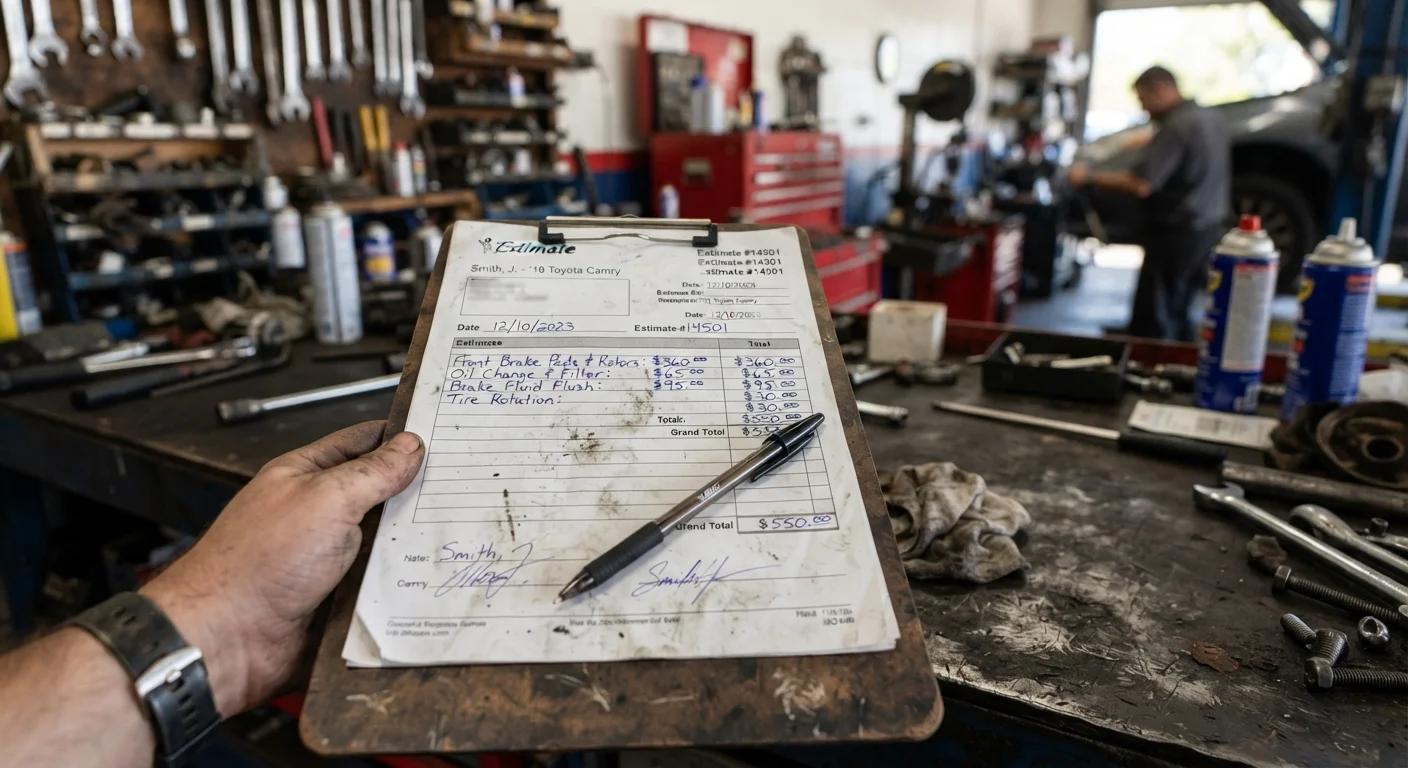
What a Standard Estimate Contains
A properly prepared repair estimate breaks down into several distinct sections. Knowing what each one represents helps you read the document as a whole rather than treating it as a single opaque charge.
- Repair description: A plain-language explanation of the work being performed. If it is vague - 'engine work' rather than 'replace intake manifold gasket' - ask for specifics before signing.
- Labor hours and rate: The number of flat-rate hours billed multiplied by the shop's hourly rate. Both numbers should appear explicitly.
- Parts: Each part listed with quantity and price. OEM, aftermarket, or remanufactured status should be stated or available on request.
- Shop supplies and fees: Consumables, environmental disposal charges, and similar overhead items. These should be itemized or calculated transparently.
- Taxes: Applied to parts in most states; labor tax rules vary by jurisdiction.
- Authorization clause: The section governing what happens if additional work is identified. Read this carefully.
If you are deciding between a dealership and an independent shop, the estimate format can differ - see our comparison of dealer service centers vs. independent mechanics for context on how pricing structures and parts sourcing can vary.
Written Repair Estimate
The formal document listing all proposed labor, parts, and fees - your primary reference for reviewing costs.
Smartphone or Computer
Used to look up standard labor times and get a general sense of parts pricing from publicly available sources.
Notepad or Notes App
For recording questions, part numbers, and any verbal commitments made by the service writer.
Step-by-Step: Reading the Estimate Before You Sign
Follow these steps each time you receive a repair estimate, whether it arrives in person, by email, or over the phone.
Confirm the estimate is written and itemized
Before reviewing any numbers, verify that the estimate is on paper or a shop-generated digital document - not a verbal ballpark. A proper estimate lists each repair as a separate line item showing the task description, labor hours, parts needed, and individual costs. If the shop hands you a single total with no breakdown, ask for an itemized version before proceeding.
Understand how labor hours are calculated
Shops charge labor using a flat-rate system based on industry time guides - manuals that assign a standard number of hours to each repair procedure regardless of how long the actual job takes. A brake job that takes a technician 45 minutes may still be billed at one full hour because that is what the guide specifies. This is industry-standard practice. What you should check is the shop's hourly labor rate, which is usually printed at the top of the estimate. Labor rates vary widely by region and shop type.
Review parts charges and note OEM vs. aftermarket
Each parts line should show the part name, part number if available, quantity, and unit price. Shops typically add a markup over their wholesale cost - often 20-50% - which covers purchasing, stocking, and warranty handling. This is normal. What matters is whether the parts are described as OEM (Original Equipment Manufacturer), aftermarket (third-party equivalents), or remanufactured (rebuilt to spec). These differ in cost, warranty, and suitability depending on your vehicle and situation. Ask if you are unsure which type is being used.
Identify shop supply and environmental fees
Most estimates include a line for shop supplies - rags, cleaning solvents, fasteners, and other consumables used during the repair - and sometimes a separate hazardous materials or disposal fee for fluids and filters. These are legitimate charges. However, they should be itemized or calculated as a stated percentage of the labor total, not left as unexplained flat amounts. If you see a charge you cannot identify, ask the service writer to explain it specifically.
Check the authorization and additional-work policy
Look for the section of the estimate that describes what happens if additional problems are found mid-repair. Reputable shops will contact you before performing any unapproved work beyond the original scope. The estimate should state a dollar threshold or a clear policy requiring your authorization for add-ons. If that language is absent, ask the service writer to add a written note before you sign. This is one of the most common sources of surprise charges.
Compare the final invoice against the signed estimate
When you pick up your vehicle, place the original signed estimate next to the final invoice and review them line by line. Labor hours, parts quantities, and fee amounts should match what you approved. If labor hours increased, ask why - legitimate reasons include encountering seized bolts or unexpected corrosion, but these should have prompted a call to you before the work continued. Any unapproved line items should be questioned before you pay.
Never Authorize Work Verbally Only
In most U.S. states, auto repair shops are legally required to provide a written estimate and obtain your written or documented authorization before beginning work. A verbal okay offers you little legal protection if disputes arise. Always get the estimate in writing, sign it, and keep a copy before leaving your vehicle.
Watch for Vague 'Miscellaneous' Line Items
If an estimate includes a line labeled only 'miscellaneous fees' or 'shop charges' without a breakdown, ask for specifics before signing. Legitimate shops can explain every charge. Unexplained bundled fees can be a sign that costs are being obscured.
Request the Replaced Parts Back
Asking a shop to return your old parts after the job is a simple verification step. Many states allow this by law when requested in advance. Seeing the worn or broken component confirms the work was actually performed and the part was genuinely in need of replacement.
Clear communication before the job starts is just as important as reviewing paperwork afterward. Our guide on communicating clearly with a mechanic covers how to describe symptoms accurately so the estimate reflects the actual problem from the start.