

Key Takeaways
Our Verdict
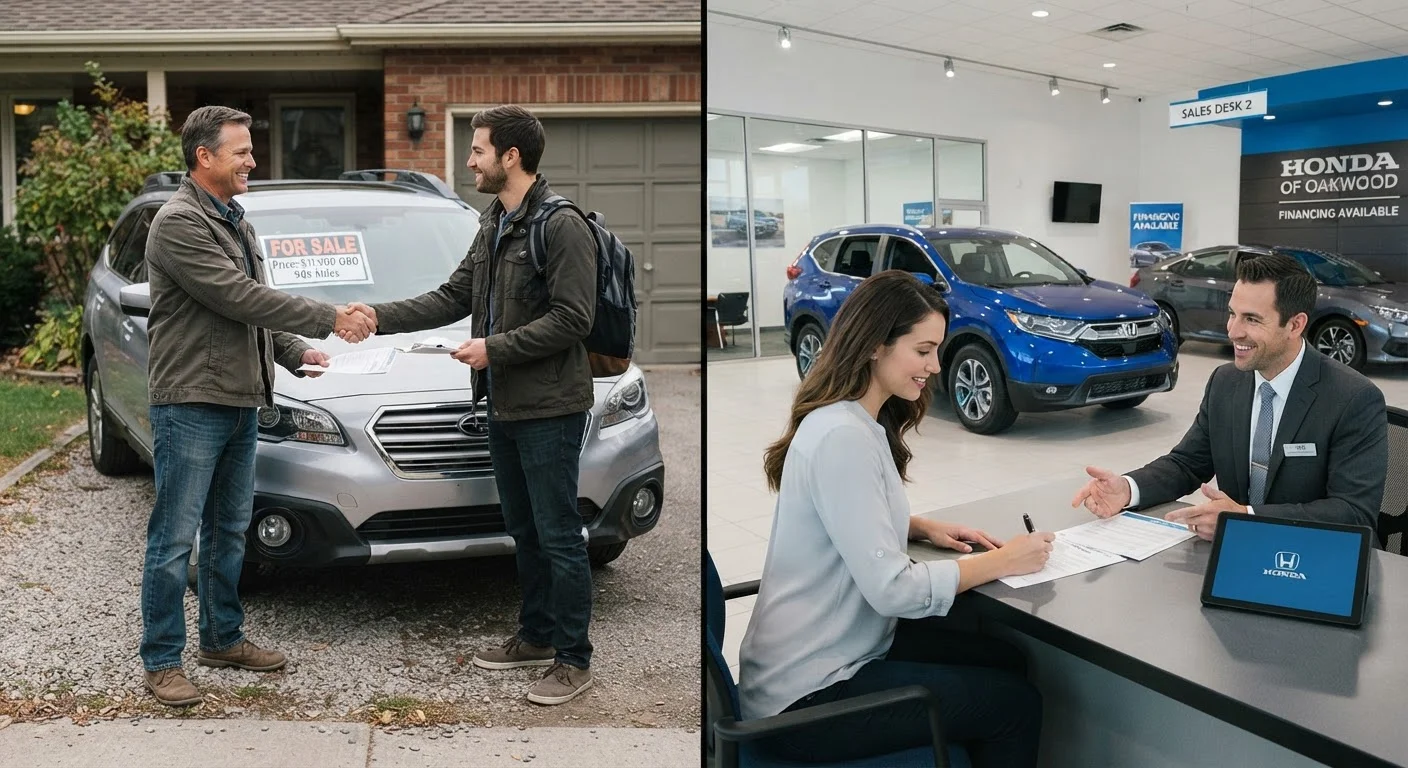
Neither channel is universally superior - the right choice depends on your risk tolerance, financing needs, and how much due diligence you're prepared to do. Dealerships provide structure, accountability, and financing infrastructure; private sellers can offer lower asking prices but place more responsibility squarely on the buyer.
| Best for | Recommended |
|---|---|
| Buyers who want financing options, warranty coverage, and a regulated transaction process | Dealership |
| Experienced buyers comfortable with thorough due diligence who prioritize lower purchase price | Private Seller |
| First-time buyers or those unfamiliar with used car evaluation | Dealership |
| Buyers seeking a specific older or rare vehicle not typically stocked by dealers | Private Seller |
Two Very Different Transactions
Buying a used car from a private individual and buying one from a licensed dealership may look similar on the surface - you inspect a vehicle, negotiate a price, and sign paperwork. But the two processes operate under fundamentally different rules, protections, and expectations. Understanding those differences before you start shopping can save you from surprises at the worst possible moment.
For a broader overview of every stage involved, see The Full Vehicle Buying Journey, Explained. This article focuses specifically on how the purchase channel - private or dealer - changes what you can expect.
Consumer Protections and Legal Accountability
This is the most consequential difference between the two channels. Dealerships are licensed businesses subject to state and federal regulations, including FTC used car rules that require dealers to display a Buyers Guide disclosing warranty terms on every used vehicle. They must follow title transfer laws, disclose known defects in many states, and can be held accountable through regulatory bodies and consumer protection statutes.
Private sellers operate under a much lighter legal framework. In most states, private sales are conducted strictly "as-is," meaning the seller bears no legal obligation to disclose hidden defects unless they actively misrepresent the vehicle's condition. Once the transaction closes, your recourse is extremely limited - typically requiring proof of deliberate fraud, which is difficult and costly to pursue.
Private Sale Fraud Is More Common Than You May Expect
Title washing, odometer fraud, and undisclosed salvage history do occur in private transactions. Always run a vehicle history report using the VIN before finalizing any private purchase. Meet in a safe, public location and be cautious of sellers who pressure quick decisions or refuse an independent inspection. If something feels off, walk away.
This asymmetry doesn't make private purchases inherently bad, but it does mean the burden of due diligence falls almost entirely on you as the buyer.
Warranties, Guarantees, and What Happens After You Drive Away
Dealerships can offer certified pre-owned (CPO) vehicles with manufacturer-backed warranties, dealer warranties on non-CPO used cars, or at minimum the Buyers Guide disclosure of "as-is" versus warranty coverage. Understanding those distinctions matters - see New Car, Used Car, or Certified Pre-Owned: What's Actually Different? for a fuller picture of what each label actually means.
Private sellers cannot legally offer manufacturer warranties that have expired, and they generally provide no post-sale remedies. Some factory warranties are transferable to subsequent owners - but you'll need to verify this directly with the manufacturer before relying on it.
| Private Seller | Dealership | |
|---|---|---|
| Legal accountability | Minimal; as-is in most states | Regulated; subject to FTC and state law |
| Warranty options | None (unless transferable factory warranty) | As-is, dealer warranty, or CPO available |
| Financing | Must arrange independently before purchase | On-site financing through dealer lenders |
| Title and paperwork | Buyer handles all DMV steps manually | Dealer typically handles title transfer process |
| Price negotiation | Often flexible; no overhead structure | Structured; includes reconditioning costs |
| Vehicle history disclosure | Seller's word; verify independently | Often provided; required disclosure on Buyers Guide |
| Trade-in option | Not available | Commonly accepted |
Financing, Paperwork, and the Mechanics of Closing
Dealerships have finance departments that can process loan applications on-site through relationships with multiple lenders. While this is convenient, it's worth understanding the trade-offs before accepting dealer-arranged financing - Dealership Financing vs. Outside Lender: Key Differences to Understand covers that decision thoroughly.
Private sales require you to arrange your own financing in advance, typically through a bank or credit union. The title transfer process is also more manual: both buyer and seller must complete the title correctly, you may need a bill of sale, and you'll handle all DMV registration and tax paperwork yourself. Errors in private title transfers can create serious legal headaches, so verify your state's exact requirements before the transaction.
Always Get a Pre-Purchase Inspection
Regardless of whether you're buying from a private party or a dealer, having an independent mechanic inspect the vehicle before you commit is one of the most practical steps you can take. A qualified technician can identify mechanical issues not visible in a test drive. Budget roughly $100-$200 for a thorough inspection - it's a small cost relative to the potential expense of undisclosed problems.
Price Negotiation and the Human Factor
Private sellers are often motivated by a specific need - relocation, upgrading, or financial circumstances - which can create more room for negotiation than a dealership floor. There's no sales manager, no desk fee structure, and no F&I (finance and insurance) office adding products at closing. What you see is closer to what you pay.
Dealerships operate within a business model that includes overhead, reconditioning costs, and profit targets. Negotiation still happens, but the process is more structured and less personal. The flip side: dealerships often handle trade-ins, provide documented vehicle history reports, and have reconditioned the vehicle to a retail standard - services private sellers generally don't offer.
After your purchase, where you take the vehicle for service is another decision worth thinking through. Dealer Service Center vs. Independent Mechanic: What Changes Depending on Your Situation can help you plan ahead for ongoing maintenance.