

Key Takeaways
Why Urgency Is Such an Effective Lever
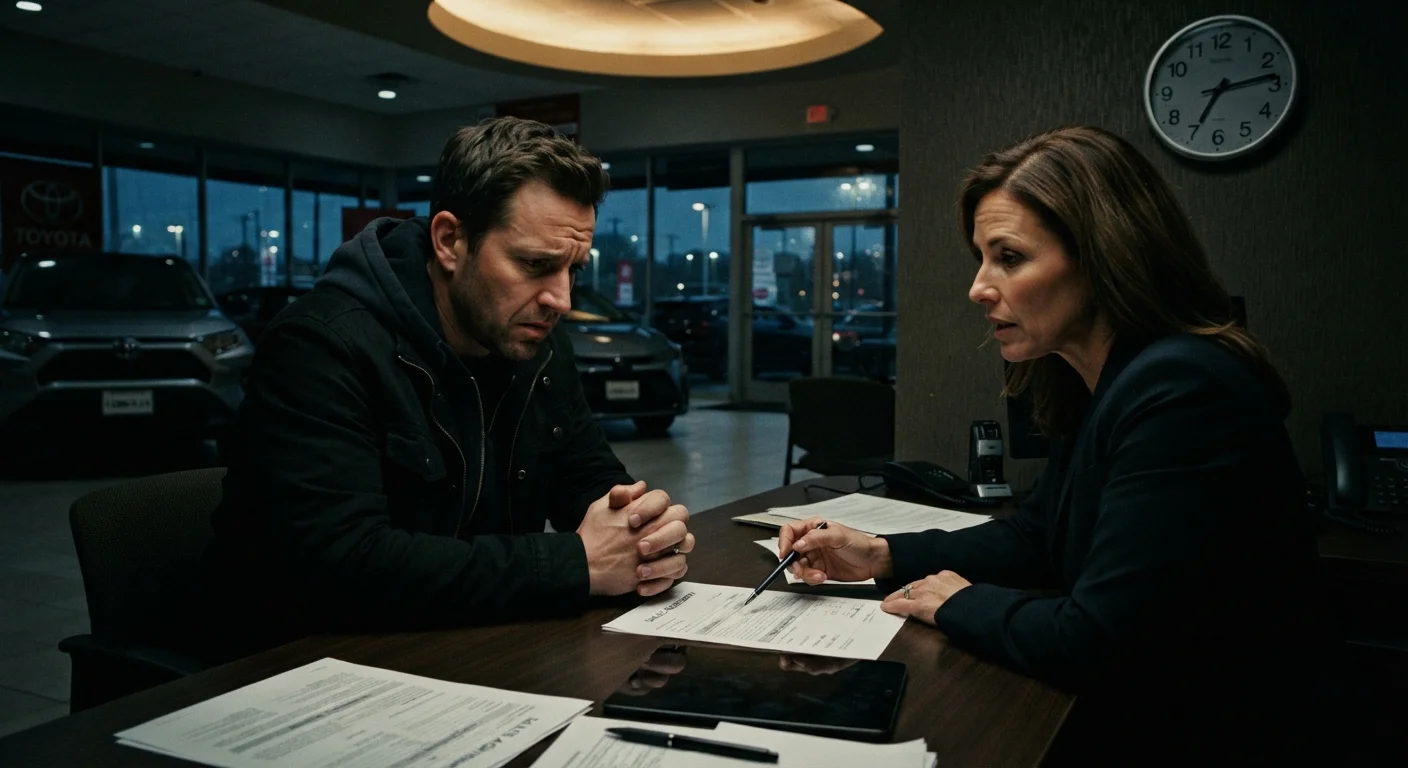
Time pressure is not an accidental feature of car buying - it is a structural one. The dealership environment is specifically designed to compress the decision window: long waits, back-and-forth negotiations, and a finance office at the end all contribute to a state of mental fatigue that makes buyers more likely to accept terms they would otherwise scrutinize carefully.
Psychologically, urgency triggers what behavioral researchers call a scarcity mindset - a cognitive state in which the fear of losing something narrows focus and reduces the quality of decision-making. This is the same phenomenon discussed in the context of impulsive purchasing across many categories, from phone upgrades to wardrobe purchases. In high-stakes transactions like vehicle buying, the consequences are proportionally larger.
Understanding that this dynamic exists - and that it is frequently intentional - is the first meaningful defense against it.
~3 hrs
Average time spent at a dealership per transaction
Industry research has consistently found that the average car purchase visit runs roughly three hours, a length that correlates with decision fatigue in buyers.
62%
Buyers who felt rushed during vehicle purchase
A survey by CDK Global found that a majority of car buyers reported feeling rushed at some point during the vehicle-buying process.
The Most Costly Mistakes Pressure-Rushed Buyers Make
Most of the expensive errors in the car-buying process are not the result of ignorance. They are the result of good decision-making frameworks getting short-circuited by time constraints. For a full picture of the buying journey from budget-setting to signing, see The Full Vehicle Buying Journey, Explained.
Skipping pre-approval on financing before visiting a dealership.
Why it happens: Buyers who feel time pressure often jump straight to the lot, leaving financing entirely in the dealer's hands - a position that tends to favor higher-margin loan products.
Accepting 'today only' pricing without verification.
Why it happens: The fear of missing out on a deal can override rational evaluation. Buyers may not realize that advertised pricing, incentives, and available inventory shift frequently - not just on arbitrary daily deadlines.
Skipping an independent vehicle inspection on a used car.
Why it happens: When buyers feel pressed for time, a pre-purchase inspection can seem like an inconvenient delay. Sellers occasionally reinforce this by suggesting other interested buyers are waiting.
Neglecting to research trade-in value before arriving at the dealership.
Why it happens: Buyers focused on acquiring a new vehicle often treat their existing car as an afterthought, leaving the valuation entirely to the dealer under time constraints.
Agreeing to add-on products or packages without reviewing them carefully.
Why it happens: Finance office paperwork often arrives after a long negotiation, when buyers are mentally fatigued and eager to finish. Extended warranties, paint protection, and gap insurance can be presented quickly and bundled into monthly payments that obscure their true cost.
End-of-Month Pressure Is Real - But Cuts Both Ways
Sales staff often face genuine end-of-month quotas, and some buyers do find more flexible negotiations near those deadlines. However, this same dynamic can be used to manufacture urgency. Assuming a deadline is real before verifying it gives away negotiating leverage you didn't need to surrender.
Building a Process That Protects Your Judgment
The most reliable way to neutralize time pressure is to do the majority of your decision-making before you ever interact with a seller. Research vehicle types, establish a firm budget - consider reviewing budgeting basics if you need a framework - and set hard limits on monthly payments and total spend. When those parameters are already fixed in writing, in-person pressure has less surface area to work on.
A deliberate "sleep on it" policy is also highly practical. Commit in advance that no vehicle purchase will be finalized on the same day you first see the car. This single rule eliminates a significant share of pressure-driven regret. Your money mindset shapes whether you can hold that boundary when a salesperson is pushing back - and it is worth reflecting on before you shop.
No Deal Is Worth a Bad Decision
Dealership inventory fluctuates regularly, and the vehicle you feel pressured to buy today is rarely the only viable option on the market. Walking away from a high-pressure situation is almost always recoverable. Signing a contract you regret is not - financing terms, trade-in values, and add-on products become binding the moment you drive off the lot.
The parallel to major real estate decisions is instructive: just as skipping a home inspection can saddle a buyer with hidden costs, bypassing due diligence on a vehicle purchase because of artificial time pressure carries similar long-term consequences. Patience, in large-purchase contexts, is not just a virtue - it is a financial strategy.
This article is for general informational and educational purposes only. It does not constitute financial, legal, or professional advice. Readers should consult qualified professionals for guidance specific to their circumstances.