

Key Takeaways
Monroney Label
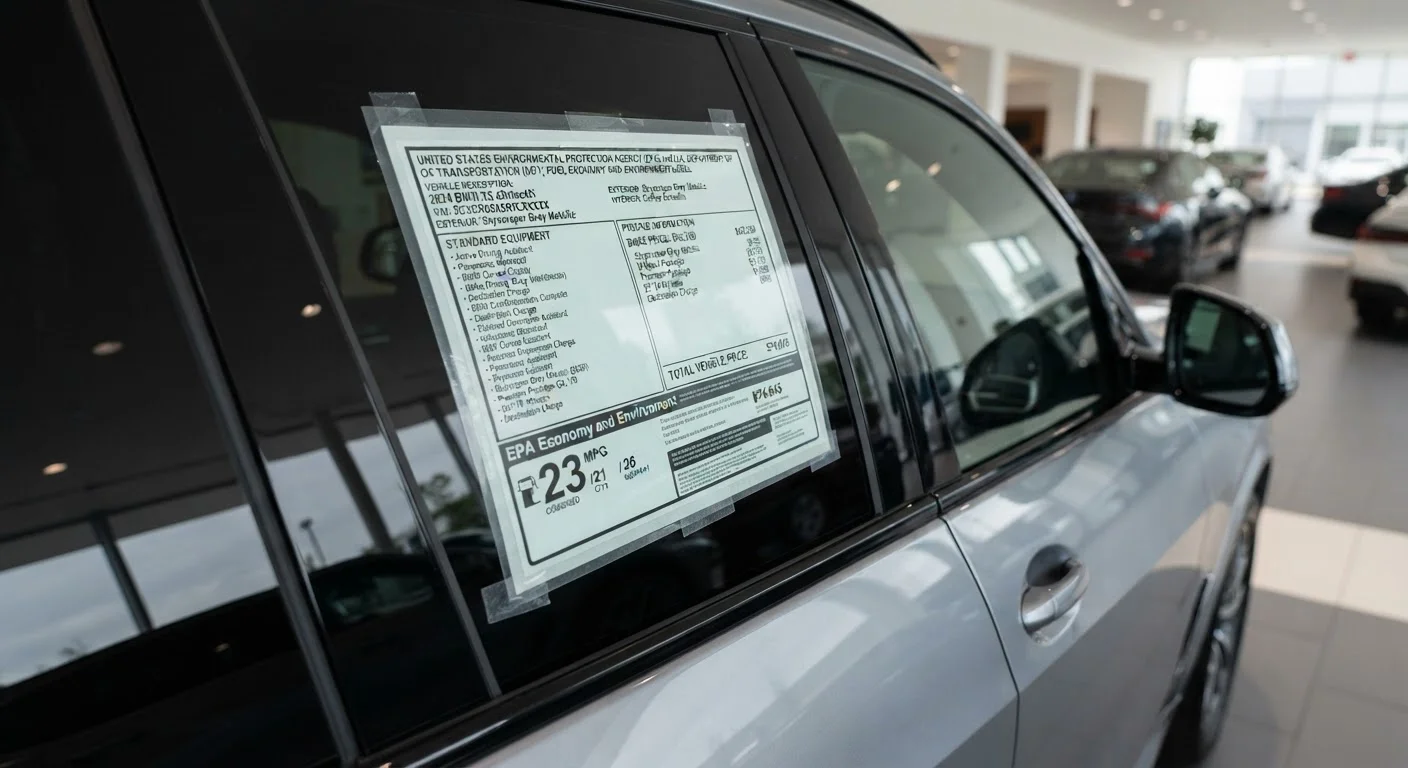
The window sticker on a new car - officially called the Monroney label - is a federally mandated document that every new vehicle sold in the U.S. must display. It lists the manufacturer's suggested retail price, standard and optional equipment, fuel economy estimates, and safety ratings. It exists to give buyers a consistent, standardized source of information before they sign anything.
The label is named after Senator Mike Monroney, whose 1958 Automobile Information Disclosure Act first required its use. Dealers are prohibited by law from removing it before the vehicle is sold.
Why the Window Sticker Exists
Before 1958, car buyers had little reliable information about what a vehicle actually cost to build or what they were paying for. The Monroney Act changed that by requiring manufacturers - not dealers - to produce and affix a standardized label to every new car. That distinction matters: the sticker reflects what the manufacturer says the vehicle is worth, independent of what a dealership might charge.
For shoppers, the sticker is the single most important document on the lot. It's a neutral baseline in a transaction that is otherwise heavily weighted toward the seller. Understanding each section turns a wall of small print into a practical decision-making tool.
Monroney Labels Vary Slightly by Vehicle Type
Electric vehicles and plug-in hybrids display different fuel economy metrics, including miles per gallon equivalent (MPGe) and estimated electric range. Heavy-duty trucks and certain commercial vehicles use separate labeling standards. The core structure is consistent, but the metrics shown will differ depending on the vehicle's powertrain.
Breaking Down Each Section of the Label
Base price and options: The label begins with the vehicle's base price - the cost of the model in its most basic configuration. Below that, each factory-installed option or package is listed with its individual price. This is where you can identify which features were added and whether they align with what you actually want. Packages that bundle features can appear cost-efficient but may include items you'd never use.
Destination and delivery charge: This mandatory fee covers transporting the vehicle from the factory to the dealership. It is non-negotiable - every buyer pays it - and it is included in the total MSRP at the bottom of the sticker.
Total MSRP: The bottom-line figure is the sum of the base price, all options, and destination charge. This is the number to use when comparing vehicles, not the base price alone.
5 stars
Maximum NHTSA overall safety rating
NHTSA rates vehicles on a five-star scale across frontal crash, side crash, and rollover resistance categories, with ratings published at safercar.gov.
1958
Year the Monroney Act was signed into law
The Automobile Information Disclosure Act of 1958 established the window sticker requirement, making standardized vehicle pricing information publicly accessible for the first time.
Fuel economy: EPA city, highway, and combined mpg estimates appear prominently. A QR code or web address often links to the EPA's fuel economy site for deeper comparison data. The estimated annual fuel cost assumes a standard number of miles driven and a fixed fuel price - useful for apples-to-apples comparison but not a real-world prediction.
Safety ratings: NHTSA crash test ratings appear as star ratings across categories including frontal, side, and rollover protection. Critically, the sticker only reflects NHTSA testing. The IIHS - which conducts its own independent tests including small overlap and headlight evaluations - is not represented here. For a complete safety picture, consult both organizations directly.
For everything the sticker omits about how a vehicle performs in its class, see what the window sticker doesn't tell you about a vehicle's class and capability.
How to Use the Sticker as a Negotiation Tool
The itemized options list is your leverage. If a package was added by the manufacturer and is listed on the Monroney, it has a defined cost and is part of the vehicle as configured. However, dealer-added accessories - things like paint protection film, cargo nets, or all-weather mats installed at the dealership - do not appear on the Monroney label. They appear on a separate dealer sticker, often placed next to it. Those items are entirely negotiable and are frequently marked up significantly.
Photograph the Sticker Before Negotiating
Before you sit down with a salesperson, take a clear photo of both the Monroney label and any dealer add-on sticker. This gives you an accurate reference during negotiation and prevents confusion about which items are factory-installed versus dealer-added. Having the numbers in front of you shifts the dynamic in your favor.
Comparing the Monroney label of two similarly priced trims reveals exactly what you're gaining or losing per dollar. A higher trim may add a safety package that includes automatic emergency braking; a lower trim may omit it entirely. The sticker makes that visible.
Understanding the sticker also helps you evaluate the full picture of ownership costs. The purchase price is only one piece - see the true cost of owning a vehicle beyond the sticker price for a fuller accounting of what a vehicle will actually cost you annually.
If you're also weighing whether to buy new at all, understanding the differences between new, used, and certified pre-owned vehicles can help frame that decision before you step onto the lot.