

Key Takeaways
Lipid Panel (Cholesterol Screening)
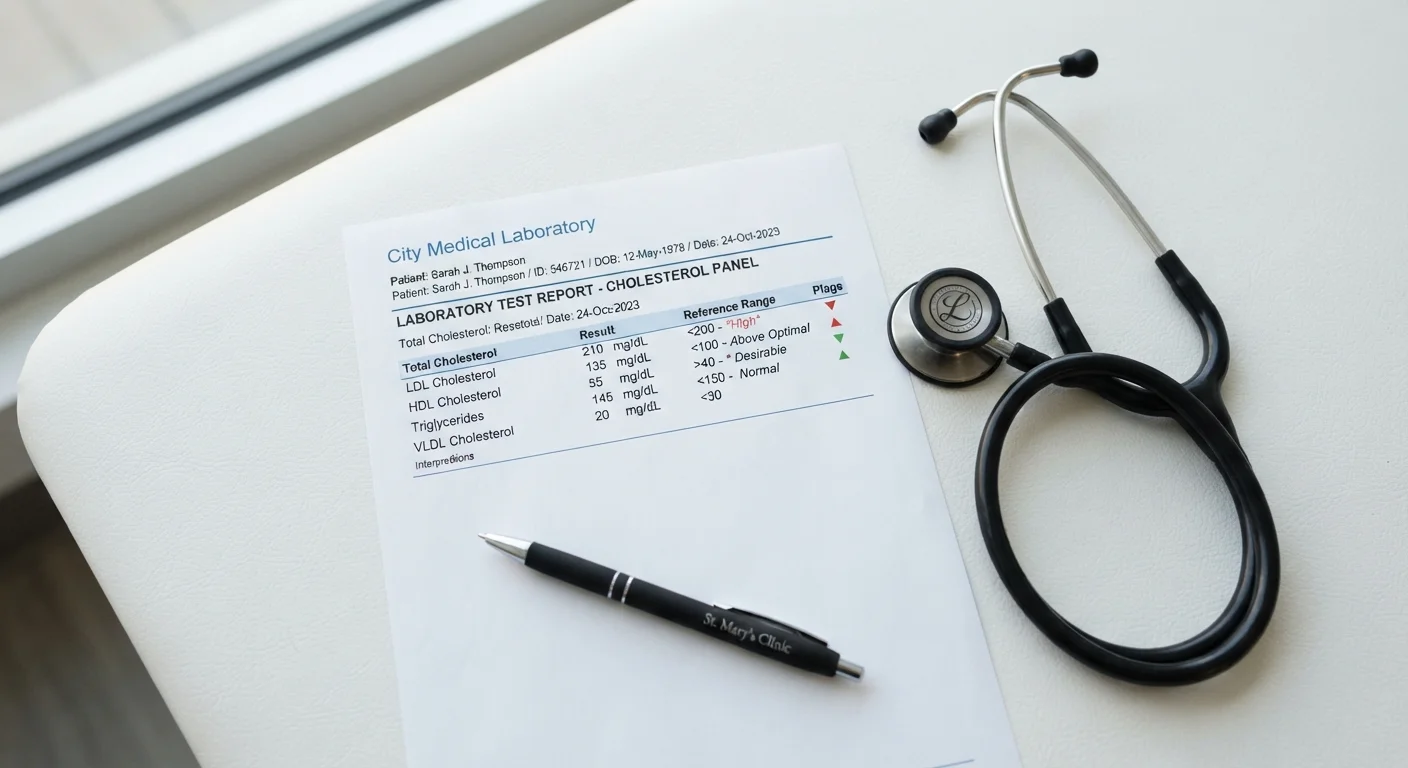
A lipid panel is a blood test that measures the levels of fats and fat-like substances in your bloodstream. It reports several separate values - including HDL, LDL, total cholesterol, and triglycerides - each of which gives clinicians different information about cardiovascular risk. The test typically requires fasting for 9-12 hours beforehand, though some ordering clinicians may waive this requirement.
Results are expressed in milligrams per deciliter (mg/dL) and interpreted alongside individual risk factors such as age, blood pressure, smoking status, and family history - not as standalone pass/fail numbers.
Why a Cholesterol Panel Reports Multiple Numbers
When most people hear the word "cholesterol," they picture a single reading. In reality, a standard lipid panel breaks cholesterol down into distinct components - because each one behaves differently in the body and signals a different aspect of cardiovascular health.
Cholesterol itself is a waxy, fat-like substance the body needs for building cell membranes and producing hormones. It travels through the bloodstream packaged inside proteins called lipoproteins. The type of lipoprotein carrying the cholesterol determines whether it poses a risk or offers protection. Understanding what each measurement means puts you in a much stronger position to have an informed conversation with your doctor.
For context on where cholesterol screening fits into your broader preventive care plan, see recommended health screenings by age and sex.
~86M
U.S. adults with high total cholesterol
According to the CDC, approximately 86 million American adults have total cholesterol above 200 mg/dL, making it one of the most common modifiable cardiovascular risk factors.
55%
Adults with high LDL not receiving treatment
CDC data suggest that only about half of adults with elevated LDL are receiving any form of cholesterol-lowering treatment, highlighting a major gap in preventive care.
4-6 years
Typical screening interval for average-risk adults
Most major clinical guidelines, including those from the U.S. Preventive Services Task Force, suggest screening every 4-6 years for adults at average cardiovascular risk.
The Four Key Measurements Explained
LDL - Low-Density Lipoprotein
Often called "bad" cholesterol, LDL carries cholesterol from the liver to cells throughout the body. When LDL levels are elevated, excess cholesterol can deposit in artery walls, contributing to plaque buildup (atherosclerosis) over time. LDL is the primary target of most cholesterol-lowering interventions. A general target is below 100 mg/dL for most adults, though people at higher cardiovascular risk may be advised to aim lower - a decision made in partnership with their provider.
HDL - High-Density Lipoprotein
HDL is frequently described as "good" cholesterol because it transports cholesterol away from the arteries back to the liver for processing. Higher HDL levels are generally associated with lower cardiovascular risk. Values above 60 mg/dL are considered protective, while levels below 40 mg/dL (men) or 50 mg/dL (women) may signal increased risk.
Triglycerides
Triglycerides are a type of fat stored in cells and circulating in blood. They reflect how efficiently your body processes energy from food - particularly refined carbohydrates, sugars, and alcohol. A normal fasting triglyceride level is generally below 150 mg/dL. Elevated levels are associated with metabolic syndrome, insulin resistance, and cardiovascular risk.
Total Cholesterol
This figure is a combined sum of HDL, LDL, and a fraction of triglycerides. While it's a quick screening marker, it doesn't distinguish between protective and harmful cholesterol - so clinicians rely more heavily on the individual components and ratios when assessing risk.
Non-HDL Cholesterol: A Useful Additional Metric
Some clinicians also calculate non-HDL cholesterol - total cholesterol minus HDL - as a supplementary risk marker. It captures all the atherogenic (plaque-promoting) particles in one figure, which some research suggests is more predictive than LDL alone for certain individuals. Ask your provider whether this figure appears on your report and what it means for your risk assessment.
How Clinicians Interpret Results - and Why Context Is Everything
A lipid panel number is not a verdict on its own. Clinicians use validated risk-calculation tools - such as the Pooled Cohort Equations endorsed by major cardiology guidelines - to estimate an individual's 10-year risk of a cardiovascular event. These tools factor in age, sex, race, blood pressure, smoking status, diabetes, and whether the person is already on treatment.
For example, an LDL of 130 mg/dL carries very different clinical meaning for a healthy 35-year-old with no other risk factors versus a 58-year-old with type 2 diabetes and a family history of early heart disease. This is why results always require professional interpretation rather than comparison to a generic chart.
Cholesterol screening is one of several interconnected cardiovascular markers. If you'd like to understand how another common measurement is interpreted, blood pressure readings explained walks through systolic and diastolic numbers in similarly plain language.
Prepare Before Your Panel Appointment
Ask your provider in advance whether fasting is required, and for how long. Avoid heavy, high-fat meals the evening before a fasting draw, and hold alcohol for at least 24 hours. Bring a list of any supplements or medications you take, as some can affect lipid values. Showing up prepared gives you the most accurate baseline result.
This article is for general informational and educational purposes only and does not constitute medical advice. Always consult a qualified healthcare professional regarding your individual health screenings, lab results, and treatment decisions.