

Key Takeaways
Why Structural Maintenance Gets Skipped
Replacing a water heater is hard to ignore. A slow-draining gutter, a hairline caulk gap, or a crawl space that's never been inspected? Those stay invisible — until they don't. By that point, what could have been a weekend chore becomes a conversation with a structural engineer.
This pattern mirrors how people treat preventive care in other parts of life. Much like the gaps that open in preventive health routines, deferred home maintenance tends to be invisible until it's urgent. The eight tasks below are the ones most homeowners skip — and the ones most worth adding to a regular schedule. If you're newer to homeownership, our guide to DIY projects for first-time homeowners can help you gauge which of these you can tackle yourself.
Clean and align gutters at least twice a year
Gutters exist for one purpose: to direct rainwater away from the foundation. When they're clogged with leaves or pulled away from the fascia, water overflows and pools against the house. Over time, that moisture wicks into the foundation, basement, or crawl space — and the damage compounds quietly. Most homeowners can safely clean single-story gutters themselves with a ladder, gloves, and a garden hose. For two-story homes or steep pitches, hiring a professional is the safer call.
Overflowing gutters are among the most preventable causes of foundation moisture problems.
Extend downspouts at least six feet from the foundation
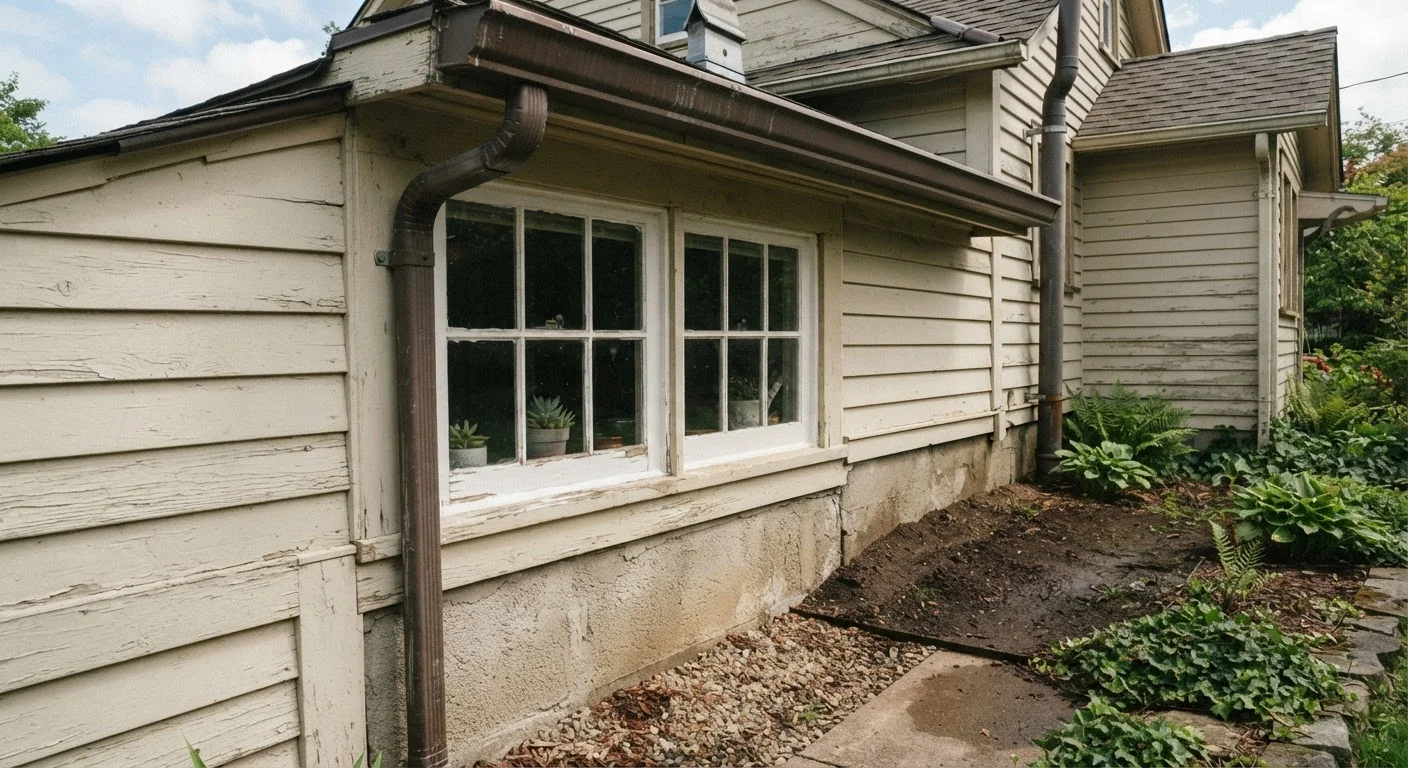
Even perfectly clean gutters fail if downspouts deposit water right next to the house. The general guidance from home inspectors and waterproofing contractors is to discharge water at least six feet away from the foundation — and more in flat yards with poor drainage. Inexpensive extender tubes and splash blocks handle most situations. This is one of the lowest-cost, highest-impact upgrades available to any homeowner.
Where water lands after leaving the downspout matters as much as the gutter itself.
Check and correct the grading around the foundation
The soil immediately surrounding your home should slope away from the foundation — typically a drop of about six inches over the first ten feet. Settled soil, garden beds built against the siding, or added hardscaping can reverse this slope and funnel water inward. Regrading around the perimeter with compacted soil is a manageable DIY project in most cases, though significant grading changes near drainage systems may warrant a contractor's assessment.
Soil that slopes toward your house is slowly working against your foundation every time it rains.
Inspect and maintain caulk around windows, doors, and penetrations
Caulk is the first line of defense against water infiltration at every joint and gap in the building envelope. It degrades — typically within five to ten years — and when it cracks or shrinks, water finds its way in behind siding, around window frames, and into wall cavities. Walk the exterior annually and look for gaps, peeling, or discoloration. Recaulking is inexpensive and takes an afternoon; the water damage it prevents can be extensive. This task also ties directly into energy efficiency — see home weatherization and energy loss for a fuller picture.
Failed caulk is invisible from the inside until water damage has already begun in the wall cavity.
Ventilate and inspect the crawl space annually
Crawl spaces are rarely visited and often poorly ventilated — a combination that encourages moisture buildup, wood rot, and pest entry. An annual inspection (or hiring a pest control or waterproofing professional to do one) can catch standing water, damaged vapor barriers, deteriorating floor joists, or evidence of rodent activity before any of those problems escalate. If a crawl space is consistently damp, a licensed contractor can evaluate whether encapsulation or improved drainage is appropriate. Moisture in the crawl space can also affect indoor air quality, making ventilation a health consideration as well.
Most crawl space damage goes undetected for years simply because homeowners rarely look.
Check flashing at the roof, chimney, and skylights
Flashing — the metal strips that seal transitions between the roof and vertical surfaces like chimneys, dormers, and skylights — is where most roof leaks originate. It can corrode, pull away, or crack at sealant points without any visible damage to the shingles themselves. A visual inspection from the ground with binoculars, or a professional roof inspection every few years, can catch lifting or corroded flashing before water travels into the attic or wall assembly. Roof work should be done by qualified professionals given the safety risks involved.
Most roof leaks don't start at shingles — they start at the flashing joints most people never examine.
Test sump pump function before wet season
If your home has a sump pump, it's the last line of defense against a flooded basement. Testing it takes about two minutes: pour a bucket of water into the pit and confirm the float triggers the pump and it evacuates the water. Do this before the rainy season each year. Check that the discharge line is clear and directed well away from the foundation. A sump pump that hasn't run in months may have a seized motor — and discovering that during a storm is far more costly than a seasonal test.
A sump pump that hasn't been tested in a year may not work when you need it most.
Trim trees and shrubs away from the structure
Overhanging branches accelerate shingle wear by abrading surfaces and depositing debris that holds moisture. Roots from large trees planted too close to the house can, over decades, encroach on drain lines or the foundation perimeter. Keeping branches trimmed back at least six feet from the roofline and monitoring root growth near utility lines and the foundation edge is practical long-term structural protection. For significant tree work near the house — especially large limbs over the roofline — licensed arborists are the appropriate professionals.
Trees add value to a property, but branches over the roofline quietly shorten the life of shingles.
Making These Tasks a System, Not a Scramble
The common thread across all eight items is timing: catching them early costs a fraction of fixing them late. A useful benchmark from the home inspection industry is that deferred maintenance on moisture-related issues can multiply repair costs three to five times within just a few seasons — though specific outcomes vary widely by climate, construction type, and how quickly a problem is caught.
Turn These Into a Twice-Yearly Walkthrough
Set a calendar reminder each spring and fall to walk the perimeter of your home and check gutters, downspout extensions, caulk, and grading in one pass. Pair the fall walkthrough with a crawl space check and sump pump test. Keeping a simple log of what you inspected and any issues found makes it easier to track deterioration over time and communicate clearly with contractors when professional help is needed.
Building a simple annual checklist — spring for exterior drainage and caulk, fall for gutters and crawl spaces — turns these tasks from reactive emergencies into routine upkeep. The annual home maintenance tasks most people skip is a practical companion resource. And if a project involves structural changes, electrical work, or anything below grade, always verify whether a permit is required — building permits cover more than most homeowners expect.
This article provides general home maintenance information for educational purposes only. Costs, timelines, and code requirements vary by location. Always consult a licensed professional for structural, electrical, or permitted work, and verify local requirements before beginning any project.