

Key Takeaways
Start here
Understanding Your Skill Level Before You Start
Next
The Starter Tool Kit Every Homeowner Needs
Then
DIY-Friendly Projects to Tackle First
Important boundary
When to Stop and Call a Professional
Before any project
Planning, Permits, and Avoiding Costly Mistakes
Understanding Your Skill Level Before You Start
Homeownership comes with a long to-do list, and the instinct to handle everything yourself is understandable — both to save money and to feel in control of your space. But the most important first step is an honest assessment of what you can safely do right now.
Think of home repairs as a spectrum. On one end are purely cosmetic tasks that require patience and basic tools. On the other are technical systems — electrical, gas, structural — that carry real safety and legal consequences when done incorrectly. Most new homeowners should spend their first months at the cosmetic and preventive-maintenance end of that spectrum.
Load-bearing wall
A wall that supports the weight of the structure above it. Removing or modifying one without professional guidance can compromise your home's structural integrity.
Building permit
Official approval from a local government agency required before starting certain construction or renovation work. It ensures the project will be inspected and meets safety codes.
Rough-in plumbing
The initial phase of plumbing installation where supply and drain lines are run through walls and floors before walls are finished. This is typically licensed-contractor territory.
Joint compound
A paste-like material used to fill holes, cover seams, and smooth drywall surfaces before painting. It dries hard and can be sanded to a smooth finish.
Stud
A vertical framing member inside a wall, typically spaced 16 inches apart. Anchoring heavy items into studs — rather than just drywall — provides a secure hold.
Before your first project, also review what came with your house: inspection reports, appliance manuals, and any seller disclosures. These documents reveal known issues and help you prioritize. You might also want to review things first-time homebuyers often overlook before closing, which covers critical steps that can surface hidden problems early.
The Starter Tool Kit Every Homeowner Needs
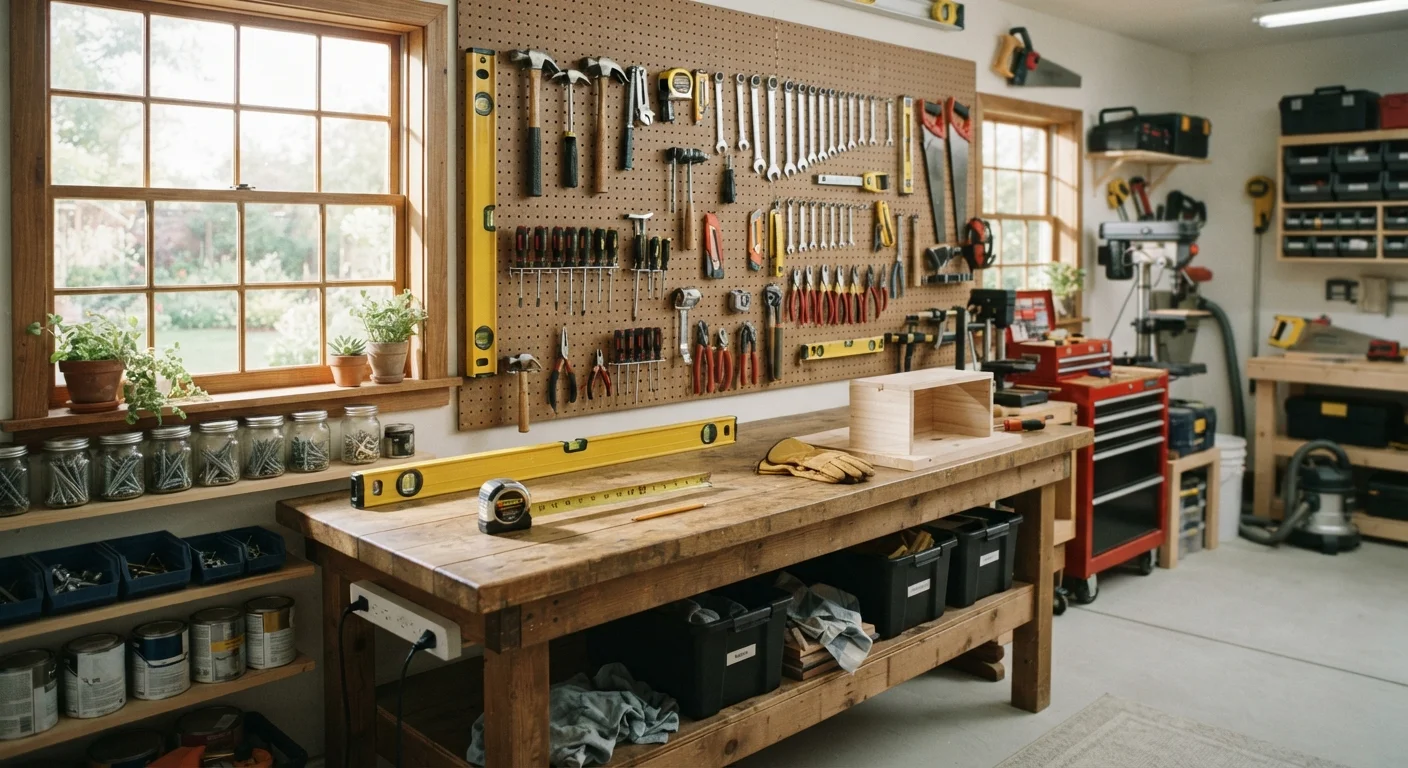
You do not need a garage full of power tools to handle most routine repairs. A well-chosen core set will take you far without overspending. Here is what to prioritize:
- Hammer — For driving nails, light demolition, and hanging.
- Cordless drill/driver — The single most versatile tool for any homeowner.
- Tape measure (25 ft) — Accurate measurements prevent expensive material waste.
- Level — Essential for hanging shelves, pictures, and fixtures straight.
- Stud finder — Lets you anchor heavy items safely to wall framing.
- Set of screwdrivers — Flathead and Phillips in multiple sizes.
- Adjustable wrench and slip-joint pliers — For basic plumbing and hardware tasks.
- Utility knife — Cutting drywall, flooring, caulk lines, and packaging.
- Caulk gun — Used for sealing gaps around windows, tubs, and sinks.
Add tools as specific projects demand them. Renting specialty tools from a hardware store is often smarter than buying equipment you may use once. See the annual home maintenance tasks most people skip to understand which recurring jobs these tools will support.
Start Small, Build Confidence
Your first few projects should be ones you can complete in a single afternoon. Small wins — a caulked tub, a patched wall, a replaced door handle — build the practical intuition that makes larger projects more manageable. Resist the urge to jump to complex renovations before you have a feel for how your home's systems work.
DIY-Friendly Projects to Tackle First
The following projects are well within reach for most new homeowners with basic tools and a willingness to learn. They also deliver visible results that build momentum.
Painting Interior Walls
Proper prep — patching holes, cleaning surfaces, taping edges — determines 80% of the result. Take your time on prep and the paint application becomes straightforward.
Caulking and Weather-Stripping
Sealing gaps around windows, doors, and tubs reduces drafts, lowers energy costs, and prevents moisture intrusion. This is one of the highest-return maintenance tasks a homeowner can do. It connects directly to overlooked maintenance tasks that protect a home's structure long-term.
Replacing Fixtures and Hardware
Swapping out light fixtures, cabinet pulls, door handles, and faucets (on supply lines, not main connections) is manageable with basic tools and shut-off valves. Always confirm power or water is off before starting.
Patching Drywall
Small holes from nails or door handles can be patched with a pre-mixed joint compound and a few simple steps. Larger holes up to about 6 inches can be handled with a patch kit. Cracks along seams or near corners may indicate structural movement and warrant a professional assessment.
Installing Shelving and Storage
Wall-mounted shelves add function to any room and are beginner-friendly when anchored properly into studs. This pairs well with room-by-room organization strategies for getting your space set up efficiently.
When to Stop and Call a Professional
Knowing your limits is not a weakness — it is smart homeownership. Certain work carries risks that go well beyond a failed project: injury, fire, flooding, or code violations that affect your ability to sell the home later.
Don't Skip Safety on Live Systems
Working on electrical outlets, plumbing supply lines, or gas connections without shutting off the relevant utility first is one of the most common causes of serious DIY injuries. Always locate your main water shut-off, circuit breaker panel, and gas shut-off valve before undertaking any project that could affect them. When in doubt, treat the system as live until you have confirmed otherwise.
Always hire a licensed professional for:
- Electrical panel work — Upgrading breakers, rewiring circuits, or adding outlets beyond a simple switch swap.
- Gas lines — Any connection, repair, or rerouting involving natural gas or propane.
- Load-bearing walls — Removing or modifying walls that support the home's structure.
- Main plumbing connections — Work on supply mains, sewer lines, or anything requiring a permit.
- Roofing repairs — Beyond replacing a few shingles, roof work is physically dangerous and technically demanding.
- HVAC systems — Central heating and cooling systems involve refrigerants and combustion that require licensed handling.
If you are unsure whether a project falls into this category, a paid one-hour consultation with a licensed trade professional is money well spent. You can also review hiring a general contractor vs. managing subcontractors yourself to understand how professional project management works.
Planning, Permits, and Avoiding Costly Mistakes
Even a well-executed project can create problems if it skips required permits. Unpermitted work can complicate home sales, void insurance claims, and — in serious cases — require demolition and rework at your expense.
As a general rule: if a project changes a home's electrical, plumbing, gas, or structural systems, or if it involves adding habitable square footage, contact your local building department first. Requirements vary significantly by municipality, so do not rely on assumptions from other homeowners.
Good planning also prevents the most common DIY pitfall: buying the wrong materials. Measure twice, research the product specifications, and understand the return policy before purchasing. Consult questions to ask before any home renovation project for a structured pre-project checklist that applies whether you are doing the work yourself or hiring someone else.
Finally, be honest about the time cost. A weekend project that extends into two weeks because of unexpected complications is a real strain. Build buffer time into your plan and have a contingency — a plumber on standby, for example — if a repair touches a live system. Avoiding common renovation misconceptions also helps; see home renovation myths that cost homeowners real money for a clear-eyed look at what actually adds value to a home.
This article provides general home improvement information for educational purposes only. Always verify local permit requirements with your municipality and consult licensed professionals for work involving electrical, gas, structural, or plumbing systems.