

Key Takeaways
Start here
Why Start Room by Room
Next
The Entryway and Living Room
Then
Kitchen and Dining Area
Continue
Bedroom and Closet
Almost done
Bathroom and Utility Spaces
Final step
Building Habits That Stick
Why Start Room by Room
Home organization doesn't require a weekend marathon or a total lifestyle overhaul. The room-by-room approach breaks an overwhelming task into manageable, completable units — and that sense of completion is what builds momentum.
Before touching a single drawer, it helps to understand two foundational ideas. First, every object in your home should have a designated home — a specific place it belongs when not in use. Second, organization is not the same as tidying. Tidying moves clutter out of sight; organizing creates a system so clutter stops accumulating in the first place.
Not sure where to start? Your personality and schedule may point toward a specific decluttering framework before you begin arranging anything.
Designated home
A specific, consistent place where an item belongs when not in use. Having one prevents the object from drifting and creating clutter.
Zone-based storage
Organizing items according to where and how you use them, rather than grouping all similar objects together regardless of location.
Decluttering
The process of deciding which items to keep, donate, sell, or discard — done before organizing so you're only creating systems for things you genuinely need.
Surface reset
A quick daily habit of clearing counters, tables, and other flat surfaces back to their intended state, preventing clutter from compounding overnight.
Vertical space
The usable area above typical shelf or floor height in a room. Most homes underuse wall height and the tops of closets, which can add meaningful storage capacity.
The Entryway and Living Room
The entryway is the first place clutter accumulates and the last space most people think to organize. A few deliberate systems here prevent disorder from spreading inward. A dedicated hook or bin for keys, a small tray for mail, and a shoe rack or basket near the door handle the most common sources of entry-zone chaos.
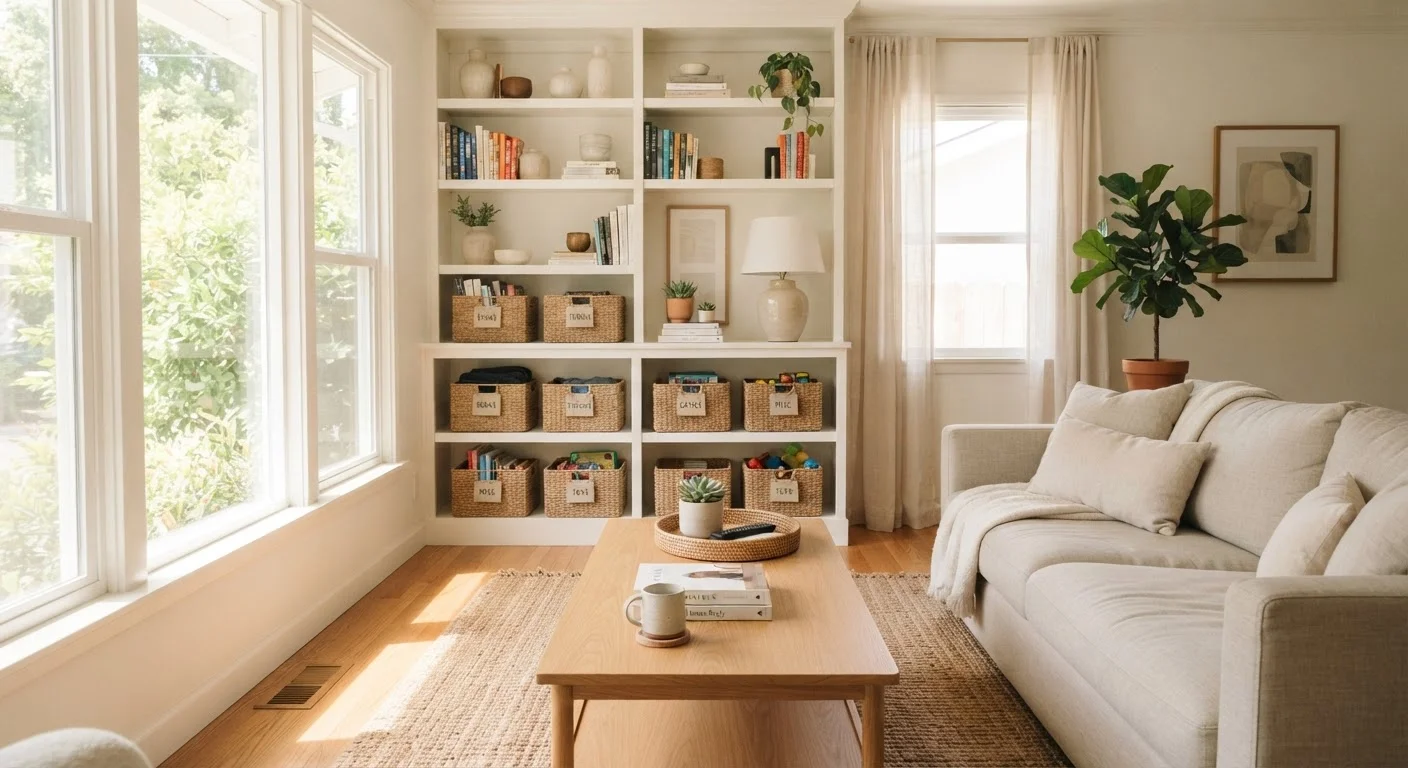
In the living room, the goal is a space that resets quickly. Assign each category of loose items — remotes, chargers, books, throw blankets — a container or shelf position. Furniture placement also affects how functional a room feels; common layout habits can unintentionally shrink a room.
Organize Before You Buy Storage
Avoid purchasing bins, baskets, or shelf organizers until after you've decluttered a space. Once you know exactly what you're keeping, you can measure and buy storage that actually fits — and you'll often need far less than you expected.
If you share your home, living areas benefit from clear, easy-to-use systems everyone can follow. The principles for shared living spaces cover how to build systems that accommodate different habits without constant negotiation.
Kitchen and Dining Area
Kitchens accumulate more categories of items than almost any other room: food, cookware, tools, small appliances, cleaning supplies, and paper. The organizing principle here is zone-based storage — group items by where and how they are used, not by type alone. Coffee supplies near the coffee maker. Cutting boards near the prep area. Pots near the stove.
Countertops deserve particular attention. Every item living on the counter is occupying prime real estate. If an appliance isn't used at least weekly, consider storing it in a cabinet or pantry instead.
Don't Let Food Expiration Dates Slide
When organizing pantry and refrigerator zones, check expiration dates on everything you handle. Expired food stored neatly is still expired food. Disposing of it at the start clears space and prevents accidental use of spoiled products.
In the dining area, the table is often treated as a secondary desk or mail drop. Assigning that paper clutter a permanent home elsewhere — an inbox tray, a filing folder — keeps the table usable for its intended purpose.
Bedroom and Closet
The bedroom serves a single primary purpose: rest. Keeping it free of work materials, excess furniture, and visual noise directly supports sleep quality and mental clarity. Begin by removing anything that doesn't serve rest or getting ready.
Closets are the most commonly disorganized space in American homes. The fix rarely requires a closet system remodel. Start by pulling everything out, discarding what you no longer wear or need, then returning items grouped by category: tops together, bottoms together, seasonal items on higher shelves. Vertical space is almost always underused — a second hanging rod or shelf risers can effectively double usable area.
Renters and those in smaller spaces can find additional strategies in our guide to storage solutions for small apartments.
Bathroom and Utility Spaces
Bathrooms are small but disproportionately chaotic. The main culprit is product accumulation — most households hold duplicates, near-empties, and items that were tried once and abandoned. A quarterly review of bathroom products prevents this from reaching a tipping point.
Under-sink cabinets and medicine cabinets benefit from pull-out bins or shelf risers, which bring items at the back within easy reach. In utility spaces — laundry rooms, garages, basements — the same zone-based logic applies: group by activity (laundry, gardening, tools) rather than by object type.
Building Habits That Stick
A well-organized home doesn't stay that way automatically — it requires a handful of low-effort daily habits. The most effective ones take under two minutes: putting items back after use, doing a quick surface reset before bed, and handling mail the day it arrives rather than letting it stack.
Resist the urge to perfect everything at once. Organization is an ongoing process, not a destination. Systems that are too rigid or too elaborate tend to collapse under everyday life pressure. The best system is one you'll actually use.
Be aware that some popular organizing advice doesn't hold up under scrutiny. Common organization myths — like the idea that matching containers solve everything — can lead to wasted effort and money.
Decluttering Method Comparison Guide
Explore different decluttering frameworks — from category-based sorting to room sweeps — to find the approach that fits your schedule and personality.
Small-Space Storage Ideas
Renter-friendly, no-drill storage solutions organized by room type for apartments and compact homes looking to maximize every square foot.