

Key Takeaways
The Small-Apartment Storage Problem
Living in a small apartment doesn't mean accepting constant clutter — it means thinking differently about every surface, corner, and vertical inch you have. The good news for renters: the most effective storage upgrades don't require a single hole in the wall or landlord approval. They require a shift in how you see the space.
Before adding any new storage, a practical first step is an honest declutter. Storage systems work best when they're organizing things you actually use, not acting as expensive hiding spots for items that should be donated or discarded. Once you've cleared that baseline, the strategies below can make a real difference — organized here by the types of space they target.
For a broader room-by-room approach to getting your whole home organized, see this room-by-room organization guide.
Use Vertical Space Above Furniture
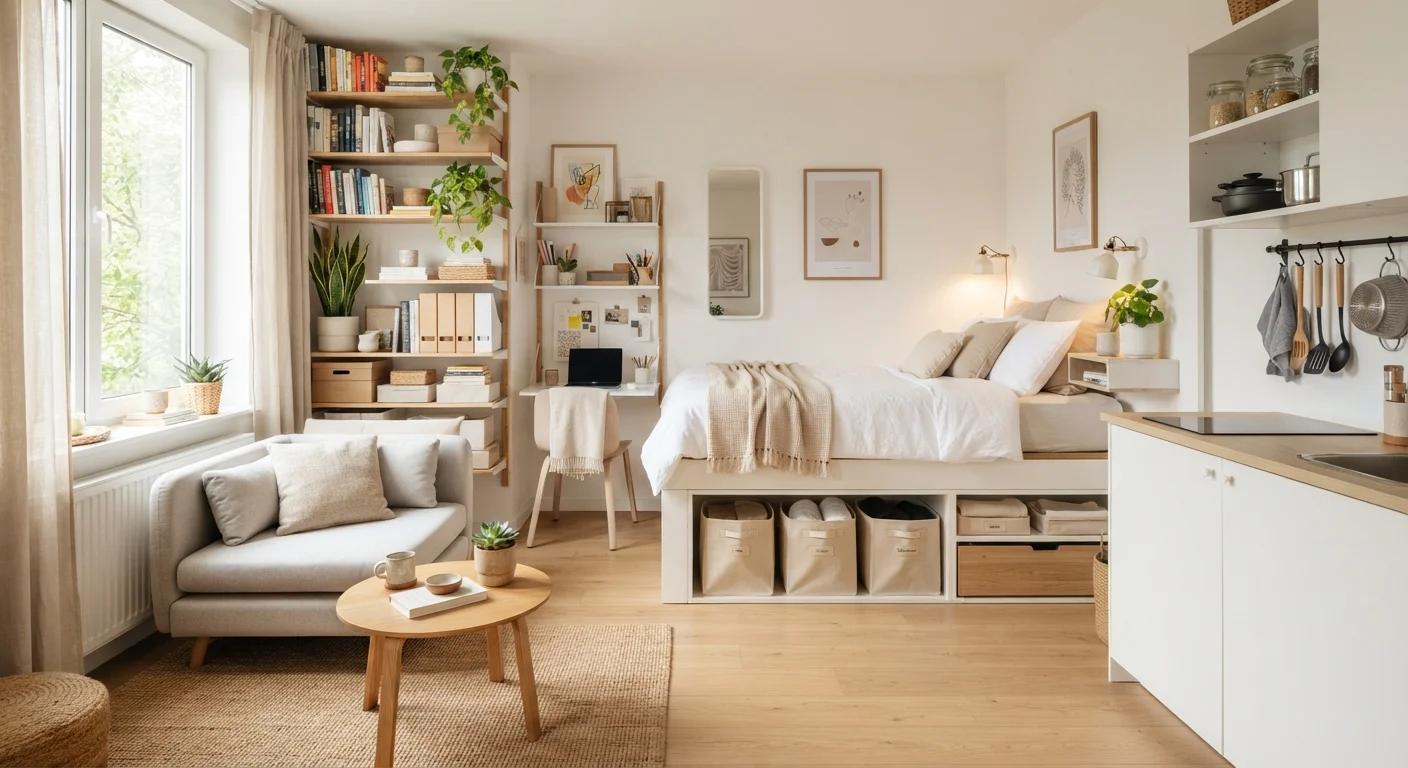
Most renters use the footprint of their furniture but ignore the six feet of wall space above it. Freestanding shelving units — no anchoring required in most cases — can sit above a sofa, desk, or dresser and hold books, baskets, or folded items. Look for units with adjustable shelves so you can customize height for what you're storing.
If your lease or wall type genuinely supports damage-free adhesive strips rated for heavier loads, lightweight floating shelves become an option too. Always check weight ratings carefully and follow manufacturer instructions — adhesive products vary significantly in what they can hold.
The wall space above your furniture is often the most overlooked storage real estate in any apartment.
Choose Furniture That Doubles as Storage
Multi-function furniture is one of the most efficient investments in a small apartment. Ottomans with interior compartments work as coffee tables, extra seating, and linen storage simultaneously. Bed frames with built-in drawers eliminate the need for a separate dresser. Benches at the entryway can hold shoes inside while providing a place to sit when putting them on.
When evaluating furniture, check the interior dimensions of any storage compartment — not just the external size — to confirm it fits what you plan to store there.
Every piece of furniture in a small apartment should earn its floor space by serving more than one function.
Maximize Under-Bed Space
The area under your bed is often one of the largest unused storage zones in the apartment. Flat, lidded bins on wheels are designed specifically for this space and work well for seasonal clothing, extra bedding, or shoes. If your bed frame sits too low, bed risers (stackable blocks placed under each leg) can add several inches of clearance without any permanent modification.
Storing items in labeled, sealed containers under the bed also protects them from dust accumulation over time.
Under-bed storage, when properly organized with lidded bins, can substitute for an entire dresser drawer set.
Rethink the Back of Every Door
The back of a closet door, bathroom door, or even a pantry door can hold a significant amount when fitted with an over-the-door organizer. These come in configurations suited to shoes, cleaning supplies, toiletries, spices, or general small-item storage — no drilling required. Most hook over a standard door without damaging the door or frame.
Measure door clearance before purchasing: some organizers extend far enough to interfere with the door closing fully if there's a shelf or wall behind it.
Over-the-door organizers convert dead space into functional storage without touching walls or requiring tools.
Make the Kitchen Work Harder
Small kitchens often have more usable space than they appear to — it's just configured poorly. Drawer dividers keep utensils sorted so every inch of drawer space is used. A magnetic strip for knives or frequently used tools keeps the counter clear. Tiered shelf inserts inside cabinets essentially double the usable surface area within the same cabinet depth.
If you're drawn to open shelving as an option in the kitchen, it's worth understanding the full trade-off: open shelving comes with real maintenance demands that don't show up in the inspiration photos.
Tiered inserts inside existing cabinets are one of the cheapest ways to double usable kitchen storage immediately.
Rearrange Before You Buy Anything
Before purchasing new storage products, try rearranging what you already have. Furniture placement has a direct effect on how functional and spacious a room feels — and on how accessible your existing storage is. A bookcase positioned to divide a studio into sleep and living zones, for example, also adds display and storage without claiming additional floor space.
If your current layout feels cramped despite being relatively empty, your furniture arrangement itself may be working against you.
Rearranging existing furniture costs nothing and often reveals storage opportunities that new purchases can't create.
Making It Stick Long-Term
Storage solutions only work if they match your actual habits. A system that looks perfect in a photo but requires ten extra steps every time you need something will be abandoned quickly. As you implement any of the ideas above, ask whether each one fits how you genuinely live — not how you'd like to live in theory.
Label Everything You Can't See Into
Any storage container that hides its contents — a lidded bin, a basket, a cabinet — becomes a black hole without labeling. Even a simple handwritten label on a piece of tape saves meaningful time and prevents the common habit of overstuffing because you've forgotten what's already inside. Consistent labeling is especially useful under beds and in high shelves where you're not looking directly into the container.
If you share your apartment with roommates or a partner, storage decisions benefit from a shared framework. Principles for shared living spaces offers a useful starting point for aligning on systems in common areas. And if your bedroom closet is still feeling overwhelming after adding storage, it may also help to reconsider what's inside it — getting more from fewer clothes is a complementary strategy worth exploring.