

Key Takeaways
Why Your Existing Closet Likely Has More Range Than You Think
The feeling of having nothing to wear despite a full closet is extremely common — and it's usually a systems problem, not a quantity problem. When clothes are stacked, hidden, or disorganized, your brain defaults to the same familiar pieces because they're the ones you can actually see and access. The rest becomes invisible inventory.
This guide walks through a practical process for unlocking outfit combinations you already own — no shopping required. The approach focuses on identifying neutral anchors, building repeatable color relationships, and using layering to shift the same pieces across different contexts and dress codes.
If you've ever considered dramatically scaling back your wardrobe to solve this, our overview of the capsule wardrobe concept is worth reading first — it explains what that approach actually involves and whether it fits different lifestyles.
Visibility Is the Real Bottleneck
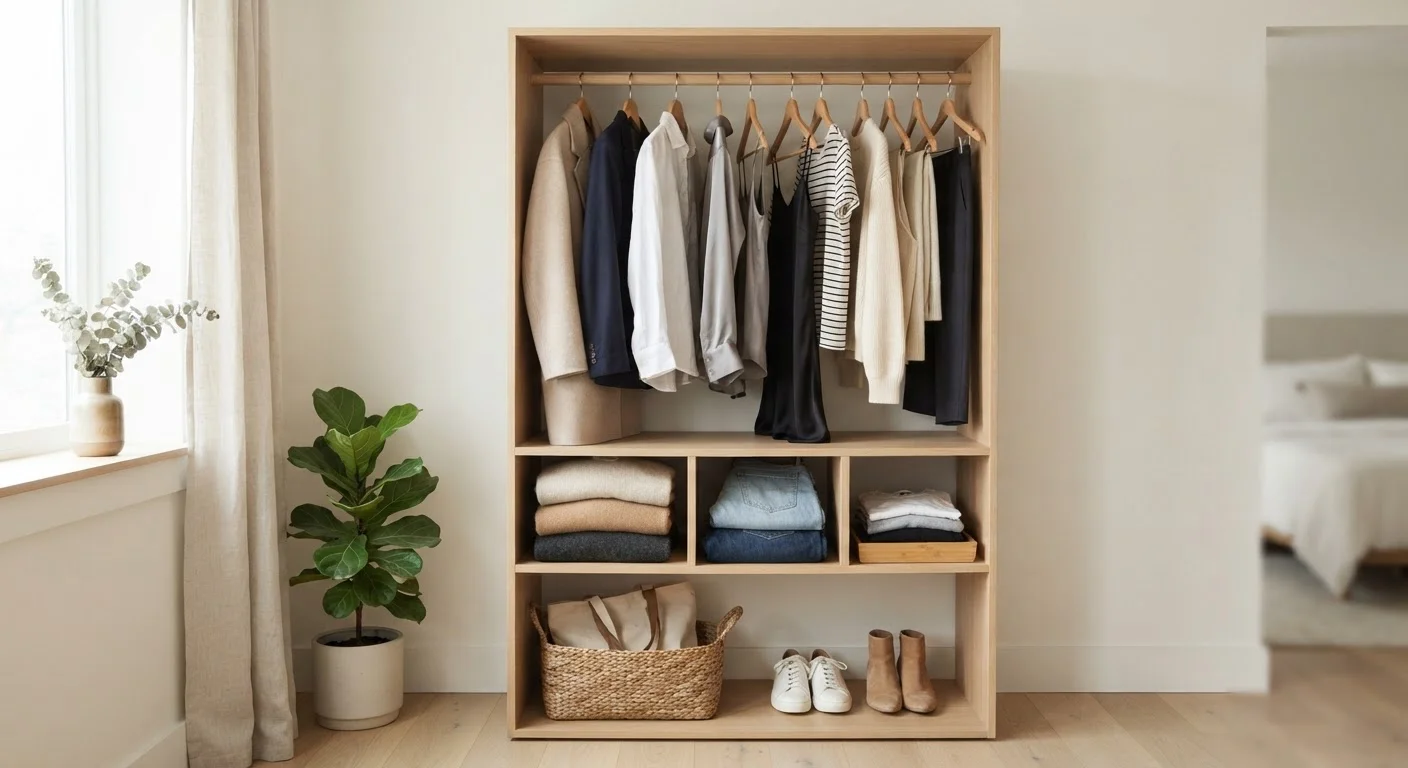
The most common reason people feel like they have nothing to wear isn't a shortage of clothes — it's that their clothes aren't visible or accessible. Reorganizing before buying anything else is almost always the higher-leverage move. A well-organized small wardrobe consistently outperforms a packed, chaotic one.
Here's what you'll need before starting:
What you will need
And the tools that help most:
Full-length mirror
Allows you to evaluate complete outfit combinations from head to toe before committing to them.
Hangers (uniform style preferred)
Consistent hangers make scanning the closet faster and keep garments visible and wrinkle-free.
Notepad or phone notes app
Record outfit combinations you discover during the audit so you can recreate them later.
Clothing steamer or iron
Refreshes wrinkled pieces that may have been overlooked, making them ready to style again.
The Step-by-Step Process
Pull everything out and do a visibility audit
You cannot style what you cannot see. Remove every item from your closet and lay it out by category: tops, bottoms, layers, dresses, shoes, and accessories. This single act usually reveals forgotten pieces that have been buried — and often exposes duplicates you didn't realize you owned. As noted in our guide to the hidden costs of a disorganized closet, most people wear roughly 20% of what they own 80% of the time, simply because the rest isn't visible.
Identify your neutral anchors
Neutral anchors are the items that pair with almost everything else: navy, white, grey, black, tan, and olive tend to be the most flexible. Identify which of these you already own in good condition. These become the foundation pieces around which everything else rotates. A well-fitting dark trouser, a clean white or light-toned shirt, and a single-color layering piece can anchor dozens of combinations. For a deeper look at what qualifies as a genuine wardrobe workhorse, our wardrobe essentials reference breaks it down clearly.
Map out repeatable color relationships
Once your neutrals are identified, look at your non-neutral pieces and ask: which two or three neutrals does this item pair with? A burgundy blouse might work with grey trousers, dark jeans, and camel trousers — that's three combinations from one piece. Write these down. You're building a mental (or physical) map of relationships rather than isolated outfits. This approach scales quickly: five pieces with three pairings each can generate more than a dozen distinct combinations.
If you have patterned pieces and aren't sure how to incorporate them, our guide to mixing patterns covers the logic behind combinations that tend to hold together.
Practice strategic layering
Layering transforms a single outfit into multiple versions of itself. A crew-neck tee under an open button-down reads differently than the button-down worn alone or the tee worn with a blazer. A cardigan over a dress changes its formality and its season. Try layering pieces you wouldn't normally pair: a structured jacket over a casual t-shirt and jeans, a lightweight scarf tied at the neck of a plain top. Each layer introduces a new variable that changes the outfit's overall tone. This is especially useful for navigating dress codes — the same base outfit can shift from casual to smart-casual with the addition of one structured layer.
Record the combinations that work
After trying combinations in front of a mirror, write down or photograph the ones that feel complete and wearable. Over time, this becomes a personal style reference — especially useful on rushed mornings. Even a simple list in your phone notes (e.g., "grey trousers + white tee + camel blazer + loafers") removes the mental load of re-deciding every day. Some people find this feels overly systematic at first, but it tends to make getting dressed faster and more satisfying.
Maintain what you already own
A piece that's pilling, faded, or misshapen stops functioning as a versatile option — even if it technically still fits. Regularly steaming, properly storing, and following care labels keeps your existing pieces in rotation longer. Good care habits also preserve the structure and color that make items easy to pair. Our clothing care guide covers the specific habits that make the biggest difference over time.
Start Small, Then Scale
You don't need to audit your entire wardrobe in one sitting. Starting with just your tops and bottoms — the two categories that interact most — can surface a meaningful number of new combinations in under an hour. Build from there once those relationships feel natural.
More Clothes Won't Solve the Problem
Buying new pieces before understanding how your existing wardrobe works often makes the problem worse, not better. New additions without a clear role tend to become the forgotten items of tomorrow. Work through this process first, then identify genuine gaps if any remain.
Once you've worked through this process, you may find that a handful of genuine gaps remain — pieces that would meaningfully connect what you already own. At that point, our guide to building a functional wardrobe from the ground up offers a logical framework for adding pieces strategically rather than impulsively. And if closet space itself is part of the challenge, our storage solutions for small spaces has renter-friendly ideas that don't require major changes.