

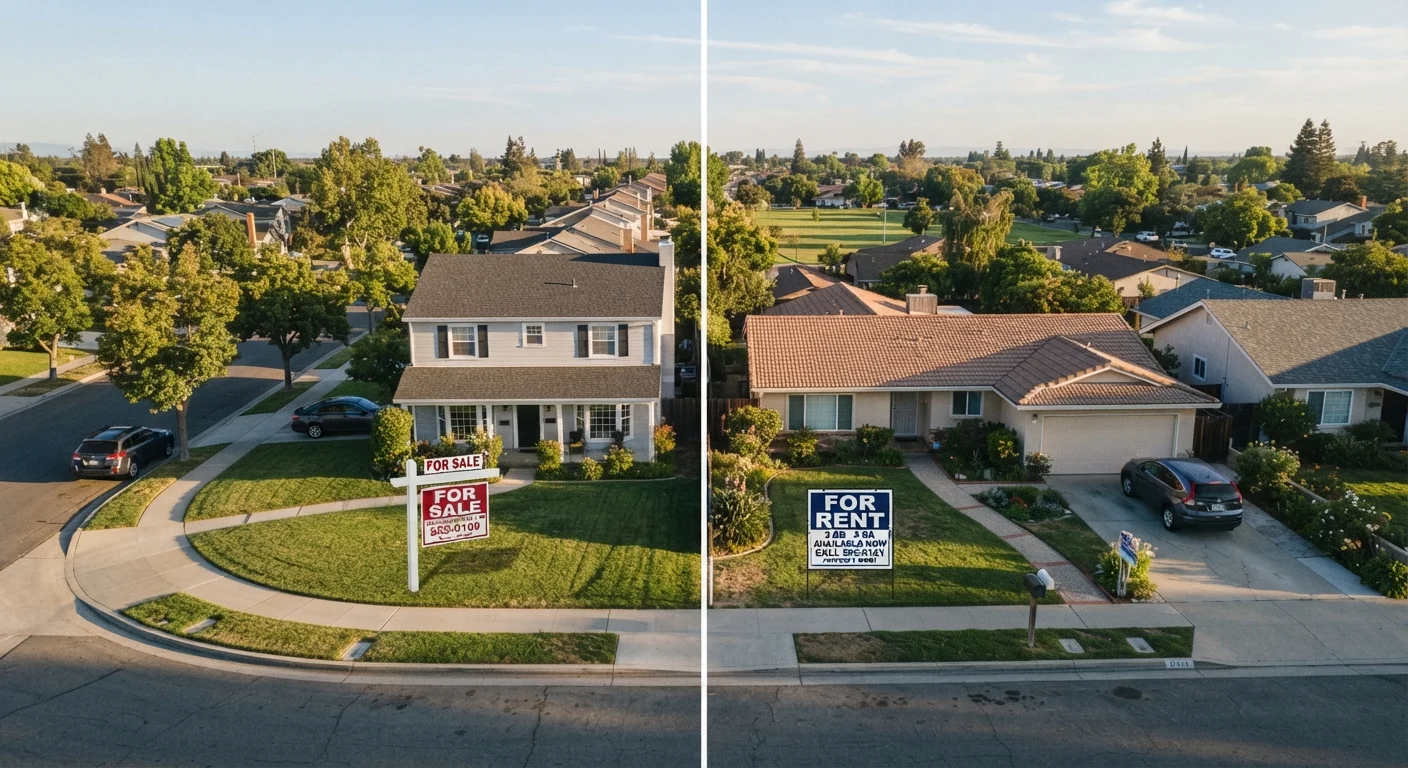
Key Takeaways
Option A
Renting a Home
The flexible, lower-commitment housing path.
Best for: People who value mobility, want to avoid maintenance responsibilities, or aren't yet financially or geographically ready to buy.
Option B
Buying a Home
The long-term equity-building route.
Best for: People with stable income, a solid down payment, and plans to stay in one area for at least several years.
If you plan to move within the next three years
Renting a Home
The transaction costs of buying — closing costs, agent fees, and early mortgage interest — typically take several years to recoup. Renting avoids locking capital into an asset you'd sell quickly.
If you have a stable income and plan to stay in an area for five or more years
Buying a Home
Over a longer horizon, monthly mortgage payments build equity rather than going to a landlord, and historically home values have appreciated in most US markets over time.
If you're managing significant existing debt or have limited savings
Renting a Home
Homeownership carries ongoing costs beyond the mortgage — maintenance, property taxes, and insurance — that can strain tight budgets. Renting preserves cash flow while you build financial footing.
If you want predictable housing costs and maintenance-free living
Renting a Home
Renters typically aren't responsible for major repairs or property taxes, which makes monthly housing expenses more predictable in the short term.
If building long-term household wealth is a primary goal
Buying a Home
Homeownership is one of the primary ways American households accumulate net worth, through both forced savings via mortgage payments and potential property appreciation.
The Core Financial Tradeoffs
At its most basic, the renting vs. buying question is a financial one — but the math is rarely simple. Renting requires first and last month's rent plus a security deposit upfront. Buying typically demands a down payment (commonly 3%–20% of the purchase price), closing costs (generally 2%–5% of the loan amount), and cash reserves for early maintenance needs.
Once you're in, the ongoing costs diverge further. Renters pay a fixed monthly amount — manageable and predictable. Homeowners pay a mortgage (principal and interest), property taxes, homeowners insurance, and maintenance, which experts often estimate at 1%–2% of a home's value annually. On the upside, each mortgage payment chips away at the principal balance, building equity that rent payments never can.
| Criterion | Renting | Buying |
|---|---|---|
| Upfront costs | Security deposit + first/last month | Down payment + closing costs (5–25% of price) |
| Monthly cost predictability | Fixed for lease term; may rise at renewal | Fixed-rate mortgage stable; taxes/insurance may shift |
| Equity building | None | Yes, through principal paydown and appreciation |
| Maintenance responsibility | Landlord handles most repairs | Owner bears full responsibility |
| Flexibility to relocate | High — lease terms are short | Low — selling takes time and costs money |
| Customization | Limited by lease terms | Full control within local codes |
| Tax considerations | No direct tax benefit | Potential mortgage interest deduction (consult a tax professional) |
For a deeper look at how mortgage structure affects long-term costs, see our comparison of fixed-rate and adjustable-rate mortgages. And if the broader transaction process feels unfamiliar, our walkthrough of the US home sale process covers every stage from offer to closing.
Lifestyle and Flexibility Considerations
Financial comparisons don't capture everything. Renting offers a degree of mobility that homeownership rarely matches — lease terms are usually 12 months, and breaking one, while not free, is far simpler than selling a property. For people whose careers require geographic flexibility, or who are still exploring where they want to put down roots, renting's shorter commitment is a genuine advantage.
Homeownership, by contrast, brings a different set of freedoms: the ability to renovate, paint, landscape, and make a space truly your own without landlord approval. It also brings stability — no risk of a landlord deciding to sell or dramatically raising rent at renewal. For families in particular, the stability of a fixed-rate mortgage in a chosen school district has real, tangible value.
65.6%
US homeownership rate
The US Census Bureau reports that roughly two-thirds of American households own their home, a figure that has fluctuated between 63% and 69% over the past three decades.
3–5 years
Typical break-even horizon for buying
Housing economists generally estimate that buyers need to stay in a home at least three to five years to recoup transaction costs through equity gains and avoided rent increases.
1%–2%
Annual maintenance cost estimate
A widely used rule of thumb suggests homeowners budget 1%–2% of their home's value each year for routine maintenance and repairs.
Renters should also understand their legal standing. Our overview of tenant rights and landlord obligations outlines the protections available to US renters, which vary significantly by state. For managing the financial side of either path, general guidance on saving and managing debt can help you build a stronger foundation before committing.
How Market Conditions and Timing Factor In
The local housing market can shift the math dramatically. In high-cost metro areas, monthly mortgage payments on a median-priced home may far exceed what comparable rental units cost — making renting financially rational even for households with the means to buy. In smaller markets or slower-growth cities, the reverse is often true: buying can cost less per month than renting a similar space.
A commonly cited rule of thumb is the price-to-rent ratio: divide the median home price in an area by the annual rent for a comparable property. A ratio above 20 generally favors renting; below 15 generally favors buying. This is a rough guide, not a formula, but it illustrates how local dynamics — not just personal finances — shape the decision.
Timing also matters in ways that go beyond market cycles. How long you plan to stay is arguably the single most important variable. Transaction costs on a home purchase — agent commissions, title fees, lender charges — typically require several years of ownership just to break even. If a job change, family shift, or lifestyle move seems likely within three to four years, the financial case for buying weakens considerably. This is a tradeoff you'll recognize if you've also weighed buying versus leasing a vehicle — upfront commitment versus ongoing flexibility is a recurring theme in major financial decisions.
This article is for general informational and educational purposes only. It is not financial, legal, or investment advice. Readers should consult a qualified financial professional before making housing decisions based on their individual circumstances.