

Key Takeaways
The Hidden Dangers Already in Your Home
Pet owners rarely set out to harm their animals. In most poisoning cases, the culprit is something entirely ordinary — a bowl of grapes left on the counter, a lily arrangement on the windowsill, or a tube of sugar-free gum in a bag the dog rooted through. The danger lies in how normal these items feel.
Dogs and cats explore the world differently than we do. They chew, lick, and mouth objects without any concept of toxicity. That makes the home environment a minefield of potential hazards that owners often don't recognize until something goes wrong. Understanding which common items carry real risk is one of the most practical steps you can take as a pet owner.
For a broader look at navigating early pet ownership safely, see what first-time dog owners commonly overlook in those critical first weeks.
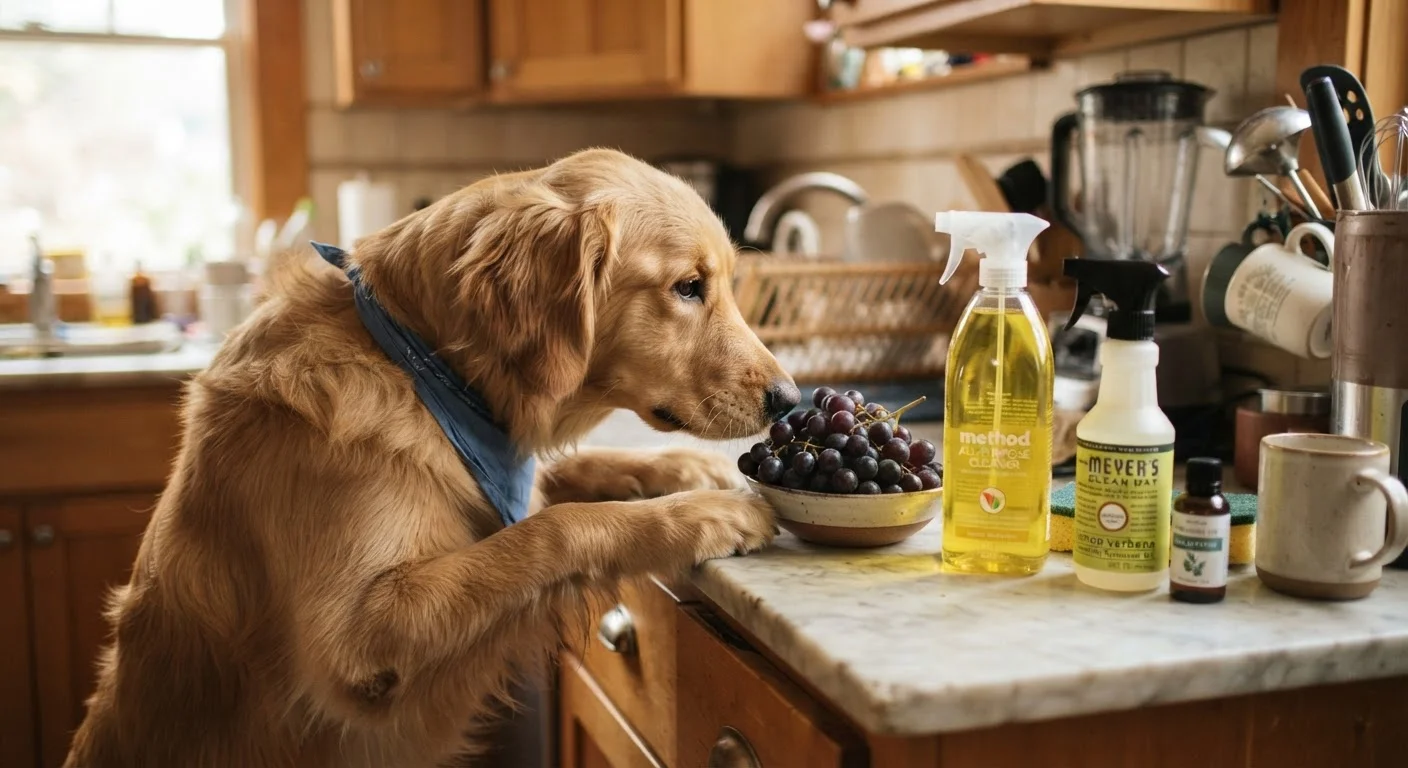
Sharing grapes, raisins, or currants with pets as a snack.
Why it happens: Grapes seem like a wholesome, natural treat — owners reasonably assume what's healthy for humans is safe for animals.
Using xylitol-containing products without checking whether pets can access them.
Why it happens: Xylitol appears in dozens of products — sugar-free gum, some nut butters, mouthwash, chewable vitamins — and owners don't always read ingredient labels with pets in mind.
Keeping lilies or other toxic plants in homes with cats.
Why it happens: Lilies are among the most popular florist flowers, and many owners don't know that true lilies (Lilium and Hemerocallis species) are acutely toxic to cats — capable of causing kidney failure even in small amounts.
Using human medications — including over-the-counter pain relievers — on pets.
Why it happens: When a pet appears to be in pain, owners want to help immediately. Medications like ibuprofen, acetaminophen, and naproxen are within easy reach and seem like a logical short-term fix.
Diffusing essential oils in rooms shared with pets, especially cats.
Why it happens: Essential oil diffusers are widely marketed for home wellness, and owners may not realize that cats in particular lack the liver enzymes needed to metabolize certain compounds found in oils like tea tree, eucalyptus, and peppermint.
Leaving household cleaners, detergent pods, or disinfectant wipes accessible to pets.
Why it happens: Cleaning products are often stored under sinks or in low cabinets — exactly where curious dogs and cats investigate. Some products have appealing scents or packaging that attracts animals.
What Exposure Can Look Like — and When to Act
Toxic exposure in pets doesn't always look dramatic at first. Early signs can be subtle: unusual lethargy, drooling, repeated swallowing, dilated pupils, or mild vomiting. Owners may mistake these for minor stomach upset and wait. That delay can significantly affect outcomes.
Don't Wait for Symptoms to Worsen
Some of the most dangerous pet toxins produce few visible signs in the first hours after ingestion. Waiting to see if your pet 'seems okay' can allow serious organ damage to progress. If you have any reason to believe your pet has ingested a toxic substance, contact your veterinarian or a pet poison hotline immediately — do not delay treatment while monitoring symptoms at home.
Some toxins — particularly grapes, raisins, and certain medications — can cause severe internal damage while outward symptoms remain mild for hours. Others, like xylitol (an artificial sweetener found in sugar-free gum, some peanut butters, and baked goods), act quickly, causing a dangerous drop in blood sugar within 30 to 60 minutes of ingestion.
#1
Most common pet poison call category
According to the ASPCA Animal Poison Control Center, human medications consistently rank as the top category of pet poisoning inquiries each year.
~400,000
Annual pet poison exposures reported
The ASPCA Animal Poison Control Center reports handling hundreds of thousands of cases annually, with many involving everyday household substances.
If you know or suspect your pet has ingested a toxic substance, don't wait for symptoms to worsen. Contact your veterinarian or call a pet poison control hotline right away. Time matters. For a detailed reference on which foods carry verified toxicity risk, the guide to people foods genuinely dangerous for pets covers the most commonly encountered hazards.
When bringing any new animal home, a structured safety review of your living space is essential. The first 30-day health and safety checklist is a practical resource for this process.
This article is for general informational purposes only and does not constitute veterinary or medical advice. Always consult a licensed veterinarian regarding your pet's health and any concerns about toxic exposure.