

| ASPCA Animal Poison Control calls annually | Over 400,000 cases per year (ASPCA Animal Poison Control Center) |
| Most common food toxin calls | Chocolate, grapes/raisins, xylitol (ASPCA APCC annual reports) |
| Toxic chocolate dose (dogs) | Varies by chocolate type; dark and baking chocolate are most dangerous (Merck Veterinary Manual) |
| Grapes/raisins — safe amount | None established; any amount is considered a risk (Merck Veterinary Manual) |
| Species most affected by xylitol | Dogs; cats less commonly exposed but also at risk (ASPCA Animal Poison Control Center) |
| Emergency vet action if ingestion suspected | Contact ASPCA APCC (888-426-4435) or your vet immediately (ASPCA Animal Poison Control Center) |
Why Human Foods Pose Unique Risks to Pets
Dogs and cats share our homes but not our metabolisms. Compounds that the human body handles without difficulty can overwhelm a pet's liver, kidneys, or red blood cells entirely. The danger is often invisible: a pet may eat a small amount of a toxic food, appear fine for hours, and then deteriorate rapidly.
Two facts make this especially important for pet owners to understand. First, dose matters enormously — some toxins are dangerous in tiny quantities, while others cause harm only above a certain threshold. Second, the threshold is unknown or zero for several common foods, meaning no safe amount can be established. See our broader guide to household toxins for additional hazards beyond food.
| ASPCA Animal Poison Control calls annually | Over 400,000 cases per year (ASPCA Animal Poison Control Center) |
| Most common food toxin calls | Chocolate, grapes/raisins, xylitol (ASPCA APCC annual reports) |
| Toxic chocolate dose (dogs) | Varies by chocolate type; dark and baking chocolate are most dangerous (Merck Veterinary Manual) |
| Grapes/raisins — safe amount | None established; any amount is considered a risk (Merck Veterinary Manual) |
| Species most affected by xylitol | Dogs; cats less commonly exposed but also at risk (ASPCA Animal Poison Control Center) |
| Emergency vet action if ingestion suspected | Contact ASPCA APCC (888-426-4435) or your vet immediately (ASPCA Animal Poison Control Center) |
The High-Risk Foods Every Owner Should Know
Grapes and Raisins
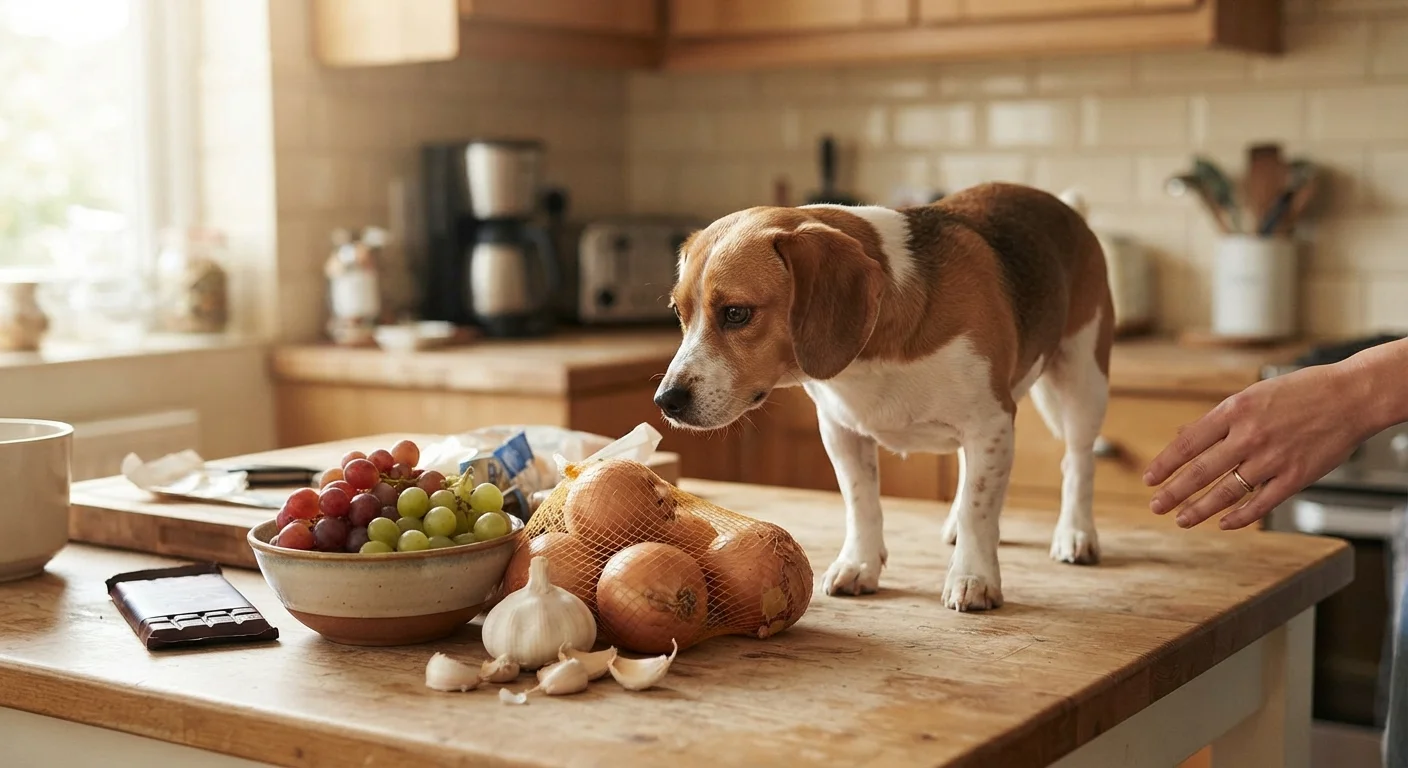
No safe dose has been identified. Even a small number of grapes or raisins has been linked to acute kidney failure in dogs. The exact mechanism remains under investigation, but tartaric acid is currently a leading suspect. Cats are also considered at risk. Dried forms — raisins, currants, sultanas — are more concentrated and therefore more dangerous by weight.
Chocolate and Caffeine
Chocolate contains theobromine, a compound dogs and cats metabolize far more slowly than humans do. Dark chocolate and baking chocolate carry the highest concentrations. Caffeine compounds the risk. Signs can include vomiting, muscle tremors, rapid heart rate, and seizures.
Xylitol
This artificial sweetener triggers a dangerous insulin release in dogs, causing blood sugar to plummet. It can also cause liver failure. It appears in sugar-free gum, some nut butters, dental products, and baked goods. Always check labels before offering human snack items to a pet.
Alliums: Onions, Garlic, Leeks, and Chives
All members of the allium family contain N-propyl disulfide, which damages red blood cells and can lead to hemolytic anemia in both dogs and cats. Cooked forms are still toxic. Powdered garlic and onion — common in seasonings and baby food — are significantly more potent by weight than the raw vegetable.
Macadamia Nuts
Even small amounts can cause weakness, hyperthermia, vomiting, and tremors in dogs within 12 hours of ingestion. The toxic mechanism is not yet fully understood. Cats appear less commonly affected, but exposure should be treated as a risk.
Alcohol and Raw Yeast Dough
Alcohol — including in cooking wine, beer, and spirits — is rapidly absorbed and toxic to pets at much lower doses than for humans. Raw yeast dough presents a dual hazard: it expands in the stomach and produces alcohol as a fermentation byproduct, creating risk of bloat and alcohol poisoning simultaneously.
Avocado
The compound persin, concentrated in the skin, pit, and leaves of avocados, is particularly toxic to birds and small mammals. Dogs and cats have variable sensitivity, but the large pit also poses a choking and obstruction hazard that makes avocado a food to avoid entirely.
This Article Is Informational, Not Medical Advice
The information here is a general educational reference. If you believe your pet has ingested a toxic substance, contact your veterinarian or the ASPCA Animal Poison Control Center (888-426-4435) immediately. Do not wait for symptoms to appear — early intervention significantly improves outcomes for many toxin exposures.
Hidden Sources Are Often the Real Risk
Many toxic ingredients appear in processed foods where owners least expect them. Xylitol turns up in some peanut butters, protein bars, and flavored yogurts. Garlic and onion powder are far more concentrated than the raw vegetable. Always read ingredient labels on anything you intend to share with a pet.
For owners navigating diet choices more broadly, separating pet nutrition myths from fact and understanding how to read pet food labels can help you make more confident, evidence-based decisions.
Theobromine
A naturally occurring stimulant found in chocolate that dogs and cats cannot metabolize efficiently. It can accumulate to toxic levels even from relatively small amounts.
Xylitol
An artificial sweetener used in sugar-free gum, some peanut butters, and other products. It causes a rapid and dangerous drop in blood sugar in dogs and can lead to liver failure.
N-propyl disulfide
The compound found in onions, garlic, leeks, and chives responsible for destroying red blood cells in dogs and cats, potentially causing hemolytic anemia.
Hemolytic anemia
A condition in which red blood cells are destroyed faster than the body can produce them. In pets, allium vegetables are a known dietary trigger.
Mycotoxins
Toxic substances produced by molds that grow on foods like grapes or grains. Some mycotoxins are associated with acute kidney injury in pets.
Hepatic lipidosis
A severe liver condition in cats often triggered by sudden food restriction or ingestion of certain toxins. Also called fatty liver disease.
What to Do If Your Pet Ingests a Toxic Food
Do not wait for symptoms to develop. Many food toxins — especially grapes and xylitol — cause internal damage before any outward signs appear. If ingestion is suspected or confirmed, contact your veterinarian or the ASPCA Animal Poison Control Center immediately. Be prepared to share the animal's weight, the food involved, and an estimate of the amount consumed.
Inducing vomiting at home is not always appropriate and can cause additional harm depending on what was ingested. A veterinary professional should guide that decision. For owners who also let pets participate in less conventional diets, the trade-offs of raw feeding is a useful companion reference for understanding broader dietary risks.
This article is for general informational purposes only and is not veterinary or medical advice. Always consult a licensed veterinarian for guidance specific to your pet's health and situation.