

Key Takeaways
High palatability for many dogs and cats
Raw meat is generally highly palatable, which can benefit picky eaters or pets recovering from illness-related appetite loss. This is one of the most consistently reported owner observations.
Transparent, recognizable ingredient list
Raw diets let owners see exactly what their pet is consuming, which appeals to those managing food sensitivities or who prefer to avoid certain processing additives.
Potential for improved stool quality and volume
Some owners and veterinarians note that raw-fed pets produce smaller, firmer stools, which may reflect higher digestibility of animal-based proteins compared to grain-heavy kibbles.
Moisture content supports hydration
Raw meat has a naturally high moisture content, which may support kidney function and urinary tract health — especially relevant for cats, who have a low innate drive to drink water.
Can be formulated to meet specific needs
When designed by a board-certified veterinary nutritionist, a raw diet can be tailored to a pet's life stage, health status, and breed requirements in ways that some commercial kibbles cannot.
Bacterial contamination risk to pets and people
Raw meat frequently harbors pathogens such as Salmonella, Listeria, and E. coli. These can cause illness in pets and transfer to humans through handling, feeding bowls, and contaminated surfaces.
Nutritional deficiencies are common in homemade versions
Studies have found that a majority of homemade raw diet recipes available online or in popular books are nutritionally incomplete, lacking critical minerals and vitamins needed for long-term health.
Raw bones carry choking and obstruction risks
Whole or fragmented raw bones can cause choking, broken teeth, esophageal damage, or gastrointestinal perforation, particularly in dogs that eat quickly or are unfamiliar with bone feeding.
Higher cost and more complex to prepare
Sourcing quality ingredients, maintaining safe storage temperatures, and ensuring nutritional completeness all add expense and time compared to commercially prepared complete diets.
Increased risk for immunocompromised pets and households
Pets undergoing treatment for cancer or other conditions, and households with vulnerable human members, face meaningfully elevated exposure risk from the pathogens commonly found in raw meat.
Limited strong scientific evidence for key claimed benefits
Many popular claims around raw feeding — reduced cancer risk, improved energy, allergy resolution — are largely anecdotal. Controlled, peer-reviewed research supporting these outcomes remains sparse.
Our Verdict
Raw feeding is neither a miracle solution nor an inherently reckless choice — the outcome depends almost entirely on how it is sourced, formulated, and handled. The evidence for claimed benefits remains limited, while food-safety and nutritional-balance risks are well-documented. Any owner considering this approach should consult a veterinarian and, ideally, a board-certified veterinary nutritionist before making the switch.
Best suited to motivated, detail-oriented owners who have consulted a veterinary nutritionist, have no immunocompromised people or pets in the household, and are committed to rigorous food-safety protocols.
What Raw Feeding Actually Involves
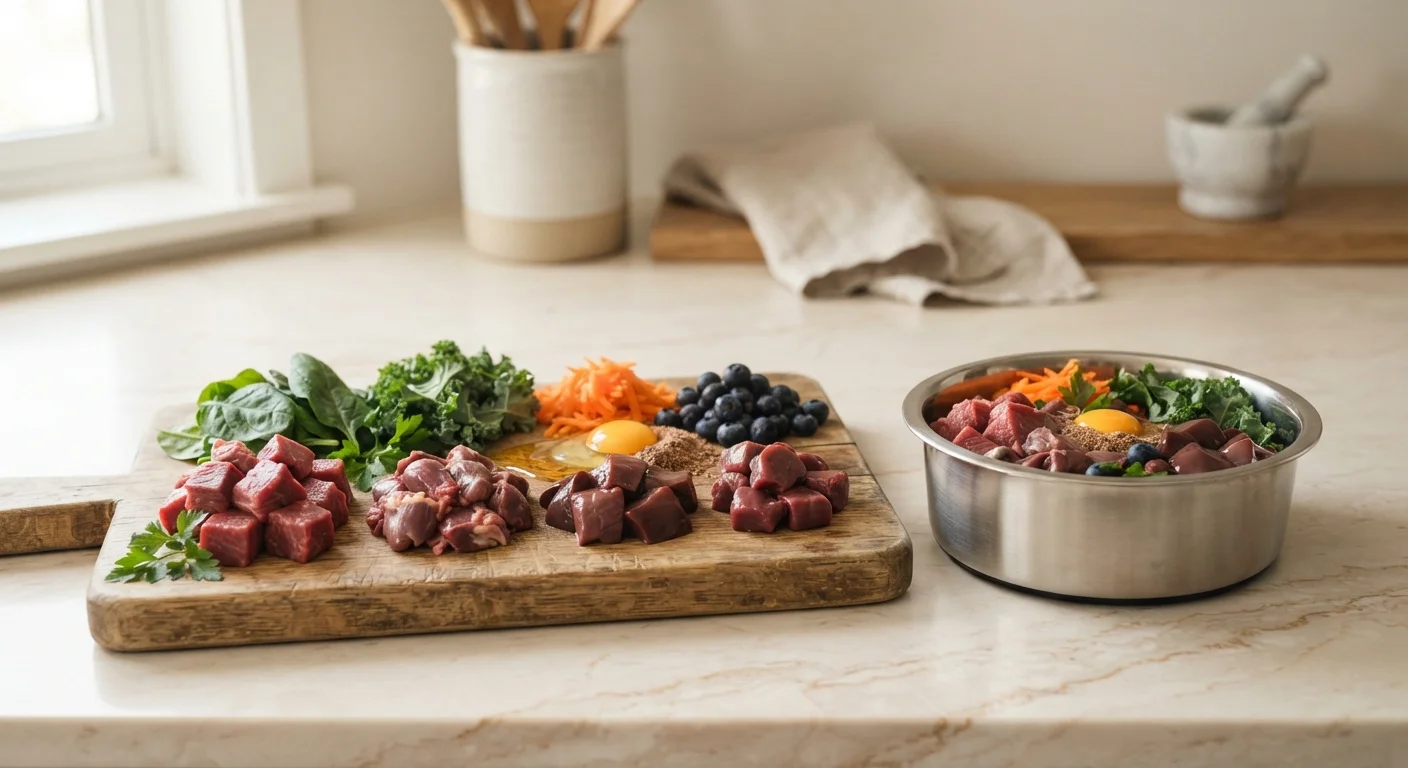
Raw feeding — sometimes called a BARF diet (Biologically Appropriate Raw Food) or a prey-model diet — typically consists of uncooked muscle meat, raw meaty bones, organ meats, and sometimes raw eggs, dairy, or produce. Commercially prepared frozen or freeze-dried raw products also exist alongside fully homemade versions.
The concept has grown considerably in popularity over the past two decades, driven by owner preferences for whole, minimally processed ingredients. However, popularity does not equal consensus: major veterinary organizations, including the American Veterinary Medical Association (AVMA), have issued formal position statements discouraging raw protein diets due to documented risks. Understanding both sides of that debate is essential before making a decision for your pet. For a deeper look at the specific claims made by raw-feeding advocates, see our balanced review of raw diets for dogs.
The Potential Advantages
Proponents point to several areas where raw feeding may offer benefits, though research support varies considerably across these claims.
High palatability for many dogs and cats
Raw meat is generally highly palatable, which can benefit picky eaters or pets recovering from illness-related appetite loss. This is one of the most consistently reported owner observations.
Transparent, recognizable ingredient list
Raw diets let owners see exactly what their pet is consuming, which appeals to those managing food sensitivities or who prefer to avoid certain processing additives.
Potential for improved stool quality and volume
Some owners and veterinarians note that raw-fed pets produce smaller, firmer stools, which may reflect higher digestibility of animal-based proteins compared to grain-heavy kibbles.
Moisture content supports hydration
Raw meat has a naturally high moisture content, which may support kidney function and urinary tract health — especially relevant for cats, who have a low innate drive to drink water.
Can be formulated to meet specific needs
When designed by a board-certified veterinary nutritionist, a raw diet can be tailored to a pet's life stage, health status, and breed requirements in ways that some commercial kibbles cannot.
Coat condition and stool quality are among the most commonly reported improvements by owners who switch, though these are difficult to separate from general dietary improvements. Ingredient transparency is a legitimate concern for many pet owners, and raw diets do allow clear visibility into what a pet is eating — something that appeals particularly to owners who've navigated food recalls or allergy management. For owners interested in broader nutrition principles, our guide on what nutritional balance really requires is worth reading alongside any raw-diet research.
The Genuine Risks
The risks associated with raw feeding are better documented than most of the claimed benefits, and they deserve careful consideration rather than dismissal.
Bacterial contamination risk to pets and people
Raw meat frequently harbors pathogens such as Salmonella, Listeria, and E. coli. These can cause illness in pets and transfer to humans through handling, feeding bowls, and contaminated surfaces.
Nutritional deficiencies are common in homemade versions
Studies have found that a majority of homemade raw diet recipes available online or in popular books are nutritionally incomplete, lacking critical minerals and vitamins needed for long-term health.
Raw bones carry choking and obstruction risks
Whole or fragmented raw bones can cause choking, broken teeth, esophageal damage, or gastrointestinal perforation, particularly in dogs that eat quickly or are unfamiliar with bone feeding.
Higher cost and more complex to prepare
Sourcing quality ingredients, maintaining safe storage temperatures, and ensuring nutritional completeness all add expense and time compared to commercially prepared complete diets.
Increased risk for immunocompromised pets and households
Pets undergoing treatment for cancer or other conditions, and households with vulnerable human members, face meaningfully elevated exposure risk from the pathogens commonly found in raw meat.
Limited strong scientific evidence for key claimed benefits
Many popular claims around raw feeding — reduced cancer risk, improved energy, allergy resolution — are largely anecdotal. Controlled, peer-reviewed research supporting these outcomes remains sparse.
Food-safety concerns extend beyond the pet. Studies have consistently detected Salmonella, Listeria, and E. coli in commercially prepared raw pet foods — pathogens that can transfer to food preparation surfaces, hands, and vulnerable household members. The AVMA's caution is particularly strong for households with infants, elderly individuals, pregnant people, or anyone undergoing immunosuppressive therapy. Raw meaty bones, while promoted for dental benefits, also carry a choking and gastrointestinal obstruction risk that warrants serious consideration.
AVMA and AAFCO Positions on Raw Feeding
The American Veterinary Medical Association discourages feeding raw or undercooked animal-source proteins to pets due to the documented risk of pathogen transmission to both animals and humans. The Association of American Feed Control Officials (AAFCO) provides voluntary nutrient guidelines that complete commercial diets — including some raw products — can choose to meet. When evaluating any pet food, looking for a clear AAFCO nutritional adequacy statement on the label is a practical starting point for assessing completeness.
Nutritional Balance: The Hardest Part to Get Right
Whether a raw diet is homemade or commercial, achieving genuine nutritional completeness is the single greatest practical challenge. Studies analyzing homemade raw diets have found widespread deficiencies in calcium, phosphorus, zinc, vitamin D, and other essential nutrients. The consequences of long-term imbalances — particularly in growing puppies and kittens — can include skeletal abnormalities and organ dysfunction.
60–80%
Homemade raw diets found nutritionally deficient
Multiple published analyses of homemade raw pet diet recipes have found that the majority fail to meet established AAFCO minimum nutrient profiles for dogs or cats.
~20–35%
Commercial raw samples testing positive for Salmonella
Several independent laboratory studies and FDA sampling programs have found Salmonella contamination rates in commercially available raw pet foods ranging from roughly 20 to 35 percent of samples tested.
Commercial raw products vary widely in quality and testing rigor. Unlike dry kibble, raw products are not all required to meet AAFCO (Association of American Feed Control Officials) nutritional standards on label, though some do. Owners should look specifically for an AAFCO nutritional adequacy statement on any commercial raw product. If you're also weighing other diet formats, our comparison of wet food vs. dry food for cats covers similar nutritional-balance considerations in that context.
Who Should Be Most Cautious
Certain pets face elevated risk from raw diets and are generally poor candidates regardless of how carefully the diet is prepared. These include puppies and kittens (whose immune systems are still developing), senior pets, any animal receiving chemotherapy or immunosuppressive medications, and pets with pre-existing gastrointestinal or kidney conditions.
Senior pets in particular have shifting nutritional needs that can make unformulated raw diets especially problematic — our article on senior pet nutrition explores how dietary requirements evolve with age. Similarly, owners considering raw feeding should be aware of which common household foods are toxic; our reference on people foods that are genuinely dangerous for pets is a useful companion read.
This article is for general informational purposes only and is not veterinary or medical advice. Always consult a licensed veterinarian before making significant changes to your pet's diet.