

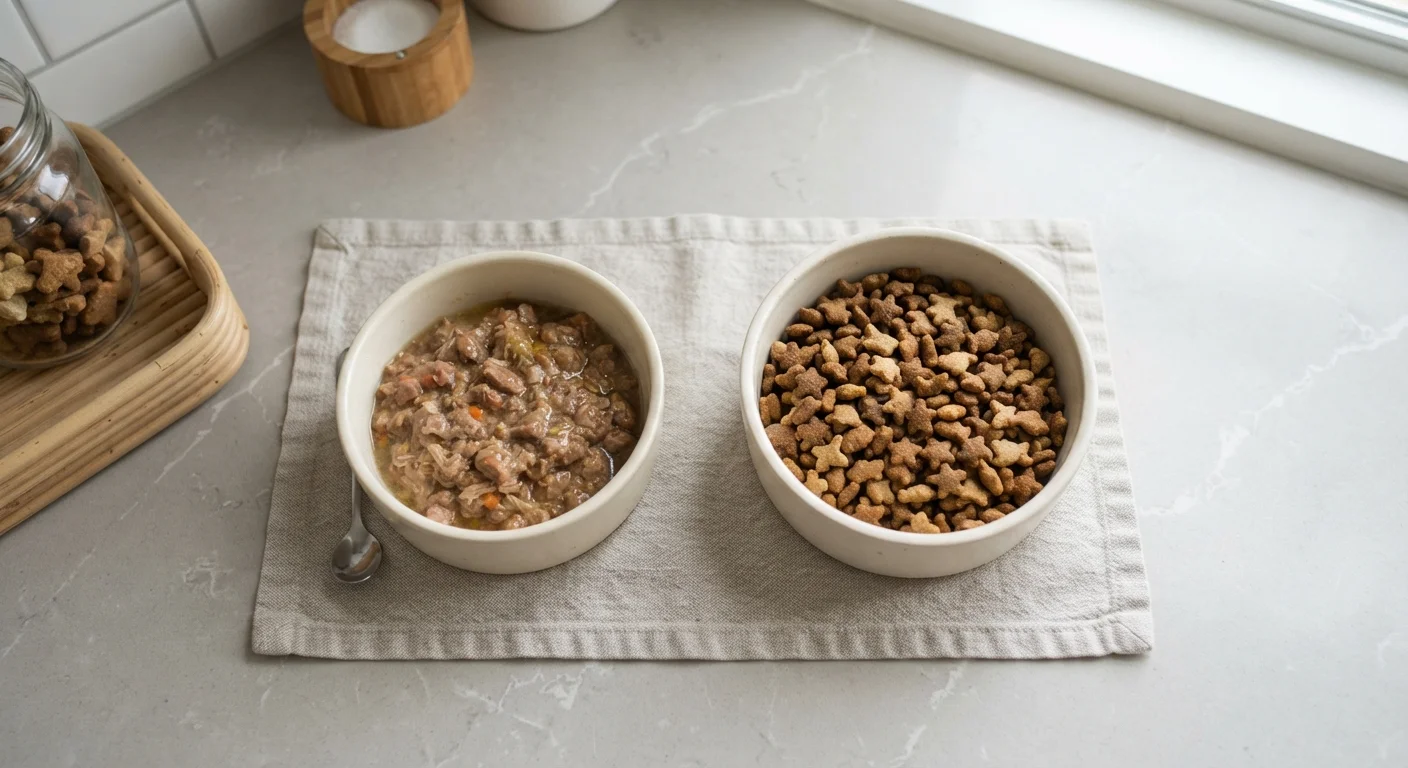
Key Takeaways
Option A
Wet Food (Canned)
The high-moisture, palatable option closest to a cat's natural prey diet.
Best for: Cats with urinary issues, low thirst drive, dental problems, or difficulty maintaining a healthy weight.
Option B
Dry Food (Kibble)
The convenient, calorie-dense staple that dominates most feeding routines.
Best for: Owners seeking convenience and lower cost, or cats who graze freely throughout the day.
If your cat has urinary tract issues or chronic kidney disease
Wet Food (Canned)
The high moisture content (roughly 70–80%) substantially increases daily fluid intake, which supports urinary tract function and is frequently recommended by veterinarians for cats prone to crystals or kidney stress.
If you need a cost-effective feeding option for multiple cats
Dry Food (Kibble)
Kibble is generally less expensive per calorie and can be left out longer without spoiling, making it practical for multi-cat households on a budget.
If your cat is overweight or prone to overeating
Wet Food (Canned)
Wet food tends to be lower in caloric density and more satiating due to its water content, which can help manage portion control more effectively than free-feeding dry kibble.
If your senior cat has reduced appetite or difficulty chewing
Wet Food (Canned)
Soft texture is easier on aging teeth and gums, and the strong aroma of wet food is often more appealing to cats whose sense of smell has diminished with age.
If your healthy adult cat shows no specific health concerns
Wet Food (Canned)
A mixed diet — primarily wet food supplemented with some dry kibble — provides hydration benefits while maintaining variety, though both formats can be nutritionally complete when formulated to AAFCO standards.
The Core Difference: Moisture Content
The most significant and clinically relevant difference between wet and dry cat food is water content. Canned wet food typically contains 70–80% moisture, while dry kibble contains only around 10%. This gap matters because cats evolved as desert animals with a naturally low thirst drive — they are biologically designed to obtain most of their water through food rather than a separate water source.
When cats eat an exclusively dry diet, they often consume far less fluid than their bodies require. Over time, chronic mild dehydration is associated with urinary tract problems, including the formation of crystals and stones. Veterinary nutritionists frequently recommend wet food — or at minimum a mixed diet — for cats with a history of lower urinary tract disease. For a deeper look at how moisture and other nutritional factors differ, see our guide to nutritional differences between wet and dry pet food.
| Criterion | Wet Food (Canned) | Dry Food (Kibble) |
|---|---|---|
| Moisture content | 70–80% | ~10% |
| Urinary health support | Strong — increases fluid intake | Limited — low moisture intake |
| Dental health benefit | Minimal | Minimal (unless VOHC-certified) |
| Caloric density | Lower per gram | Higher per gram |
| Palatability | Generally higher | Variable |
| Cost per day | Higher | Lower |
| Convenience & shelf life | Shorter once opened | Long shelf life, easy to store |
| Best life stage fit | All stages; especially seniors | All stages; easier for kittens to nibble |
Dental Health, Weight, and Palatability
Dry food is often marketed as better for dental hygiene, based on the notion that crunching kibble scrubs tartar from teeth. The reality is more nuanced. Most cats swallow kibble whole or with minimal chewing, meaning the mechanical cleaning effect is minimal. The Veterinary Oral Health Council (VOHC) does recognize certain dental diets and treats — but standard kibble earns no such distinction. Dedicated dental chews or regular tooth brushing remain the most effective preventive tools.
On the weight management front, dry food's caloric density is a genuine concern. It's easy for a free-fed cat to consume more calories than needed, particularly when kibble is always available. Wet food's higher water content means cats often feel fuller on fewer calories, which can support weight control. That said, overfeeding wet food is equally possible without measured portions.
Palatability is where wet food typically wins. Most cats find canned food more appealing due to its stronger aroma and soft texture. Picky eaters, senior cats with dulled senses, and cats recovering from illness are particularly likely to favor it. If your cat is turning down meals regardless of format, our article on why cats leave food in the bowl explores the behavioral and medical causes worth ruling out.
70–80%
Moisture in typical wet cat food
Compared to roughly 10% in dry kibble — a difference that meaningfully impacts daily fluid intake in cats.
~50%
Of cats may develop urinary issues
Urinary tract disease is among the most common reasons cats visit veterinarians, and hydration is considered a key preventive factor by veterinary nutritionists.
2–4 hrs
Safe window for wet food at room temperature
Canned food left out longer than this is at risk for bacterial growth and should be discarded, according to general food safety guidance.
Cost, Convenience, and Practical Feeding
Dry food carries a clear practical advantage: it's cheaper per calorie, easier to store, and doesn't spoil within hours of being served. For owners managing multiple cats or tight budgets, these factors are real and legitimate. Wet food costs more, requires refrigeration of opened cans, and must be discarded if left out for more than two to four hours at room temperature to avoid bacterial growth.
A mixed feeding approach — offering wet food as the primary meal with dry kibble available for grazing — is a middle path many veterinarians consider reasonable for healthy cats. It balances hydration benefits with cost savings, though it requires monitoring total caloric intake across both formats to avoid overfeeding.
Whatever approach you choose, look for foods that carry an AAFCO (Association of American Feed Control Officials) nutritional adequacy statement, which confirms the diet meets established minimum nutritional requirements for cats at the appropriate life stage. This applies to both wet and dry formats. For broader context on how diet intersects with overall feline wellbeing, explore the Pet Health & Wellness hub.
What AAFCO Complete & Balanced Means
When a cat food label states it is 'complete and balanced' for a given life stage, it means the product meets minimum nutritional profiles established by AAFCO — the body that sets standards for pet food in the US. This designation applies to both wet and dry formats. It does not mean all products are nutritionally equivalent, but it sets a meaningful baseline floor. Always check that the life stage listed (kitten, adult, all life stages) matches your cat's current age and condition.
This article provides general educational information about cat nutrition and is not a substitute for personalized veterinary advice. Consult your veterinarian before making significant dietary changes, especially if your cat has an existing health condition.