

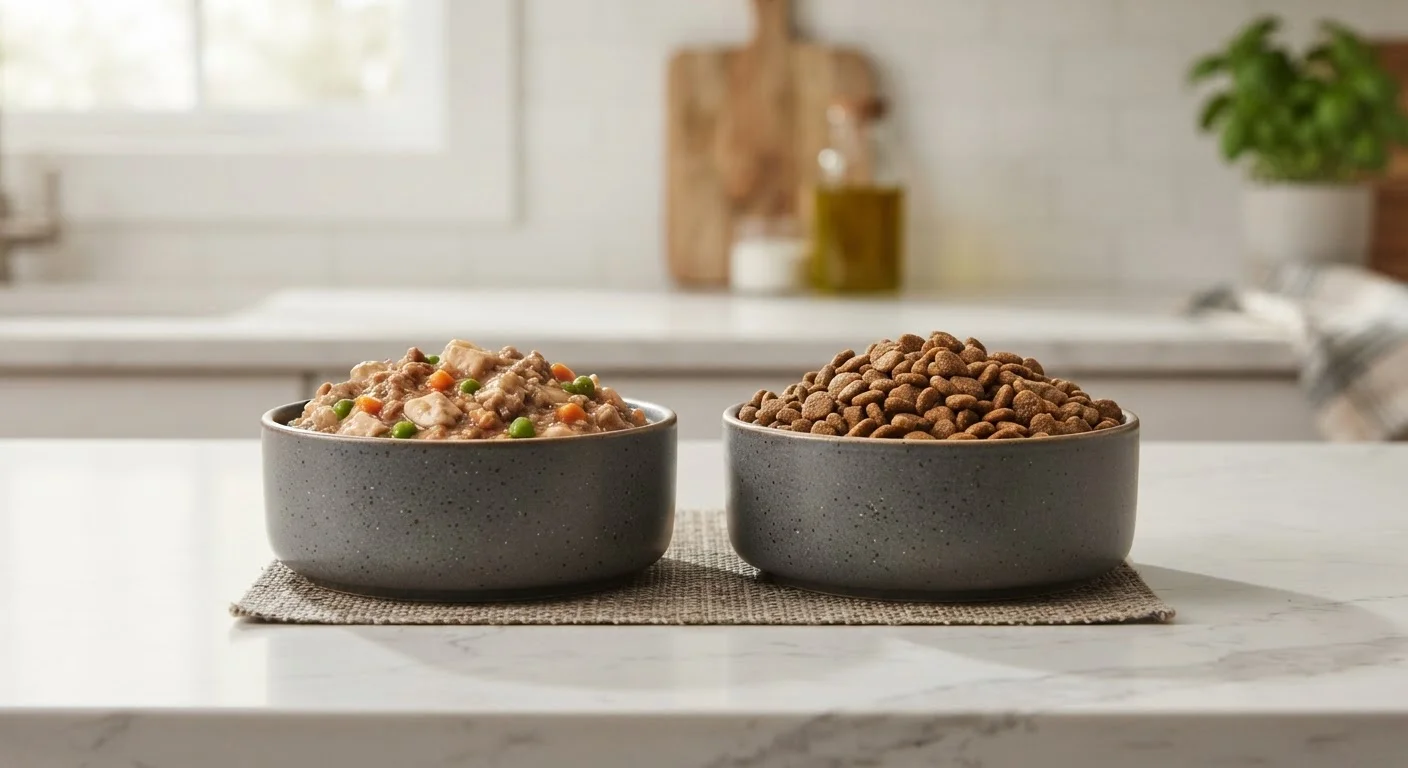
Key Takeaways
Option A
Wet Pet Food
The high-moisture, palatability-forward option.
Best for: Pets needing extra hydration, picky eaters, or animals with dental or swallowing difficulties.
Option B
Dry Pet Food (Kibble)
The calorie-dense, shelf-stable everyday staple.
Best for: Owners seeking convenience, longer shelf life, and cost-effective daily feeding.
If your cat has a history of urinary tract issues or low water intake
Wet Pet Food
Wet food significantly increases daily fluid intake, which veterinary guidelines consistently associate with better urinary tract health in cats.
If convenience and cost efficiency are your primary concerns
Dry Pet Food (Kibble)
Kibble is shelf-stable, easier to portion, and typically more affordable per calorie than wet food.
If your pet is overweight or prone to obesity
Wet Pet Food
Wet food's lower caloric density means larger portion volumes for fewer calories, which can help pets feel satiated while reducing caloric intake.
If your pet has dental disease concerns
Dry Pet Food (Kibble)
The mechanical action of chewing kibble may provide a modest reduction in plaque and tartar, though a vet-directed dental care plan is still essential.
If your senior pet has reduced appetite or difficulty chewing
Wet Pet Food
Wet food's soft texture and stronger aroma can help stimulate appetite and is easier to chew for older pets or those with dental pain.
Moisture Content: More Than Just Water
The single most significant difference between wet and dry pet food is water content. Wet food typically contains between 70% and 85% moisture, while dry kibble retains only about 6–10% after processing. This gap has real nutritional consequences that go beyond simple hydration.
Because wet food is mostly water by weight, its dry matter — the actual protein, fat, fiber, and micronutrients — is more concentrated than the label's as-fed percentages suggest. When comparing nutrient levels across formats, veterinary nutritionists use dry matter basis (DMB) calculations to create a fair comparison. Without adjusting for moisture, wet food can appear lower in protein and fat than it actually is relative to its caloric content.
For cats especially, moisture intake matters enormously. Cats evolved as desert animals with a naturally low thirst drive and are inclined to obtain most of their fluids from food. Research consistently links chronically low water intake in cats to a higher risk of feline lower urinary tract disease (FLUTD) and chronic kidney disease. Feeding wet food is one practical way to boost daily fluid consumption. For a deeper look at how nutrient information is structured on packaging, see what pet food labels are actually telling you.
| Criterion | Wet Pet Food | Dry Pet Food (Kibble) |
|---|---|---|
| Moisture content | 70–85% | 6–10% |
| Caloric density (per gram) | Lower | Higher |
| Shelf life (unopened) | 1–5 years (canned) | 12–18 months typical |
| Shelf life (after opening) | 3–5 days refrigerated | Weeks in sealed container |
| Palatability | Generally higher | Variable by formulation |
| Dental benefit | Minimal | Modest (mechanical chewing) |
| Cost per serving | Generally higher | Generally lower |
| AAFCO complete & balanced | Available in most formulas | Available in most formulas |
Caloric Density, Protein Quality, and Ingredient Profiles
Dry kibble is calorie-dense. A single cup of kibble can deliver significantly more calories than the same volume of wet food, because kibble contains far less water per gram. This matters for portion sizing: feeding by volume rather than by calorie is a common cause of unintentional overfeeding with dry food.
Wet food, by contrast, provides a larger physical volume per calorie. For pets prone to weight gain or obesity, this can translate to more satisfying meal sizes with less caloric load — though any weight management plan should be developed with a veterinarian.
70–85%
Moisture in typical wet pet food
Compared to roughly 6–10% in dry kibble, this difference substantially affects both hydration and caloric density per gram.
~3x
Greater volume per calorie in wet food
Because of its high water content, wet food generally provides larger portion volumes for the same number of calories as dry kibble.
In terms of ingredient composition, both formats can feature high-quality protein sources, but the processing methods differ. Kibble undergoes high-heat extrusion, which can reduce some heat-sensitive nutrients; manufacturers typically compensate by adding vitamins and minerals back post-processing. Wet food is generally cooked at lower temperatures and sealed in cans or pouches, which can better preserve some natural moisture and palatability compounds.
Neither format is inherently superior in ingredient quality — that depends entirely on the specific formulation. Both can meet AAFCO (Association of American Feed Control Officials) nutrient profiles for complete and balanced nutrition. For definitions of terms like AAFCO, crude protein, and guaranteed analysis, the pet nutrition labels glossary is a useful reference.
It's also worth noting that as pets age, their nutritional priorities shift. Senior animals may benefit from wet food's easier digestibility and palatability. The article on senior pet nutrition covers these evolving needs in detail.
Dry Matter Basis: Why It Matters
When comparing protein, fat, or fiber percentages between wet and dry food labels, the as-fed numbers can be misleading due to the large difference in moisture content. Dry matter basis (DMB) removes water from the equation to give a true nutritional comparison. Your veterinarian or a board-certified veterinary nutritionist can help you interpret DMB values if you're evaluating foods side by side.
Practical Considerations: When to Choose, When to Combine
There is no single correct answer to the wet-versus-dry question for all pets. The right choice depends on your pet's species, life stage, health status, and individual preferences — and your own practical constraints around cost, storage, and feeding routine.
Some owners find that combining both formats — often called mixed feeding — offers a workable middle ground. Dry food can form the caloric base for cost and convenience, while a smaller portion of wet food boosts moisture and palatability. Before changing your pet's diet significantly, consult your veterinarian to confirm the approach fits your pet's specific health profile.
The Pet Nutrition & Diet hub provides broader guidance on feeding decisions across all life stages and species. And if you're curious how these commercial formats compare to home-prepared diets, homemade pet food and nutritional balance is essential reading — nutritional gaps in home-cooked diets are more common than many owners expect.
This article is intended for general educational purposes only and does not constitute veterinary advice. Always consult a licensed veterinarian before making significant changes to your pet's diet, especially if your pet has existing health conditions.