

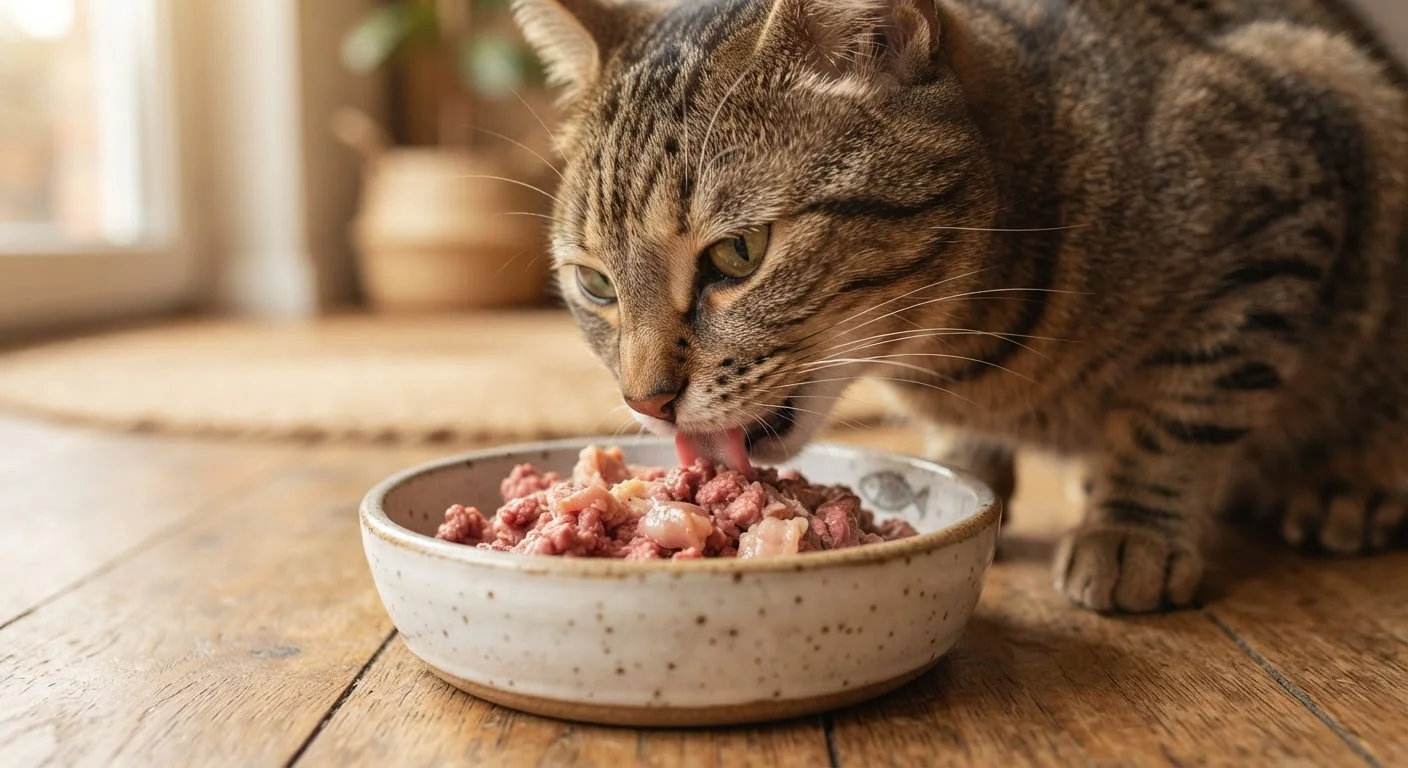
| Dietary Classification | Obligate carnivore |
| Cannot Synthesize | Taurine, arachidonic acid, preformed vitamin A, niacin, arginine (in sufficient quantity) (Established veterinary nutritional science) |
| Primary Nutrient Sources | Animal muscle meat, organ meats, animal fats |
| Regulatory Baseline (US) | AAFCO "complete and balanced" labeling (Association of American Feed Control Officials) |
| Deficiency Risk: Homemade Diets | High without veterinary nutritionist guidance (Multiple peer-reviewed diet analyses) |
Why Cats Are Obligate Carnivores — and What That Actually Means
Unlike dogs or humans, cats are obligate carnivores — their bodies are biologically hardwired to obtain essential nutrients exclusively from animal tissue. Evolution shaped their metabolism to rely on prey, not plants, and as a result, cats have lost or never developed the enzymatic pathways to synthesize several nutrients that other species manufacture on their own.
This is not simply a preference. Feeding a cat an inadequate diet — even one that appears filling — can lead to serious, progressive deficiencies. Understanding which nutrients cats cannot make themselves, and why each one matters, is the foundation of confident, informed feeding. For a broader look at what macronutrients do at the cellular level, see our plain-language guide to protein, carbs, and fat.
| Dietary Classification | Obligate carnivore |
| Cannot Synthesize | Taurine, arachidonic acid, preformed vitamin A, niacin, arginine (in sufficient quantity) (Established veterinary nutritional science) |
| Primary Nutrient Sources | Animal muscle meat, organ meats, animal fats |
| Regulatory Baseline (US) | AAFCO "complete and balanced" labeling (Association of American Feed Control Officials) |
| Deficiency Risk: Homemade Diets | High without veterinary nutritionist guidance (Multiple peer-reviewed diet analyses) |
The Nutrients Cats Cannot Synthesize on Their Own
The following nutrients are considered nutritionally essential for cats — meaning dietary intake is required because the cat's body either cannot produce them at all or cannot produce them in sufficient quantities.
Taurine
Taurine is an amino sulfonic acid critical to heart function, vision, and reproductive health. Most mammals synthesize taurine from cysteine and methionine, but cats lack adequate activity of the enzyme cysteine sulfinic acid decarboxylase needed for this conversion. Deficiency is associated with dilated cardiomyopathy and central retinal degeneration. Taurine is found only in animal-sourced foods — another reason plant-forward diets are inappropriate for cats.
Arachidonic Acid
This omega-6 fatty acid plays a role in inflammation response, skin integrity, and reproductive function. Dogs and humans can convert linoleic acid into arachidonic acid; cats cannot do this efficiently due to low delta-6-desaturase activity. Animal fats — particularly from poultry and organ meats — are the primary dietary source.
Vitamin A (Preformed)
Cats cannot convert beta-carotene from plant foods into active vitamin A (retinol). They require preformed vitamin A, found in liver and other organ meats. Deficiency affects vision, immune function, and skin health.
Niacin (Vitamin B3)
Most mammals convert the amino acid tryptophan into niacin. Cats have high picolinic carboxylase activity that diverts tryptophan away from niacin synthesis, making dietary niacin essential. Animal muscle meat is a reliable source.
Arginine
Cats have an exceptionally high dietary requirement for arginine, an amino acid essential for the urea cycle — the process that detoxifies ammonia from protein metabolism. Even a single arginine-deficient meal can trigger dangerous hyperammonemia. All commercially complete cat foods must contain adequate arginine.
Obligate Carnivore
An animal that must consume animal-sourced food to survive because its metabolism cannot adequately obtain or synthesize essential nutrients from plant material alone. Cats are the most studied obligate carnivore kept as a companion animal.
Taurine
An amino sulfonic acid found exclusively in animal tissue. Cats cannot synthesize enough taurine from other amino acids, making it a dietary essential critical to heart muscle function and retinal health.
Arachidonic Acid
An omega-6 polyunsaturated fatty acid that cats cannot produce from plant-derived linoleic acid. It must come from animal fat and is required for skin health, immune response, and reproduction.
AAFCO
The Association of American Feed Control Officials. This body establishes nutrient profiles used to define whether a commercial pet food is nutritionally "complete and balanced" for a given life stage.
Urea Cycle
The metabolic pathway that converts toxic ammonia — a byproduct of protein digestion — into urea for safe excretion in urine. Cats depend heavily on dietary arginine to keep this cycle functioning.
If you are considering a homemade diet, these requirements cannot be met by intuition alone. Our article on what nutritional balance in homemade pet food really requires explains what "complete and balanced" actually means in practice.
How to Know If Your Cat's Diet Covers These Needs
Commercial cat foods labeled "complete and balanced" according to AAFCO (Association of American Feed Control Officials) profiles are formulated to meet established minimum nutrient levels, including all the essentials listed above. This label is your most reliable baseline indicator — but it does not mean all formulations are equal in ingredient quality or digestibility.
Raw and homemade diets require far more scrutiny. Nutritional gaps are common and can take months to manifest as visible symptoms. Consult a board-certified veterinary nutritionist before adopting either approach. For context on the risks and trade-offs involved, see our balanced overview of raw feeding for dogs and cats.
As cats age, the quantities of certain nutrients they need — particularly protein and phosphorus — shift meaningfully. Our guide to senior pet nutrition covers how dietary priorities change over a cat's lifespan. And if your cat is turning down food altogether, the causes may be physical or behavioral — explore the common explanations in our piece on why cats leave food in the bowl.
25–30%
Minimum protein on dry matter basis recommended for adult cats
General guideline derived from AAFCO feline nutrient profiles for maintenance.
~90%
Of homemade pet diets found nutritionally incomplete in studies
Research published in veterinary nutrition literature consistently finds most home-prepared diets lack one or more essential nutrients.
This article is for general informational purposes only and is not veterinary or medical advice. Always consult a licensed veterinarian regarding your cat's specific nutritional needs and health status.