

Key Takeaways
Silicones in Hair Products
Silicones are a family of synthetic compounds derived from silicon and oxygen. In hair care, they coat the outer layer of each strand — called the cuticle — to create a smooth, slippery surface that reduces friction and reflects light. You'll recognize them on ingredient labels by endings like -cone, -conol, or -xane (e.g., dimethicone, cyclomethicone, amodimethicone).
Silicones vary widely in molecular weight and water solubility. Water-soluble silicones (such as PEG-modified versions) rinse away with regular shampoo, while heavier non-water-soluble types like dimethicone require a surfactant-based cleanser to fully remove them.
What Silicones Actually Do When You Apply Them
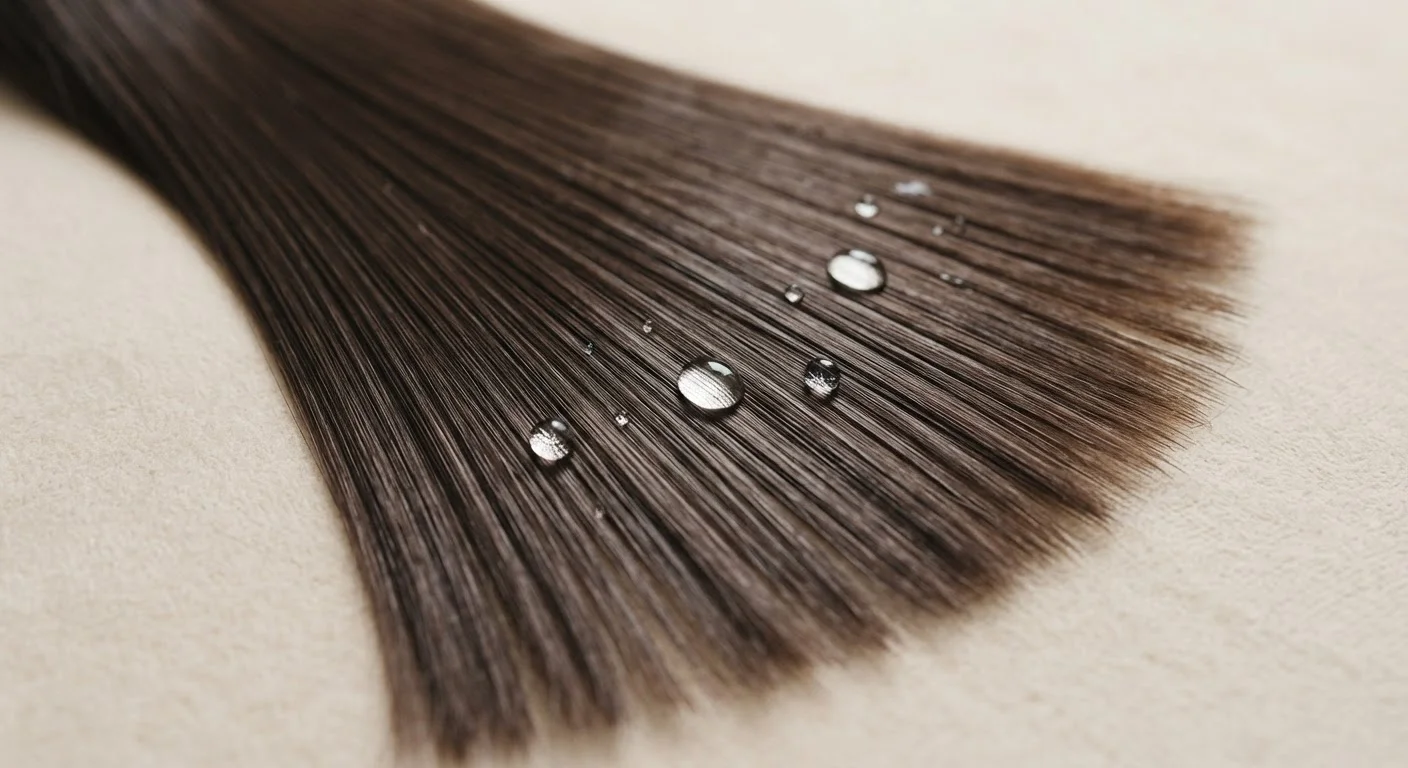
When you smooth a serum or conditioner containing silicones onto your hair, those molecules settle along the surface of each strand, filling in gaps in the cuticle (the overlapping, scale-like outer layer of hair). The result is immediate: less friction between strands, reduced frizz, and a shinier appearance. Silicones also create a light barrier against humidity and moderate heat.
This is why silicones became so common in mainstream hair products — they deliver fast, visible results. They don't actually repair damaged hair structurally; they're more like a smooth coating over an uneven surface. That distinction matters a lot when you're deciding whether they belong in your routine.
Understanding how silicones interact with your specific hair requires knowing your hair's properties. Porosity, elasticity, and density all influence how your hair responds to coating agents like silicones — low-porosity hair, for instance, can be especially vulnerable to buildup because moisture already has difficulty entering the shaft.
~200+
Silicone variants used in cosmetics globally
The silicone family encompasses hundreds of compounds; only a subset are commonly used in hair care formulations, each with distinct molecular weight and rinse-off properties.
~70%
Of conditioners contain at least one silicone
Industry formulation surveys suggest silicones appear in the majority of mainstream rinse-out and leave-in conditioners sold in the U.S. market due to their reliable smoothing performance.
4–6 weeks
Typical timeframe before buildup becomes noticeable
Hair care professionals commonly observe that clients using heavy silicone products without regular clarifying cleansing begin noticing heaviness or dullness within a month or two of consistent use.
The Buildup Problem: What Happens Over Time
Here's where things get more nuanced. Not all silicones behave the same way. Water-soluble versions — often labeled with a PEG prefix — rinse away with a standard shampoo wash. Non-water-soluble silicones like dimethicone and amodimethicone are a different story: they're designed to stay on the strand, and they do.
With repeated use and insufficient cleansing, non-water-soluble silicones layer on top of each other. The cumulative effect can include hair that feels heavy or waxy, reduced ability for moisture-based products to penetrate the strand, and a gradual loss of the shine these ingredients were supposed to provide in the first place.
People who co-wash (cleansing with conditioner rather than shampoo) are especially vulnerable to this cycle, since conditioner alone doesn't contain the surfactants needed to cut through silicone films. Co-washing vs. shampooing is a real trade-off when silicone-heavy products are in the mix.
Check Your Cleanser Before Blaming the Silicone
If your hair feels coated or dull, the issue often isn't the silicone itself — it's the mismatch between the silicone type and your cleansing routine. Before cutting silicones entirely, try a clarifying or sulfate-containing shampoo for one or two washes and see whether the issue resolves. Many people find this single adjustment makes their existing products perform the way they expected.
How to Use Silicones Without Letting Them Work Against You
The practical solution isn't to avoid silicones entirely — it's to cleanse appropriately for the products you use. If your routine includes non-water-soluble silicones in conditioners, serums, or styling creams, periodic clarifying cleansing is essential to reset the slate.
How often? That depends on your product usage and hair type. Someone applying a silicone-heavy serum before heat styling several times a week will need to clarify more frequently than someone using a light rinse-out conditioner every few washes. Clarifying shampoos are specifically formulated to remove stubborn buildup, though they should be used strategically — not as a daily cleanser.
If you heat style regularly, silicones can actually be a useful part of your toolkit. A lightweight silicone-based heat protectant creates a buffer between hot tools and the cuticle. Our heat styling damage framework covers how to integrate them without overdoing it.
Reading Labels: Identifying Silicones in Your Products
The most reliable skill you can develop is recognizing silicones on an ingredient list. Look for words ending in -cone, -conol, -silane, or -xane. Common ones include:
- Dimethicone — heavy, non-water-soluble; long-lasting smoothing effect
- Cyclomethicone / Cyclopentasiloxane — lightweight, largely evaporates after application
- Amodimethicone — bonds specifically to damaged or porous areas of the strand; generally considered less prone to uniform buildup
- PEG-modified silicones (e.g., PEG-8 Dimethicone) — water-soluble; remove easily with standard shampoo
Ingredient placement matters too. Ingredients are listed in descending order of concentration, so a silicone near the top of a list is present in meaningful amounts; one near the bottom is likely a minor component.
This article is for general informational purposes only and is not a substitute for professional hair or dermatological advice. If you have concerns about scalp health or significant hair changes, consult a licensed dermatologist.