

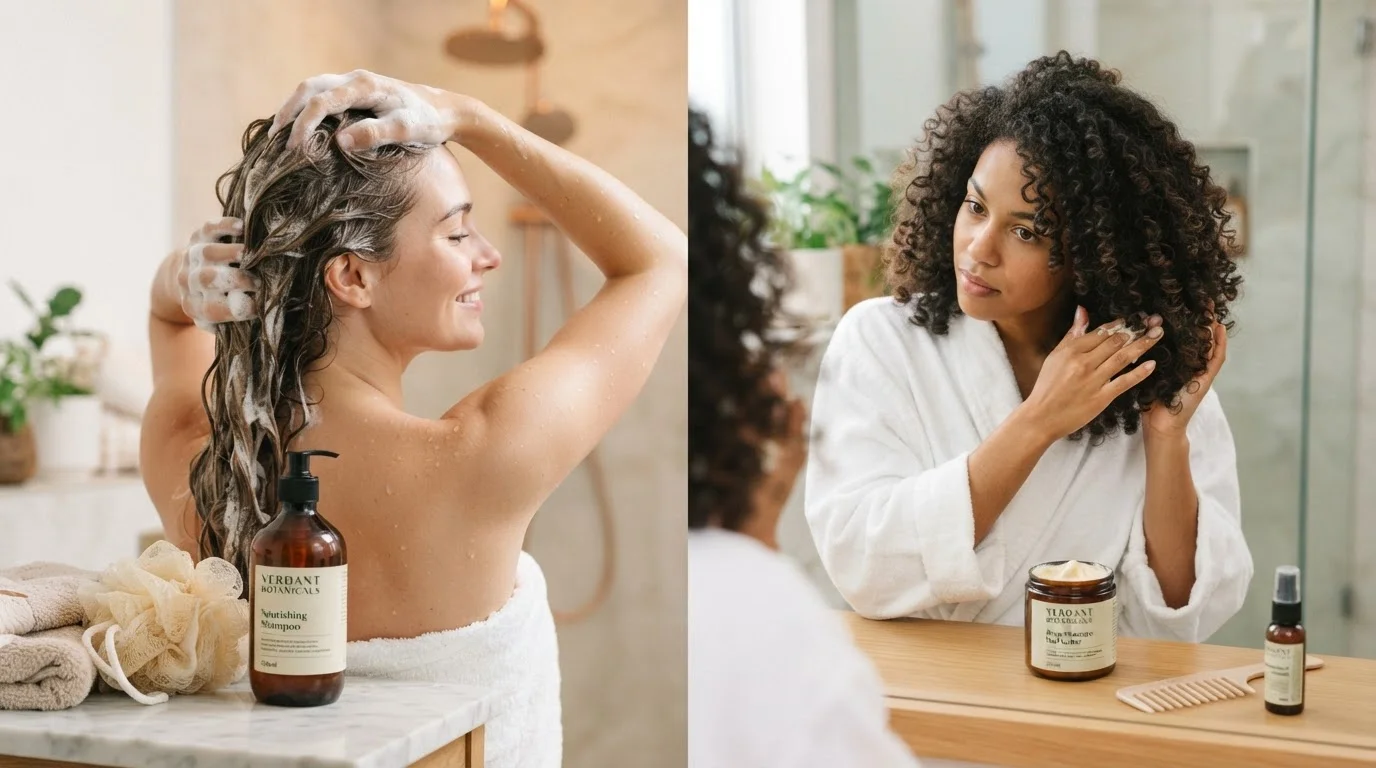
Key Takeaways
Option A
Co-Washing
The moisture-first approach for dry or textured hair.
Best for: Best for naturally dry, coily, curly, or color-treated hair that needs gentle cleansing without stripping natural oils.
Option B
Shampooing
The thorough cleanse for scalp health and product-heavy routines.
Best for: Best for oily scalps, fine or straight hair, and anyone who uses heavy styling products regularly.
If you have coily, kinky, or very dry curly hair
Co-Washing
Tightly coiled textures produce less sebum along the hair shaft and are prone to moisture loss. Co-washing rinses away surface debris while preserving natural oils that these hair types genuinely need.
If you have fine, straight, or oily hair
Shampooing
Fine and straight hair picks up scalp oil quickly, and co-washing alone tends to leave it looking flat and greasy. A regular shampoo restores scalp balance and volume.
If you use heavy styling products like gels, waxes, or silicone-based serums
Shampooing
Conditioner-only washing cannot fully dissolve silicones or waxy buildup. Regular shampooing — or at minimum an occasional clarifying wash — is necessary to keep the scalp and strands clear.
If you have color-treated or chemically processed hair
Co-Washing
Chemical services can leave hair more porous and prone to dryness. Co-washing between shampoo days helps maintain moisture and may extend color vibrancy by reducing detergent exposure.
If you want one approach that covers most hair types
Shampooing
A gentle, sulfate-free shampoo is the most universally adaptable cleansing method and can be supplemented with co-washing days for added moisture without full commitment to either extreme.
What Each Method Actually Does
Co-washing — short for conditioner-only washing — skips the detergent step entirely. Instead of a shampoo, you apply a rinse-out conditioner to the scalp and lengths, massage it in, and rinse. The surfactants in conditioner are far milder than those in shampoo, meaning they loosen surface dirt and light buildup without stripping the scalp's natural sebum.
Shampooing relies on surfactants (cleansing agents) like sodium lauryl sulfate or gentler alternatives like sodium lauryl sulfoacetate to lift oil, sweat, and product residue from both the scalp and hair shaft. A thorough shampoo is the most effective way to reset scalp cleanliness, particularly after heavy product use or workouts.
Neither method is universally superior. The better choice depends on your scalp's oil production, your hair's texture and porosity, and how much product you typically use. If you're still figuring out your hair's unique characteristics, building a hair care routine from scratch is a helpful starting point before committing to either approach.
| Criterion | Co-Washing | Shampooing |
|---|---|---|
| Cleansing strength | Mild — removes light surface debris | Strong — removes oil, sweat, and product |
| Effect on natural oils | Preserves scalp sebum | Reduces sebum — can strip if overused |
| Best hair texture | Coily, kinky, dry, or curly | Fine, straight, or oily |
| Silicone compatibility | Requires silicone-free formula | Removes silicones effectively |
| Scalp oiliness management | Poor for oily scalps | Well-suited for oily scalps |
| Color-treated hair | Gentle — supports moisture retention | Can fade color faster if sulfate-heavy |
| Product buildup removal | Limited — buildup accumulates over time | Effective — clears most residue |
| Frequency flexibility | Can be used more frequently | Best spaced out to protect scalp balance |
Who Benefits Most from Co-Washing
Co-washing gained traction largely within the natural hair community — and for good reason. Coily and kinky hair types (often classified as 3c through 4c) tend to be structurally drier because sebum from the scalp has difficulty traveling down tightly wound strands. Introducing a detergent wash too frequently can tip these hair types into persistent dryness, breakage, and dullness.
Beyond texture, co-washing is worth considering if your hair is color-treated or chemically relaxed. Chemical processes alter the hair's cuticle structure, making strands more porous and vulnerable to moisture loss. Reducing detergent exposure on wash days can help maintain softness and elasticity between deeper cleansing sessions.
One important caveat: not all conditioners work for co-washing. Products containing non-water-soluble silicones (ingredients ending in -cone, -conol, or -xane) require a detergent shampoo to be fully removed. Using them for co-washing leads to gradual buildup on the scalp and strands. What silicones in hair products actually do to your strands explains this dynamic in detail. Look for silicone-free or water-soluble formulas if you plan to co-wash regularly.
~65%
Americans with textured or curly hair
Hair texture surveys consistently estimate that a majority of Americans have naturally wavy, curly, or coily hair — the hair types most likely to benefit from co-washing.
2–3×
More moisture loss in high-porosity hair
Research on hair porosity suggests high-porosity strands — common after chemical processing — can lose moisture significantly faster than low-porosity hair, making gentle cleansing more important.
When Shampooing Is the Right Call
If your scalp leans oily, produces visible sebum within a day or two of washing, or you exercise frequently, co-washing alone is unlikely to provide the cleanse your scalp needs. The scalp is skin — it sheds cells, produces oil, and can harbor yeast overgrowth or buildup if not properly cleansed. Scalp care and hair care are not the same thing, and treating them identically often creates persistent problems.
Heavy product users — anyone applying gels, pomades, dry shampoo, or silicone-based heat protectants regularly — also need periodic detergent cleansing. Conditioner cannot cut through waxy or silicone-based residue, and buildup left on the scalp can contribute to clogged follicles and irritation over time. An occasional clarifying shampoo provides a deeper reset without requiring you to shampoo harshly every wash day.
Fine and straight hair types are also generally poor candidates for full co-washing routines. The added weight of conditioner without a detergent rinse leaves fine strands looking limp and can make the scalp appear greasy faster than usual.
A Note on Reading Ingredient Labels
Whether you co-wash or shampoo, the ingredient list on your product matters. Surfactants vary widely in strength, and conditioners marketed as 'co-wash' formulas are specifically designed for scalp use. Reading hair product labels can help you identify whether a conditioner contains the non-water-soluble silicones that make co-washing counterproductive.
The Hybrid Approach: Mixing Both Methods
The good news is that co-washing and shampooing don't have to be an either/or decision. Many people with wavy, curly, or dry hair find that alternating — co-washing on non-shampoo days and shampooing once or twice a week — gives them the best of both: cleanliness without excessive dryness.
A practical example: shampoo on Sundays and co-wash midweek if your hair feels dusty or your curl definition has dropped. This rhythm preserves moisture without allowing buildup to accumulate. For those concerned about overwashing overall, overwashing is one of the most common hair mistakes Americans make — and a hybrid approach can help you strike the right balance.
Pay attention to how your scalp and ends respond over two to four weeks. Signs that co-washing is working: strands feel softer, less frizzy, and retain moisture between wash days. Signs you need more frequent shampooing: scalp feels itchy or tight, roots look flat and greasy, or hair smells off before your next scheduled wash. Adjusting frequency is easier than many people expect — your hair will communicate what it needs if you give it a few weeks to settle into a new routine.