

Key Takeaways
How Lithium-Ion Batteries Actually Work
Most charging advice circulating online was written for an older era of battery technology. Today's smartphones use lithium-ion (Li-ion) cells, which behave in fundamentally different ways than the nickel-cadmium batteries that once powered portable devices. Understanding that difference is the starting point for making smarter charging decisions.
In a lithium-ion battery, charge is stored by moving lithium ions between two electrodes — a cathode and an anode — through a liquid electrolyte. The voltage across these electrodes changes with the state of charge: higher when full, lower when depleted. Sustained high voltage accelerates chemical reactions that degrade the electrode materials and electrolyte over time. This is why the upper end of the charge range — not just the act of charging itself — is a key factor in how quickly a battery ages.
This chemistry is also why temperature matters so much. Heat speeds up the same degradation reactions, which is why phone overheating is treated as a separate and serious concern for device longevity.
Myth
You should always charge your phone to 100% to get the most out of the battery.
Fact
Lithium-ion batteries actually experience less stress when kept between roughly 20% and 80% charge.
This belief likely carried over from older nickel-cadmium (NiCd) batteries, which did benefit from full charge cycles to prevent a phenomenon called "memory effect." Lithium-ion chemistry — used in virtually all modern smartphones — works differently. Higher charge states increase the voltage across the battery's electrodes, which accelerates the breakdown of the electrolyte and electrode materials over time. Staying in a mid-range charge window reduces that ongoing stress.
Myth
Leaving your phone plugged in overnight will overcharge and immediately damage the battery.
Fact
Modern phones stop actively charging once they reach 100%, but the sustained high-voltage state still causes gradual wear.
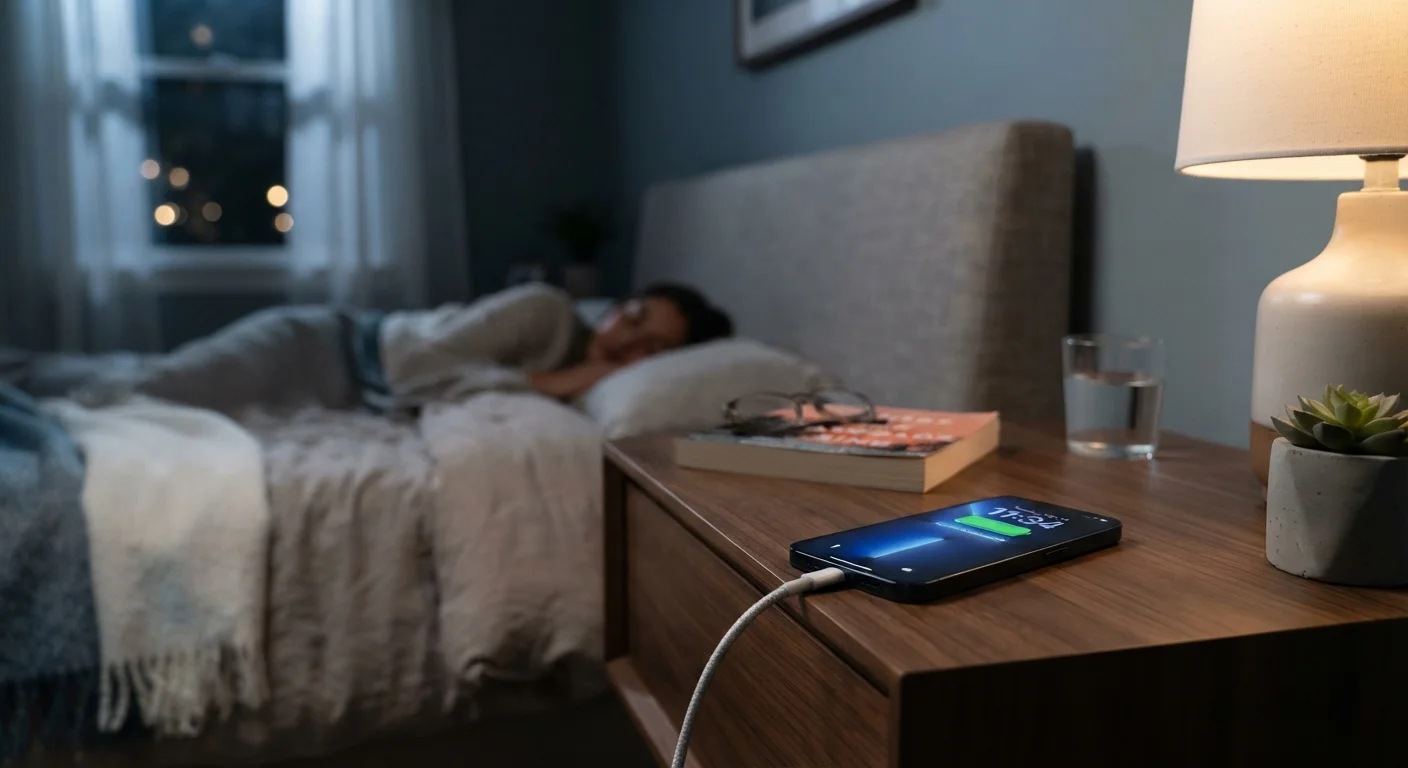
Smartphones include charging controllers that prevent electricity from continuing to flow into a full battery. So true "overcharging" in the dangerous sense doesn't happen. However, when the battery depletes slightly from background processes, the phone tops it back up to 100% repeatedly throughout the night. This trickle charging at high voltage is what contributes to long-term capacity loss — not a single dramatic overcharge event. Some phones now offer an "optimized charging" or "adaptive charging" feature that pauses charging at 80% and completes it closer to when you typically wake up.
Myth
The number of charge cycles is the most important factor in battery lifespan.
Fact
Voltage range and temperature during charging have a larger practical impact on battery aging than cycle count alone.
Manufacturers do rate batteries by cycle count — commonly 300 to 500 full cycles before significant capacity loss. But a "cycle" is defined as using 100% of total capacity, not one plug-in session. Charging from 50% to 80% uses only 30% of a cycle. More critically, research into lithium-ion degradation consistently points to high state-of-charge and elevated temperature as primary aging accelerants — meaning a battery kept cool and at moderate charge will outlast one that's repeatedly charged to full in a warm environment, even with fewer nominal cycles. For a deeper look, see why phone batteries degrade.
Myth
Fast charging ruins your battery faster than standard charging.
Fact
Fast charging generates more heat, but modern phones manage this carefully — the real risk is heat, not the charging speed itself.
Fast charging works by delivering more electrical current in a shorter time, which does produce more heat. However, most smartphones throttle fast charging as the battery approaches full, switching to a slower rate for the final stretch to protect the cells. The heat generated during a fast charge session is typically brief. Where this becomes a concern is when fast charging occurs in an already-warm environment or with a case that traps heat. Occasional fast charging under normal conditions is not meaningfully more harmful than standard charging for most users.
Myth
You should let your phone battery drain completely before recharging it.
Fact
Deep discharges below 20% put additional strain on lithium-ion batteries and should generally be avoided.
The full-drain practice was sound advice for NiCd batteries, but it is counterproductive with lithium-ion. Allowing the battery to drop to 0% — or close to it — regularly stresses the cells and can, over time, reduce overall capacity. Most battery researchers and device manufacturers recommend plugging in well before the low-battery warning, ideally keeping the charge above 20%. If your phone frequently hits critically low levels, adjusting battery optimization settings can help manage drain more efficiently.
Common Charging Myths — and What the Evidence Shows
Several deeply held beliefs about phone charging turn out to be either outdated or simply incorrect when applied to modern lithium-ion devices. The myths below are among the most widespread — and the most worth correcting, since acting on them can quietly reduce your battery's useful life over months and years.
Heat Plus Charging Is a Damaging Combination
Charging generates heat, and heat is one of the most destructive forces for lithium-ion batteries. Avoid charging your phone under a pillow, in direct sunlight, or inside a heavy case that traps heat. If your phone feels hot while charging, removing the case and moving it to a cooler surface can help reduce cumulative damage. For more on thermal risks, see what causes phone overheating.
Building better habits around charging is one of the more actionable steps covered in our broader guide to extending the life of your electronics. Small, consistent changes in how and when you plug in can translate to meaningfully longer battery capacity over the device's lifetime.
20–80%
Optimal lithium-ion charge range for longevity
Battery researchers broadly recommend keeping lithium-ion cells within this range to minimize voltage-related degradation over time.
~500 cycles
Typical full-cycle rating for smartphone batteries
Most manufacturers rate lithium-ion phone batteries at around 500 full charge cycles before capacity drops to roughly 80% of original.
≥25°C
Temperature at which battery aging accelerates
Elevated temperatures above approximately 25°C (77°F) during storage or charging are associated with faster lithium-ion capacity loss.
What You Can Realistically Do Differently
The goal isn't perfection — it's reducing unnecessary stress on your battery through small, sustainable habit changes. A few practical adjustments make a genuine difference:
- Use optimized or scheduled charging features if your phone offers them. Both iOS and Android platforms include settings that learn your routine and delay full charging until shortly before you need the device.
- Avoid charging in hot environments. Charging on a bed, under a pillow, or in a car on a summer day combines heat and high voltage — the two main aging accelerants — at the same time.
- Aim for top-ups rather than full cycles. Plugging in at 40–50% and stopping at 80–85% is gentler on the battery than running it to near-empty and charging to 100%.
- Don't obsess over it. Occasional full charges won't cause sudden failure. These habits matter over many months of repeated behavior, not a single overnight session.
For a more complete picture of how battery chemistry ages — and which factors matter most — see why your phone battery degrades. And if you're applying similar thinking to your laptop, how power states affect laptop battery wear is worth a read as well.
Full Charges Aren't Dangerous — But Sustained Full Charges Are
Plugging in to 100% occasionally won't ruin your battery. The real concern is leaving your phone at 100% and plugged in for hours — such as overnight — which keeps the battery under continuous high-voltage stress. Over months and years, this accelerates the chemical aging inside lithium-ion cells. Most modern phones mitigate this with optimized charging software, but the underlying chemistry still applies.