

Key Takeaways
Why the Pacific Northwest Coast Rewards the Curious Detour
Most road-trip itineraries along the Oregon and Washington coasts string together the same familiar stops: Cannon Beach, Astoria, the Hoh Rain Forest. Those places are genuinely wonderful — but the coastline between them is stitched with towns and landscapes that most travelers blow past at 55 miles per hour, never knowing what they've missed.
The Pacific Northwest shoreline is dramatically varied: basalt sea stacks give way to grassy headlands, which give way to sprawling dune systems, estuary marshes, and working harbors smelling of diesel and salt. If you're the kind of traveler who finds a fishing village more satisfying than a gift-shop strip, or who prefers a windswept beach with one other person on it, this coast is built for you.
It's also worth noting that traveling in the shoulder season — late spring or October — can transform these smaller towns from quietly charming to genuinely magical, with dramatic weather, low accommodation rates, and locals who actually have time to talk.
Tokeland, Washington
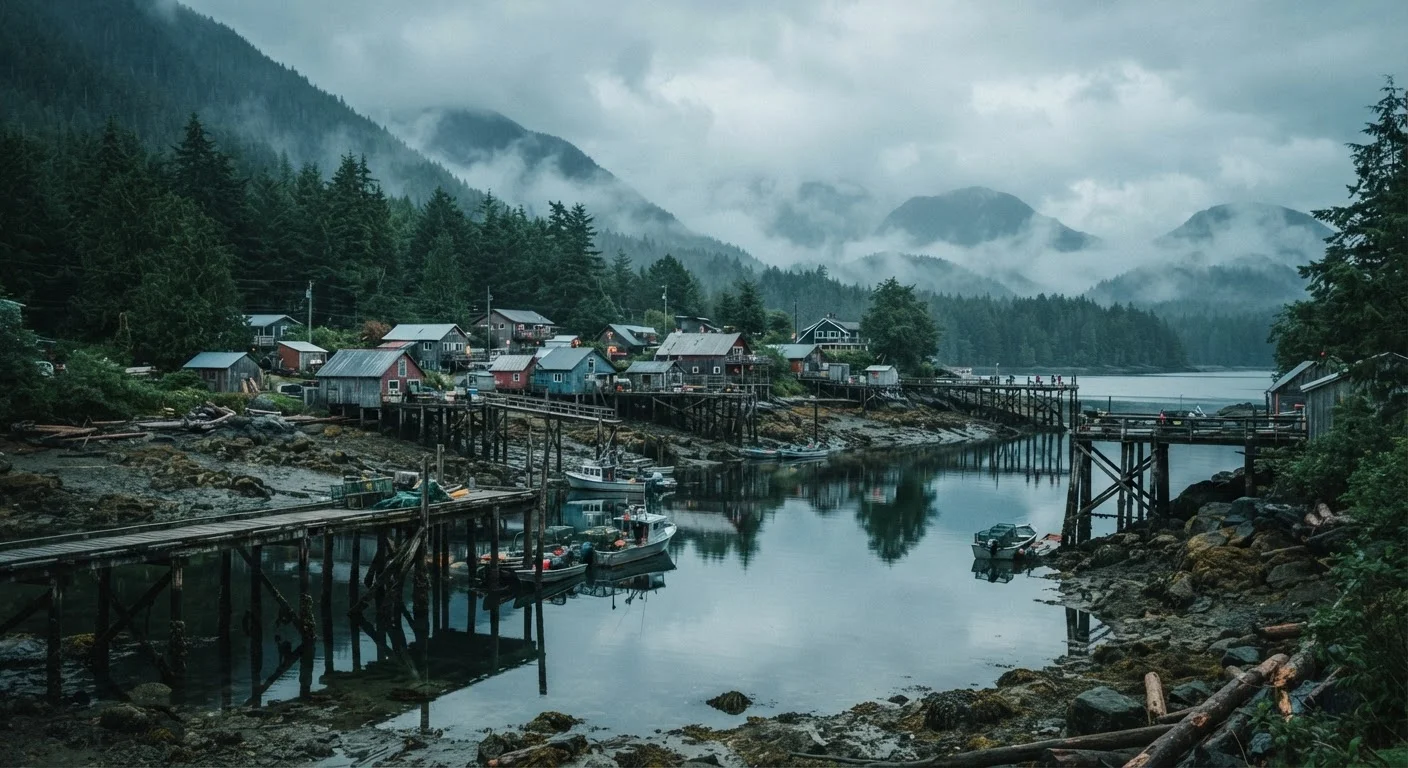
Perched on a narrow peninsula jutting into Willapa Bay, Tokeland is one of Washington's smallest incorporated towns — and one of its most atmospheric. The bay is a major estuary for migratory birds along the Pacific Flyway, making it a quiet paradise for birdwatchers, especially in fall. The historic Tokeland Hotel, built in the 1880s, is a genuine landmark worth a look even if you're not staying. The surrounding tideflats are productive clamming grounds; check current shellfish safety advisories from Washington Department of Fish and Wildlife before harvesting anything.
Tokeland sits on a migratory bird flyway that most Washington travelers never discover.
Westport, Washington
Westport is a working fishing port at the mouth of Grays Harbor — a place with genuine maritime grit rather than manufactured coastal charm. The town supports an active charter fishing fleet, and the Westport Maritime Museum, housed in a former Coast Guard station, offers real local history without the polish of larger attractions. The South Jetty area draws surfers year-round; the wave conditions here have earned it a reputation as one of the more consistent surf breaks in the Pacific Northwest. Don't miss the observation tower at Westport Light State Park for sweeping views of the harbor entrance.
Westport's working fishing harbor and consistent surf break give it an authenticity most coastal towns have traded away.
Moclips, Washington
Moclips sits on a stretch of the Washington coast that sees relatively little tourist infrastructure, which is exactly its appeal. The beach here is wide, flat, and often nearly empty — great for long walks and razor clamming when seasons are open. The Museum of the North Beach in nearby Ocean City documents the area's logging and resort history from the early 20th century. Cell service is spotty, lodging options are limited, and that's precisely the point: Moclips rewards travelers who actually want to disconnect.
Moclips offers miles of nearly empty beach for travelers who actually want to disconnect.
Reedsport, Oregon
Reedsport sits at the heart of the Oregon Dunes National Recreation Area — 40 miles of shifting sand dunes that are unlike anything else on the American West Coast. The dunes reach heights of over 500 feet in places and extend nearly a mile inland, creating an otherworldly landscape that surprises visitors who expect the coast to look like, well, a coast. The Umpqua Discovery Center in town provides excellent interpretive exhibits on the dunes ecosystem, the Umpqua River estuary, and the area's Native American heritage. Access points for hiking into the dunes are well-marked along US-101.
Oregon's dunes reach over 500 feet and stretch nearly a mile inland — a coastal landscape like no other.
Bandon, Oregon
Bandon is perhaps the most polished entry on this list, but it still flies under the radar compared to destinations further north. Old Town Bandon retains a low-key character built around cranberry farming (the region is one of Oregon's most productive cranberry-growing areas) and a working port. The beach south of town is strewn with dramatic sea stacks — formations with names like Face Rock and Table Rock — that rival Cannon Beach's Haystack Rock in visual drama but attract a fraction of the visitors. The Bandon Marsh National Wildlife Refuge, at the mouth of the Coquille River, is excellent for birding and kayaking.
Bandon's sea-stack-studded beach rivals Cannon Beach visually but draws only a fraction of its crowds.
Gold Beach, Oregon
Gold Beach sits where the Rogue River meets the Pacific — a confluence that gives the town its defining character. The lower Rogue is one of the most celebrated wild and scenic rivers in the country, and jet boat tours up the river canyon have been running for decades, offering access to rugged interior landscapes most coastal travelers never see. The town's small commercial strip is unpretentious, and the surrounding Samuel H. Boardman State Scenic Corridor — often called Oregon's most scenic 12 miles of coastline — begins just a few miles to the south, with natural arches, sea stacks, and cove beaches accessible by short trail.
Gold Beach sits where a celebrated wild river meets the Pacific, offering two landscapes for the price of one stop.
Planning Your Route Along the Forgotten Shore
These towns aren't connected by a single convenient loop, so a little route planning goes a long way. US Route 101 is the spine of the Pacific Coast Highway through both states, and nearly every destination below is within a short detour of it. Budget more time than you think you need — that's the whole point.
Pack for the Pacific Northwest Coast
Even in summer, coastal Oregon and Washington can be cool, foggy, and windy. Layering is essential — a waterproof shell, a mid-layer fleece, and sturdy footwear will serve you far better than beach-resort packing. Tide tables are freely available from NOAA and are invaluable for timing beach walks, clamming, and tidepool exploration safely.
For travelers who want to extend their Pacific Northwest adventure inland, the region's quieter public lands offer equally undersung rewards. Our guide to lesser-known national parks worth the drive pairs naturally with a coastal road trip through this corner of the country.
Travel conditions, park access, entry requirements, and road closures can change without notice. Always verify current information with official state and federal agency sources before your trip.