

Key Takeaways
How Long a Car Battery Actually Lasts
Most conventional lead-acid car batteries - the type found in the vast majority of passenger vehicles - are designed to last roughly three to five years. Some drivers squeeze out six or more years under ideal conditions; others replace batteries at two years after a string of harsh circumstances. The range is real, and it matters for budgeting and planning.
What drives that variation? The honest answer is a combination of chemistry, climate, and driving behavior. Unlike the lithium-ion cells in your phone - where charge cycles and software habits dominate the conversation (see our piece on phone charging habits) - lead-acid batteries are primarily sensitive to heat, depth of discharge, and how consistently they receive a full charge.
Understanding these real culprits makes it easier to separate genuine maintenance advice from automotive folklore.
Myth
Cold weather is the biggest enemy of car batteries.
Fact
Heat causes far more cumulative damage; cold weather reveals weakness that heat already created.
Cold temperatures do slow the chemical reactions inside a battery, reducing its available cranking power on frigid mornings. But the degradation - the permanent loss of capacity - happens primarily in summer. High underhood temperatures accelerate electrolyte evaporation and plate corrosion over months. By winter, the battery is simply weaker, and the cold exposes that weakness dramatically. Drivers in hot southern climates statistically replace batteries more frequently than those in cold northern ones.
Myth
Driving your car every day keeps the battery fully charged.
Fact
Daily driving only maintains charge if trips are long enough; short errands can leave the battery in a chronic state of undercharge.
The alternator needs sustained engine operation - typically at least 20 to 30 minutes of highway-speed driving - to meaningfully replenish the charge consumed during startup. Repeated 5- to 10-minute city trips leave the battery slightly more depleted each cycle. Over weeks, this compounds into sulfation of the battery plates, a form of internal damage that reduces usable capacity and cannot be reversed by charging alone.
Myth
Leaving your car parked for a few weeks won't affect the battery.
Fact
Modern vehicles draw continuous small currents even when off; two to four weeks of inactivity can discharge a battery to damaging levels.
Contemporary vehicles keep numerous systems active in standby - keyless entry modules, telematics, alarm systems, and infotainment units among them. This parasitic draw is typically measured in milliamps but accumulates steadily. A battery discharged below roughly 11.8 volts enters a state that may cause irreversible sulfation. Vehicles stored for more than two weeks benefit from a battery maintainer to hold charge without overcharging.
Myth
A new battery means you don't need to think about it for years.
Fact
Even a new battery requires a functioning charging system and clean connections to achieve its rated lifespan.
Installing a fresh battery into a vehicle with a failing alternator, a heavy parasitic draw, or corroded terminals will shorten that battery's life significantly - sometimes within months. A battery is only one component in the charging system. Before replacing a battery, a qualified technician should test the alternator output and check for parasitic draws. Otherwise, the root cause remains and will affect the replacement battery just as much.
Myth
You can tell a battery is failing just by looking at it.
Fact
Most battery failure gives few visible signs; a load test is the only reliable way to assess true health.
Swelling or cracking of the case is a visible indicator, but these are signs of severe damage - often after the battery has already failed. In the vast majority of cases, a dying battery looks identical to a healthy one. A proper load test, which measures the battery's ability to deliver current under realistic demand, is the diagnostic standard. Many auto parts retailers and service shops offer this test at no charge and it takes just a few minutes.
The Real Factors That Shorten Battery Life
Once myths are cleared away, a cleaner picture emerges. Three factors consistently show up as genuine battery killers:
- Chronic undercharging: Every time you take a 5-minute errand run, the alternator doesn't have enough time to replenish what the starter motor consumed. Repeated partial discharges cause lead sulfate crystals to harden on the battery plates - a process called sulfation - which permanently reduces capacity.
- Sustained high heat: Underhood temperatures in hot climates can routinely exceed 200°F. This accelerates the evaporation of electrolyte fluid inside the battery and speeds up internal corrosion of the plates.
- Parasitic draw: Modules that stay active when the vehicle is off - alarm systems, infotainment units, connected apps - draw small but continuous current. Left sitting for two weeks or more, this can discharge a battery below the threshold from which it can be fully recovered.
3-5 years
Typical lead-acid battery lifespan
Industry data and manufacturer guidance consistently place the average service life of conventional 12-volt lead-acid batteries in this range under normal conditions.
~33%
Capacity lost at -4°F vs. 77°F
Engineering data on lead-acid chemistry shows significant cold-temperature output reduction, illustrating why an already-weakened battery struggles most in winter.
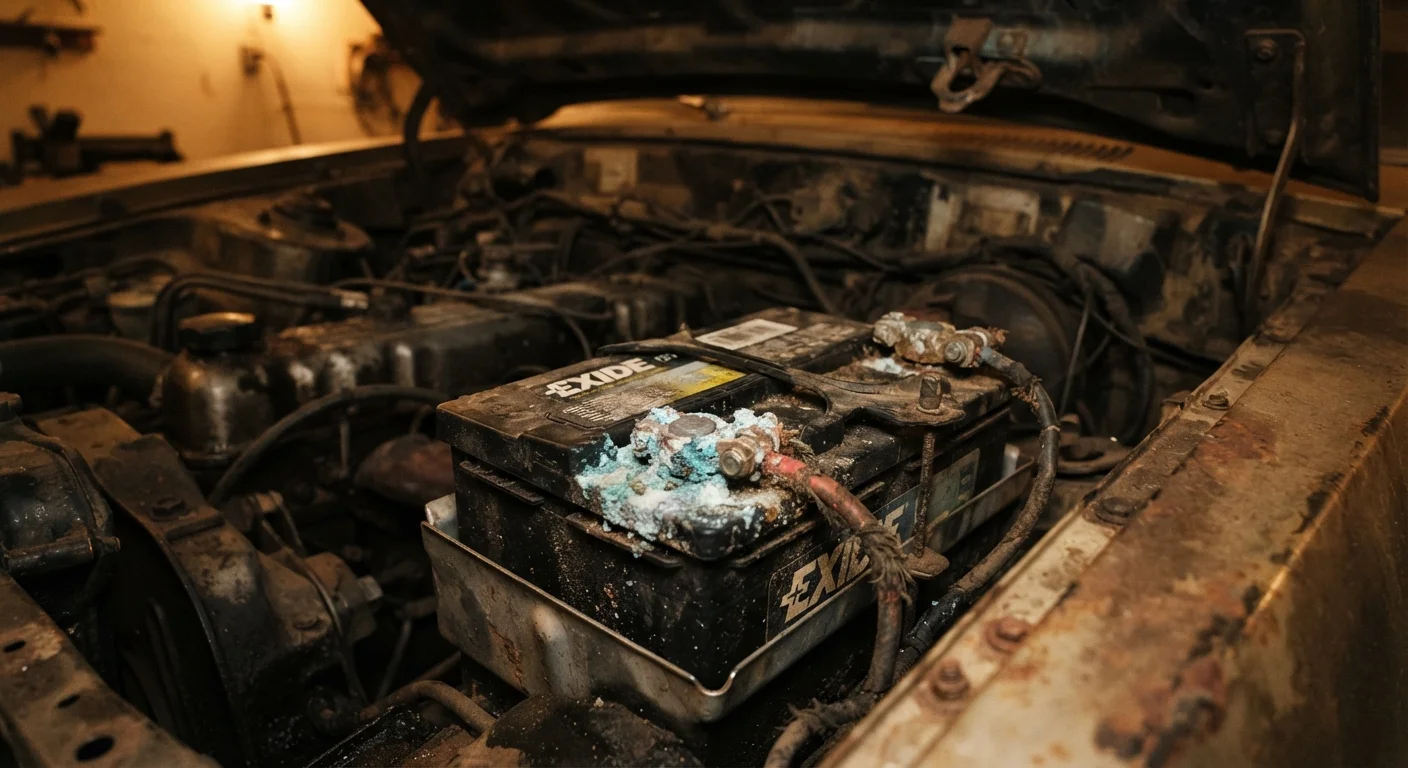
Terminal corrosion deserves a separate mention. White or blue-green buildup on battery posts increases electrical resistance, reducing the charging current that flows from the alternator. A battery that appears weak may simply have dirty terminals - a wire brush and a basic terminal cleaner can resolve it before a replacement becomes necessary. For tasks beyond cleaning, or if you suspect a deeper electrical fault, a qualified mechanic should perform a proper load test and charging-system inspection.
Keeping What You Have in Better Shape
Extending battery life isn't complicated, but it does require a few consistent habits. If your driving is mostly short urban trips, consider a periodic longer highway drive to allow the alternator to deliver a meaningful charge. Alternatively, a quality battery maintainer (sometimes called a trickle charger) used during extended storage can prevent damaging deep discharges.
Parking in a garage during extreme heat or cold reduces thermal stress considerably. If you live in a climate where summer underhood temperatures are regularly punishing, knowing the signs of early battery wear - slow cranking, dim headlights at idle, a dashboard battery warning light - can help you replace the battery proactively rather than reactively.
Don't Jump-Start a Frozen or Damaged Battery
Attempting to jump-start a battery that is visibly cracked, bulging, or leaking - or one that has frozen solid in extreme cold - can cause a dangerous failure, including electrolyte spill or, in rare cases, rupture. If a battery shows physical damage, have the vehicle towed and the battery professionally inspected or replaced before attempting any electrical operation.
Battery technology continues to evolve. Vehicles with start-stop systems, hybrids, and EVs use different battery chemistries and management systems entirely - the advice here applies specifically to conventional 12-volt lead-acid batteries found in standard combustion-engine vehicles. The same principle of understanding your specific components applies to other consumer goods; our overview of how everyday electronics wear out explores similar themes across product categories.