

| Number of standard sheen levels | 5 (flat, eggshell, satin, semi-gloss, high-gloss) |
| Best finish for ceilings | Flat / matte |
| Best finish for kitchens and bathrooms | Satin or semi-gloss |
| Best finish for trim and doors | Semi-gloss or high-gloss |
| Most forgiving of wall imperfections | Flat / matte |
| Most durable and washable finish | High-gloss |
Why Paint Finish Matters More Than Color
Most homeowners spend considerable time choosing paint colors but give little thought to sheen level — the degree of light reflectivity in a finish. That's a costly oversight. The finish you select directly affects how durable the surface is, how easy it is to clean, how much it hides wall imperfections, and how a room feels visually. Two walls painted the same color but with different finishes will look noticeably different under the same lighting conditions.
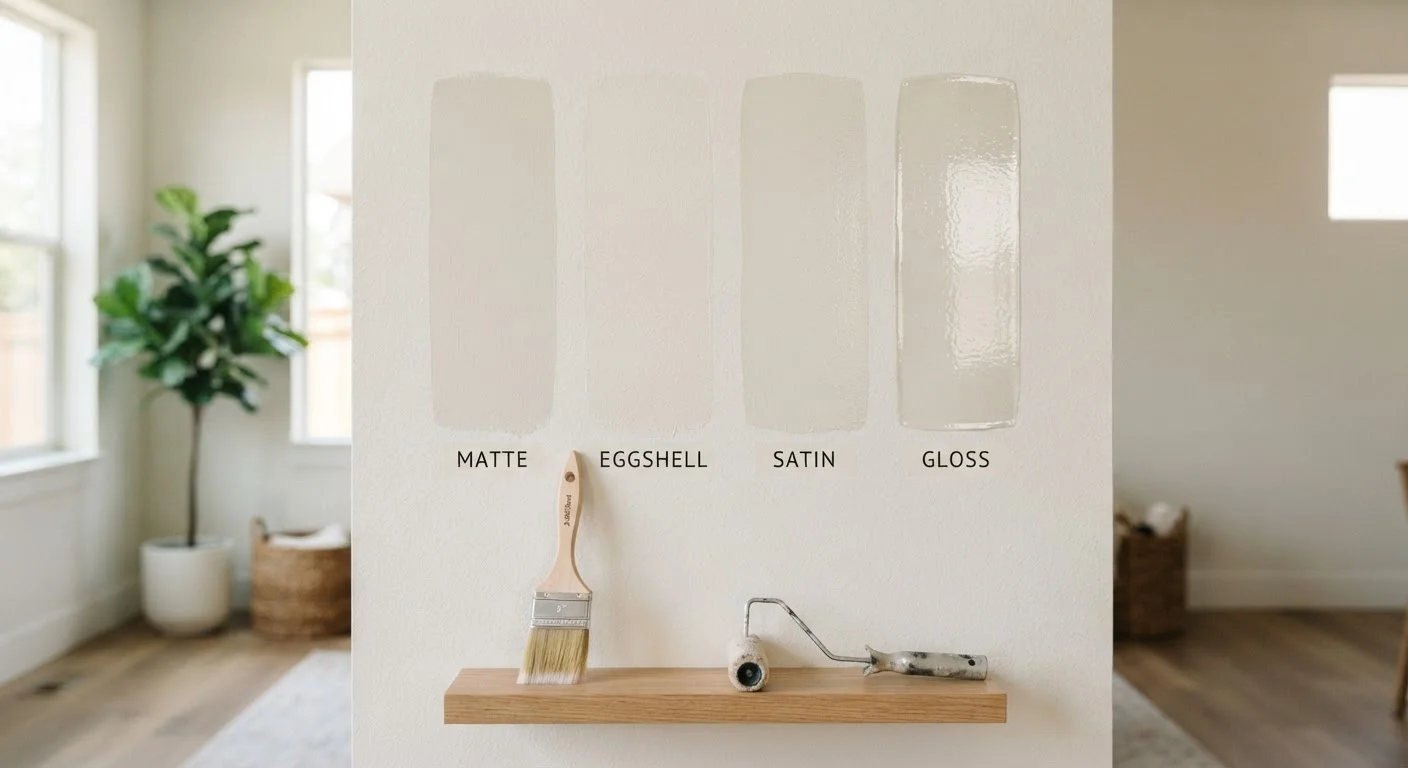
Paint manufacturers typically offer five sheen categories: flat/matte, eggshell, satin, semi-gloss, and high-gloss. Each sits at a different point on the reflectivity spectrum. Understanding where each finish belongs — and why — saves you from repainting a bathroom six months after move-in or wondering why your living room walls look washed out.
For a broader look at how paint interacts with other room elements, see how rugs, curtains, and paint work together.
| Number of standard sheen levels | 5 (flat, eggshell, satin, semi-gloss, high-gloss) |
| Best finish for ceilings | Flat / matte |
| Best finish for kitchens and bathrooms | Satin or semi-gloss |
| Best finish for trim and doors | Semi-gloss or high-gloss |
| Most forgiving of wall imperfections | Flat / matte |
| Most durable and washable finish | High-gloss |
The Four Core Finishes: A Practical Breakdown
Here's what each finish actually delivers in a real home environment.
Flat / Matte
Flat and matte finishes reflect almost no light, producing a smooth, chalky appearance that excels at concealing surface imperfections like nail pops, patched drywall, or uneven texture. This makes them the standard choice for ceilings and low-traffic areas such as formal dining rooms or adult bedrooms. The trade-off: flat finishes are difficult to clean without damaging the paint film, and repeated scrubbing can leave shiny rub marks. Some newer formulations marketed as "washable matte" offer modest improvement, but they still trail other sheens in durability.
Eggshell
Named for the subtle sheen of an eggshell, this finish reflects slightly more light than flat while remaining understated. It's the most popular finish for living rooms, hallways, and bedrooms because it balances a soft look with enough durability to wipe down light marks. Eggshell handles occasional cleaning well but isn't ideal for moisture-heavy spaces.
Satin
Satin sits in the middle of the spectrum — noticeably shiny without being stark. It resists moisture and cleans up easily, making it appropriate for kitchens, bathrooms, laundry rooms, and children's bedrooms. Satin does magnify surface imperfections more than eggshell or matte, so proper prep work matters before application.
Semi-Gloss and High-Gloss
Semi-gloss is the go-to finish for trim, baseboards, window casings, and doors because it holds up to frequent contact and cleans easily. High-gloss delivers the most reflectivity and the hardest surface; it's sometimes used on kitchen cabinetry or as a deliberate design statement on an accent wall. Both sheens are unforgiving of surface flaws — any bump or ridge will be highlighted under light.
Sheen
The degree to which a dried paint surface reflects light. Higher sheen means more light reflection and generally greater durability and washability.
Flat / Matte finish
A paint finish with little to no reflectivity. It conceals surface imperfections effectively but is the least durable and hardest to clean of all finish types.
Eggshell finish
A low-luster finish with a soft, subtle sheen similar to the surface of an egg. Balances a refined appearance with moderate cleanability, making it suitable for most living spaces.
Satin finish
A mid-range finish with a pearl-like sheen. Offers good moisture resistance and easy cleaning, making it well suited to kitchens, bathrooms, and children's rooms.
Semi-gloss finish
A noticeably shiny finish that is durable, moisture-resistant, and easy to wipe clean. Commonly used on trim, doors, and bathroom walls.
High-gloss finish
The most reflective and hardest of all paint finishes. Best reserved for cabinetry, furniture, or accent surfaces where durability and a striking appearance are priorities.
Paint film
The dried layer of paint that adheres to a surface. Film thickness and composition affect durability, washability, and sheen retention over time.
Choosing the Right Finish by Room
A useful rule of thumb: the more wear and moisture a surface faces, the higher the sheen should be. Here's a room-by-room reference.
- Ceilings: Flat only. Any sheen here creates glare and draws attention to imperfections.
- Living rooms and bedrooms: Eggshell or matte. Low traffic means durability is less critical; hiding texture flaws is the priority.
- Hallways and entryways: Eggshell or satin. Higher foot traffic and occasional scuff marks call for something more washable.
- Kitchens and bathrooms: Satin or semi-gloss. Moisture resistance and cleanability are non-negotiable.
- Trim, doors, and cabinetry: Semi-gloss or high-gloss. Hardness and sheen are functional here, not just decorative.
If your walls have significant texture issues — whether from age, repairs, or lower-quality drywall — choosing a flatter finish will do more to hide them than any amount of prep work alone. Conversely, a beautifully prepped wall can handle a higher sheen without penalty.
Prep Work Is Non-Negotiable for Higher Sheens
The shinier the finish, the more it highlights surface flaws like dings, old nail holes, or uneven patches. Before applying satin, semi-gloss, or high-gloss paint, sand surfaces smooth, fill all imperfections, and prime properly. Skipping prep on a high-sheen finish typically produces worse-looking results than a flat finish applied over an unprepped wall.
When evaluating finishes for wet areas, keep in mind that paint alone isn't a waterproofing solution. For surfaces that face direct water contact, proper backer board, sealing, and tile or other cladding may be appropriate. See flooring options for wet areas for a parallel discussion of moisture tolerance in another common surface category.