

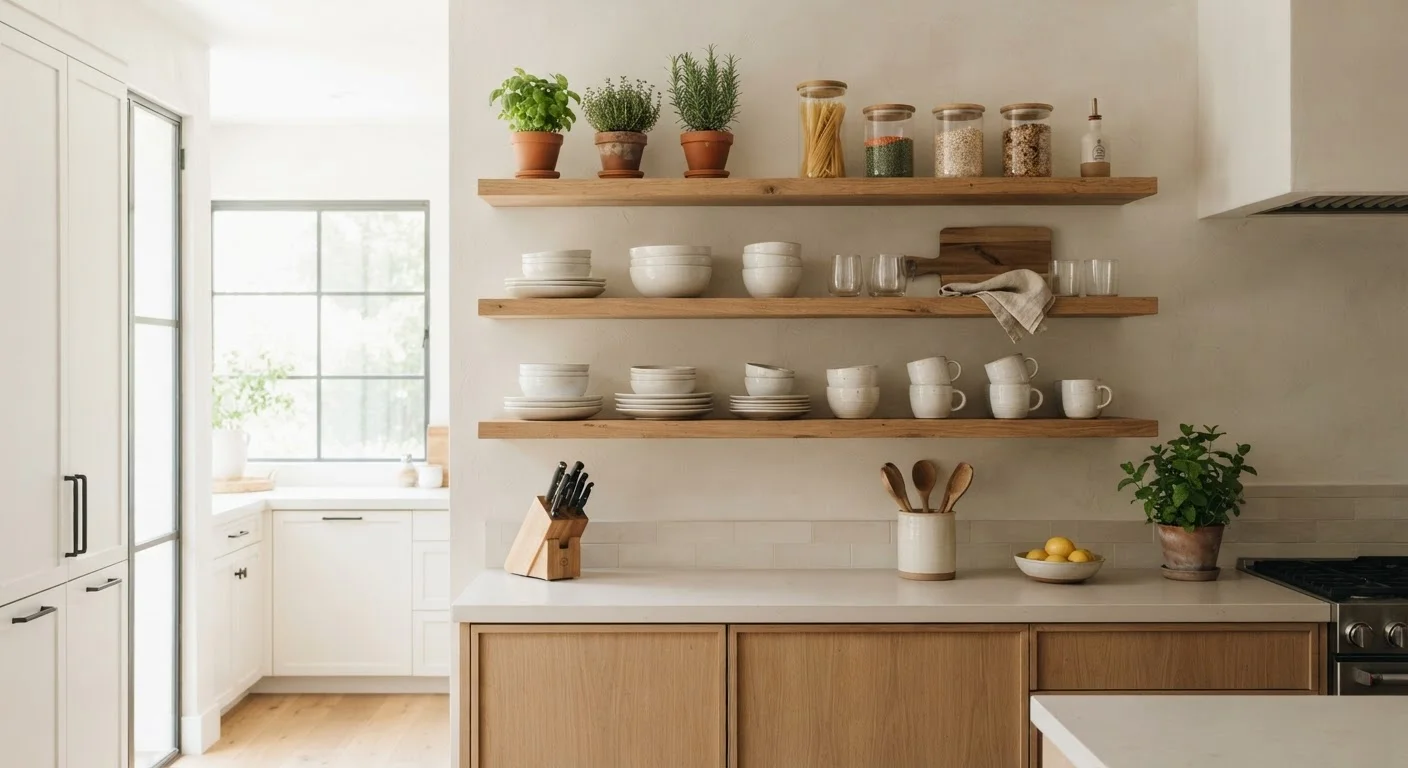
Key Takeaways
Makes small kitchens feel more open and airy
Removing the visual mass of upper cabinet boxes — especially in galley or compact kitchens — creates a sense of height and spaciousness that closed cabinetry typically works against.
Everyday items are immediately visible and accessible
Frequently used dishes, glasses, and pantry staples are faster to grab when there's no door to open, which reduces small friction points throughout the day.
Lower upfront cost than full cabinet replacement
Floating shelves are generally less expensive to purchase and install than full upper cabinet runs, making them an accessible option for budget-conscious renovations.
Encourages intentional, curated storage habits
Because everything is visible, most households naturally avoid over-accumulating items — a built-in check against the clutter that tends to fill closed cabinets unnoticed.
Adapts well to rental and temporary living situations
Freestanding shelf units require no permanent installation, letting renters test the concept and adjust or remove it without affecting their lease or security deposit.
Grease and dust accumulate on exposed items quickly
Kitchen air carries airborne grease and particulates from cooking; without cabinet doors as a barrier, dishware and shelf surfaces need more frequent cleaning than most people anticipate before installing.
Clutter is always on display — no hiding place
Any visual inconsistency — a stray mug, a mismatched container, or a temporarily placed item — is immediately visible, making the space look disordered faster than closed storage would.
Less total storage capacity than enclosed cabinets
Open shelves typically hold less than full-depth closed cabinets with doors, which can be a real constraint for households with a large dishware collection or significant pantry needs.
Items near the range require more frequent wiping
Shelves positioned close to a stovetop or oven are exposed to higher concentrations of steam and splatter, meaning individual items may need cleaning even when the rest of the kitchen doesn't.
Structural installation requires proper wall anchoring
Floating shelves must be anchored into wall studs or with appropriate hardware to safely hold the weight of dishes and pantry goods — improperly installed shelves pose a genuine safety risk. A qualified contractor or experienced DIYer should assess the installation.
Our Verdict
Open shelving delivers real aesthetic and functional benefits — better visibility, a more spacious feel, and a natural prompt to stay organized. But those benefits come with genuine upkeep demands that catch many homeowners off guard. For kitchens prone to grease splatter, households with mismatched dishware, or anyone who prefers low-maintenance storage, the look rarely holds up in daily life the way it does in design photos.
Best suited to organized households with a cohesive, curated dishware collection who are prepared to wipe down shelves and items regularly.
Why Open Shelving Has Stayed Popular
Open shelving has been a fixture in kitchen design conversations for over a decade, and its appeal is straightforward. Removing upper cabinet doors makes a kitchen feel taller, airier, and less enclosed — a meaningful advantage in smaller kitchens where closed cabinetry can feel like walls closing in. It also encourages a display mindset: attractive dishware, glass canisters, and small plants become part of the room's visual identity rather than hidden behind doors.
There's also a practical case. When everything is visible, you're less likely to lose track of what you own or forget items at the back of a deep cabinet. Grabbing a plate or bowl takes one motion instead of two. For everyday items used multiple times a day, that accessibility adds up. Compared to other storage approaches for tight kitchens, open shelving is also relatively low-cost to install — particularly if you're replacing existing upper cabinets rather than adding new storage.
Makes small kitchens feel more open and airy
Removing the visual mass of upper cabinet boxes — especially in galley or compact kitchens — creates a sense of height and spaciousness that closed cabinetry typically works against.
Everyday items are immediately visible and accessible
Frequently used dishes, glasses, and pantry staples are faster to grab when there's no door to open, which reduces small friction points throughout the day.
Lower upfront cost than full cabinet replacement
Floating shelves are generally less expensive to purchase and install than full upper cabinet runs, making them an accessible option for budget-conscious renovations.
Encourages intentional, curated storage habits
Because everything is visible, most households naturally avoid over-accumulating items — a built-in check against the clutter that tends to fill closed cabinets unnoticed.
Adapts well to rental and temporary living situations
Freestanding shelf units require no permanent installation, letting renters test the concept and adjust or remove it without affecting their lease or security deposit.
The Maintenance Reality Most Articles Skip
Kitchen air is different from the air in a living room or bedroom. Cooking produces grease vapors, starch particles, and moisture — and all of it settles on exposed surfaces. On open shelves, that means your plates, glasses, and decorative items accumulate a thin, sticky film faster than most people expect. In homes where cooking is frequent, a weekly wipe-down of both shelves and displayed items isn't an exaggeration.
Dust compounds the issue. Shelving near a range or oven will need more frequent attention than shelves on a far wall. If you cook less often or keep a tidy, minimal arrangement, this burden is manageable. But it's worth being honest: the Instagram version of open shelving typically requires either daily tidying or a very deliberate, sparse arrangement that doesn't reflect how most households actually use their kitchen storage. This lines up with a broader point covered in common home organization myths — aspirational systems often underestimate real-life friction.
Grease and dust accumulate on exposed items quickly
Kitchen air carries airborne grease and particulates from cooking; without cabinet doors as a barrier, dishware and shelf surfaces need more frequent cleaning than most people anticipate before installing.
Clutter is always on display — no hiding place
Any visual inconsistency — a stray mug, a mismatched container, or a temporarily placed item — is immediately visible, making the space look disordered faster than closed storage would.
Less total storage capacity than enclosed cabinets
Open shelves typically hold less than full-depth closed cabinets with doors, which can be a real constraint for households with a large dishware collection or significant pantry needs.
Items near the range require more frequent wiping
Shelves positioned close to a stovetop or oven are exposed to higher concentrations of steam and splatter, meaning individual items may need cleaning even when the rest of the kitchen doesn't.
Structural installation requires proper wall anchoring
Floating shelves must be anchored into wall studs or with appropriate hardware to safely hold the weight of dishes and pantry goods — improperly installed shelves pose a genuine safety risk. A qualified contractor or experienced DIYer should assess the installation.
What to Consider Before Committing
Before removing cabinet doors or budgeting for a full open-shelf installation, a few honest questions help clarify fit:
- How consistent is your household's tidying? Open shelves don't hide clutter — they amplify it. A stack of mismatched containers or a random assortment of items reads as chaos, not character.
- Is your dishware visually cohesive? Mixed patterns, random mugs, and odds-and-ends collections don't translate well to open display. A coordinated set — even a simple one — changes the result significantly.
- How active is your stovetop? High-heat, high-splatter cooking (frequent frying, wok cooking, batch sauce-making) accelerates grime buildup. Open shelves directly above or adjacent to a range will need more upkeep than those on a far wall.
- Do you rent or own? Renters may have installation restrictions, but freestanding shelving units offer a low-commitment way to test the concept. See also renter-friendly storage ideas for options that don't require drilling.
A Note on Permits and Structural Considerations
Most floating shelf installations don't require a permit, but load-bearing capacity and proper wall anchoring matter more than many guides acknowledge. Heavy stoneware and full pantry loads can exceed what decorative brackets safely support. If you're unsure about your wall type — particularly in older homes with plaster walls or unusual framing — consult a contractor before installation. Requirements vary by locality, so verify with your local building department if you're making structural changes as part of a larger kitchen renovation.
A middle-ground worth considering: replace only the upper cabinets on one wall with open shelving, keeping others closed. This hybrid approach — open shelving for attractive everyday items, closed storage for bulk goods and mismatched pieces — is how many homeowners get the aesthetic benefit without the full maintenance load.
Making Open Shelving Work If You Decide to Go Ahead
If the trade-offs feel manageable, a few practical principles improve the outcome. First, edit ruthlessly before installing. Open shelving only works well when the items on display are intentional — limit each shelf to items used regularly or genuinely pleasing to look at. Storing rarely used appliances or holiday dishware elsewhere prevents the cluttered look that undermines the whole concept.
Second, consider shelf material carefully. Sealed wood, metal, and painted MDF all hold up differently under kitchen conditions. Unsealed or lightly finished wood absorbs grease and is harder to wipe clean over time. A smooth, sealed surface simplifies maintenance considerably.
Third, use the visual weight of the shelf arrangement the same way you'd think about how furniture arrangement affects perceived space — balance matters. Heavier, darker items tend to ground a shelf better at lower heights, while lighter items and glassware read well higher up.
~30%
Homeowners who removed open shelves after installing them
Surveys by home renovation platforms have found a notable share of homeowners who installed open kitchen shelving later reinstalled closed cabinets, citing maintenance as the primary reason.
2–3×
More frequent cleaning needed vs. closed cabinets
Kitchen design professionals generally advise that open shelves in active cooking kitchens need wiping down two to three times more often than the interiors of closed upper cabinets.
Open shelving isn't right for every kitchen or every household. But approached with realistic expectations about upkeep and a clear-eyed look at your actual storage needs, it can deliver on its visual promise without becoming a daily chore.