

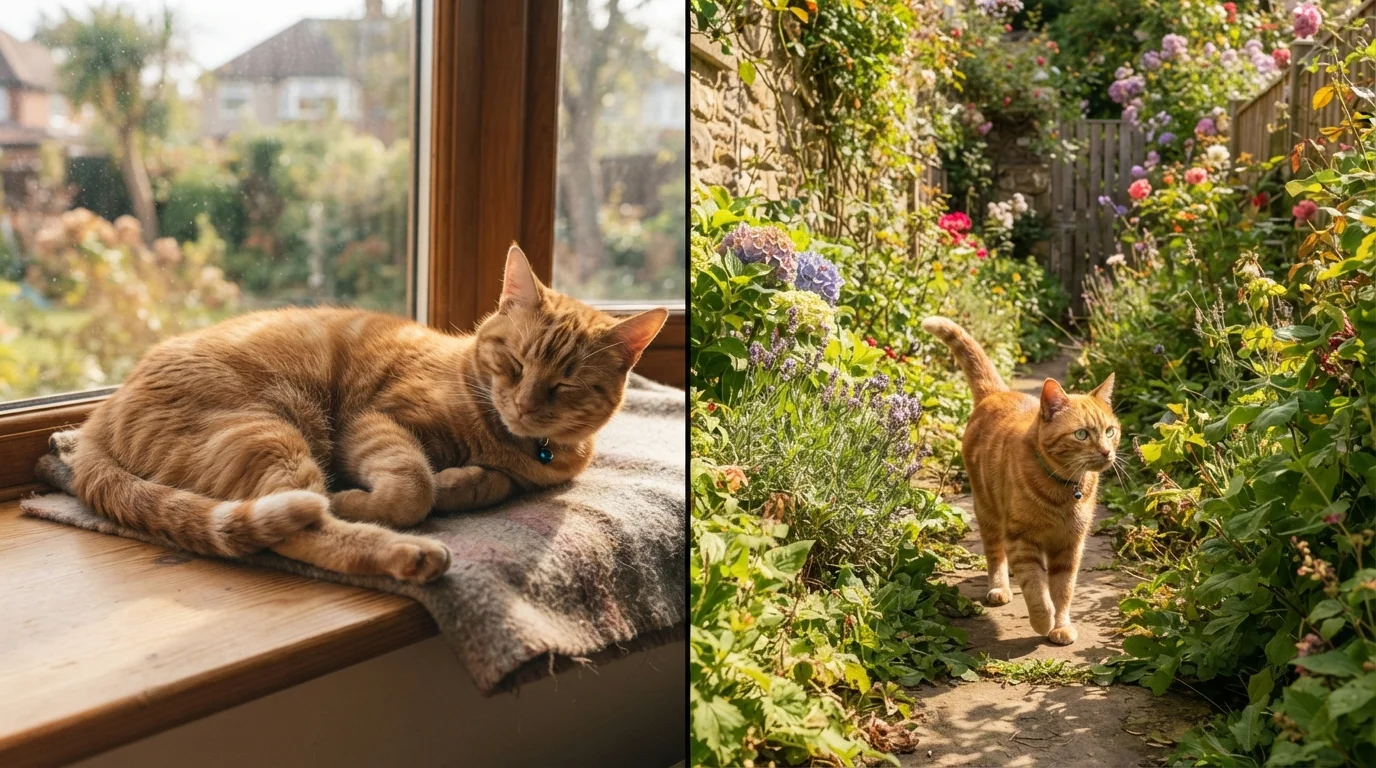
Key Takeaways
Option A
Indoor Cat
The protected, controlled environment choice.
Best for: Owners who prioritize long-term safety, predictable health management, and living in high-traffic or urban areas.
Option B
Outdoor Cat
The freedom-first, natural-stimulation lifestyle.
Best for: Cats with strong roaming instincts in low-traffic rural settings where risks can be actively managed.
If you live in an urban or suburban area with heavy traffic
Indoor Cat
Vehicle strikes are among the leading causes of outdoor cat fatalities. Keeping cats inside eliminates this risk entirely.
If your cat has lived outdoors most of its life and shows chronic stress indoors
Outdoor Cat
Forcing a lifelong outdoor cat to remain fully confined can cause significant psychological stress. Managed outdoor access with safety measures is often more humane.
If you want the lowest possible disease and parasite exposure
Indoor Cat
Indoor cats have dramatically reduced contact with FIV, FeLV, parasites, and other infectious agents transmitted through wildlife or feral cats.
If your cat shows signs of boredom or frustration indoors
Indoor Cat
Rather than switching to outdoor access, address enrichment needs with climbing structures, interactive play, and puzzle feeders — the evidence supports this approach for indoor wellbeing.
If you live in a quiet rural area and want to provide natural stimulation
Outdoor Cat
Lower traffic density and reduced predator pressure can make supervised outdoor time a reasonable option, provided vaccinations and parasite prevention are current.
What the Lifespan Data Actually Shows
The lifespan gap between indoor and outdoor cats is one of the most consistently cited findings in feline veterinary literature. Indoor cats typically live between 12 and 18 years, while outdoor cats average closer to 2 to 5 years, with some estimates reaching up to 7 years depending on environment. The disparity is stark and largely driven by preventable causes of death.
Outdoor cats face a much broader range of acute hazards — vehicle strikes, predator attacks, fights with other cats, and accidental poisoning from substances like antifreeze or rodenticides. These risks compound over time and dramatically shorten average lifespans. This doesn't mean every outdoor cat lives a short life, but the probability of encountering a fatal or seriously injurious event is measurably higher.
For owners thinking long-term about their cat's health and wellness, understanding these baseline risks is the starting point for any informed decision.
| Criterion | Indoor Cat | Outdoor Cat |
|---|---|---|
| Average lifespan | 12–18 years | 2–7 years |
| Injury risk | Low | High (traffic, predators, fights) |
| Infectious disease exposure | Minimal | Elevated (FIV, FeLV, parasites) |
| Obesity risk | Higher without enrichment | Lower due to activity levels |
| Behavioral stress risk | Possible without enrichment | Lower if roaming needs are met |
| Veterinary cost burden | Generally lower over time | Higher due to injuries and disease |
| Environmental enrichment | Requires active owner effort | Naturally high outdoors |
Disease, Parasites, and Veterinary Risk
Infectious disease exposure is a major driver of the health differential between indoor and outdoor cats. Feline Immunodeficiency Virus (FIV) and Feline Leukemia Virus (FeLV) are primarily transmitted through bites and close contact with infected cats — encounters far more common outside. Upper respiratory infections, ringworm, and intestinal parasites like roundworms and hookworms are also significantly more prevalent in cats with outdoor access.
Outdoor cats typically require more intensive veterinary monitoring, more frequent parasite prevention, and updated vaccination protocols to mitigate these elevated risks. As cats age, the burden of accumulated infections and injuries can accelerate decline. The article on senior pet care outlines how health needs shift with age — a relevant consideration for cats whose early outdoor years may have taken a cumulative toll.
12–18 yrs
Typical indoor cat lifespan
Veterinary literature consistently places indoor cat life expectancy well above that of outdoor cats, primarily due to reduced hazard exposure.
2–5 yrs
Estimated outdoor cat lifespan
Estimates vary by source and geography, but outdoor cats face significantly elevated mortality from vehicles, predators, and infectious disease.
~50%
Of owned cats in the US kept indoors
Survey data from the American Pet Products Association suggests roughly half of owned cats in the U.S. are kept exclusively indoors.
The Enrichment Problem: Why Indoor Isn't Automatically Better
Indoor cats are safer, but safety alone doesn't equal wellbeing. Cats are obligate hunters with complex needs for mental stimulation, territory exploration, and physical activity. Without intentional enrichment, indoor cats can develop stress-related behaviors — over-grooming, aggression, inappropriate elimination, or compulsive eating — that have real health consequences.
Obesity is a particular concern. Indoor cats burn fewer calories through movement and hunting-mimicry, and portion management becomes more critical. Nutrition plays an important supporting role; understanding core feline nutritional needs helps owners support metabolic health from the inside out.
The research on mental stimulation and exercise is clear: enrichment isn't optional for indoor cats. Vertical climbing spaces, food puzzles, interactive wand play, and window perches with bird feeders outside can meaningfully reduce stress and maintain a healthy weight.
Transitioning an Outdoor Cat Indoors
Cats that have spent significant time outdoors may find full confinement stressful, especially if transitioned abruptly. A gradual approach — starting with restricted outdoor time and increasing indoor enrichment simultaneously — tends to produce better behavioral outcomes. Consulting a veterinary behaviorist can be helpful for cats showing persistent distress during the transition.
The Middle Ground: Managed Outdoor Access
Many veterinarians and behaviorists now advocate for a hybrid approach that captures outdoor stimulation while limiting uncontrolled risk. Enclosed outdoor enclosures, commonly called catios, allow cats to experience fresh air, natural light, and sensory variety without exposure to traffic, predators, or other cats. Leash-trained cats can also benefit from supervised outdoor walks, though the training process requires patience and should begin gradually.
This middle-ground approach is particularly valuable for cats transitioning from outdoor to indoor life, or for households where a cat shows persistent signs of frustration with full confinement. The key principle is structured access — predictable, enriching, and controlled rather than free-roaming.
Whatever arrangement an owner chooses, keeping vaccinations current and maintaining regular veterinary checkups remains essential. Diet quality also plays a role in long-term resilience — the comparison between wet and dry food is worth reviewing, particularly as it relates to hydration in cats who may be less active indoors.
This article provides general educational information about cat care and is not a substitute for personalized veterinary advice. Consult your veterinarian for guidance specific to your cat's health, history, and environment.