

Key Takeaways
Feline Scratching Behavior
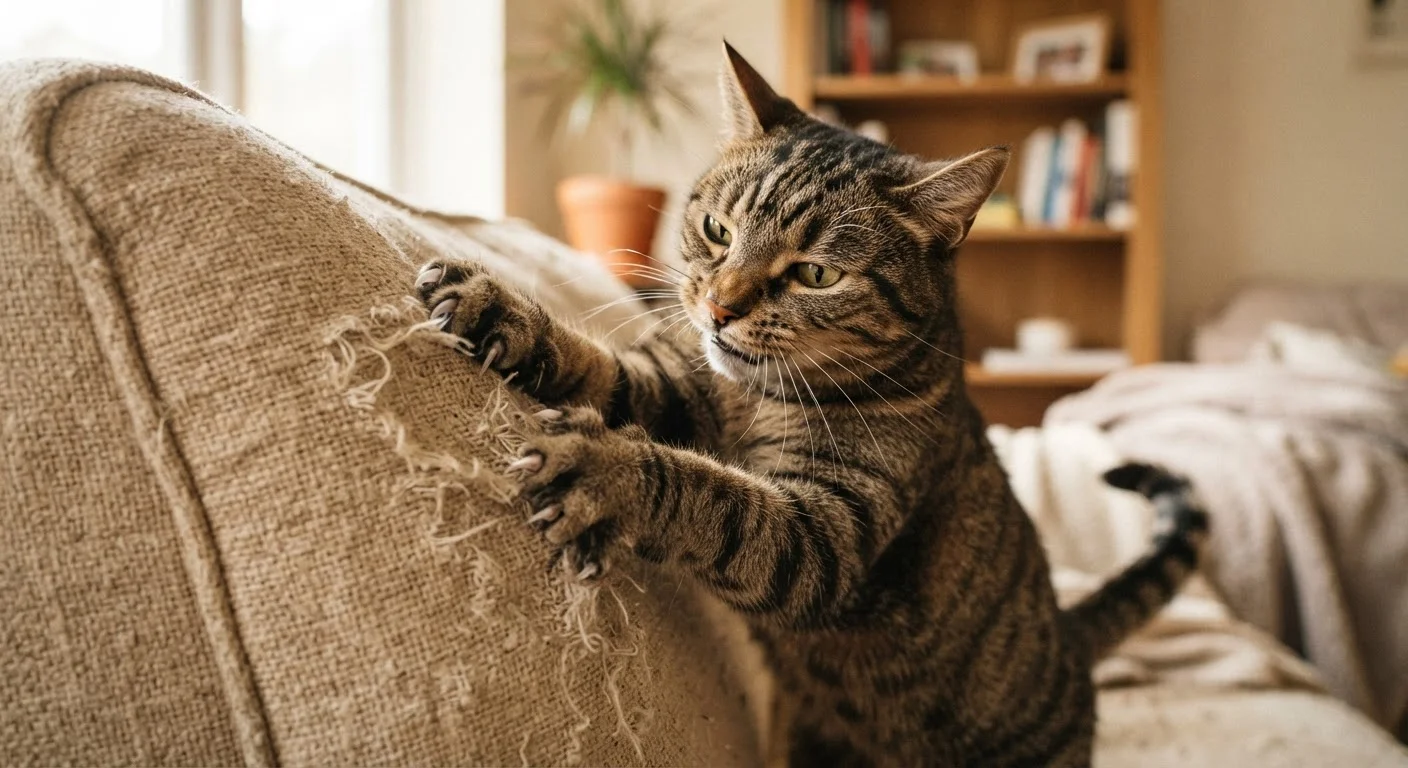
Scratching is an instinctive physical behavior in cats that serves multiple biological and communicative purposes. It is not destructive out of spite — it is deeply wired into how cats maintain their bodies, mark their territory, and manage stress. Understanding this distinction is essential before any attempt to change or redirect the habit.
Scratching removes the outer sheath of the claw (called the husk), exposes a sharper layer underneath, and activates scent glands located in the paw pads, depositing both visual and chemical territory markers simultaneously.
Why Cats Scratch: The Biology Behind the Behavior
Cats scratch for reasons that have nothing to do with misbehavior. There are at least four distinct biological drivers, and most cats are acting on several of them simultaneously.
Claw maintenance. The outer layer of a cat's claw grows in husks. Scratching peels away the dull, dead outer sheath and exposes a sharper claw beneath. This is a necessary grooming function — without it, claws can become overgrown, curved, and potentially painful.
Full-body stretching. Watch a cat scratch a vertical surface and you'll notice the full extension from shoulder to paw. Scratching engages muscles along the back, shoulders, and forelimbs that don't get the same workout any other way. It's as much about physical maintenance as claw care.
Territorial marking. Cats have scent glands in the pads of their paws. Every scratch deposits a chemical marker invisible to humans but legible to other cats. The visible scratch marks themselves serve as a secondary, visual signal of presence and ownership.
Emotional regulation. Scratching functions as a stress-relief mechanism. A cat that is anxious, overstimulated, or simply very happy after waking up will often scratch as part of returning to equilibrium. This is why cats commonly scratch near their sleeping spots immediately after a nap.
~90%
Cats that scratch household surfaces
Behavioral surveys consistently show that the vast majority of owned cats exhibit furniture or surface scratching at some point, confirming it as a near-universal feline behavior rather than an individual quirk.
28–32 in
Minimum recommended scratching post height
Feline behavior specialists generally recommend this height range to allow a full vertical stretch, which is one of the primary physical functions scratching serves.
4+
Scent gland locations on a cat's body
Cats have scent glands on their paws, cheeks, chin, and base of the tail — underscoring how central territorial scent communication is to feline social behavior.
Why Your Furniture Is the Target
If your cat ignores the scratching post you bought but attacks the corner of your sofa daily, the post — not the cat — is usually the problem.
Location matters most. Cats scratch in socially significant places: near where they sleep, near entrances, and near the areas they share with you. A scratching post tucked in a back room or corner doesn't serve the territorial and communicative purpose scratching is meant to fill. The sofa in the middle of the living room, on the other hand, does.
Height and stability. Many inexpensive posts are too short to allow a full stretch and too light to stay stable under pressure. If a post wobbles when a cat bears down on it, the cat will abandon it immediately. Posts should be at minimum 28 inches tall and anchored or weighted at the base.
Texture preferences. Cats typically prefer sisal rope, raw wood, or cardboard over carpet-covered posts — partly because these textures shred satisfyingly and allow the husk-removal function to work effectively. Carpet-covered posts can actually snag claws rather than strip them cleanly.
Try Sisal Before Anything Else
If you're replacing or adding a scratching surface, sisal rope is the most broadly preferred texture among domestic cats — it shreds in a way that mimics bark and facilitates clean claw maintenance. Flat sisal panels can also be mounted directly over furniture corners as a transitional solution while you train your cat to use a freestanding post.
Understanding these preferences allows you to select and position alternatives that genuinely compete with your furniture — rather than decorative cat furniture that goes unused.
How to Redirect Scratching Effectively
Redirection works by making appropriate surfaces more attractive and currently targeted surfaces less appealing — simultaneously. Attempting only one side of this equation typically fails.
Step 1: Match the location. Place a new scratching surface directly beside or in front of the furniture being scratched. This is temporary — once the cat is reliably using the post, you can gradually move it a few inches at a time toward a more convenient location.
Step 2: Match the orientation. Note whether your cat tends to scratch vertically (on chair arms, door frames) or horizontally (on rugs or flat surfaces). Provide both options — many cats use both depending on context and mood.
Step 3: Make the furniture less appealing. Temporary deterrents include double-sided tape on targeted areas (cats dislike the sticky sensation on their paws), aluminum foil, or commercially available furniture protector panels. These should be removed once the habit is redirected, not used permanently.
Step 4: Reinforce correct use. When your cat uses the post, reward the behavior immediately with calm praise, a treat, or play. Positive association accelerates the shift. Avoid any form of punishment for furniture scratching — it creates anxiety, which is itself a driver of increased scratching.
For a broader picture of how your home environment affects your cat's behavior, the same principles of environmental enrichment apply across multiple dimensions of feline wellness — including nutritional health.
When Scratching Signals Something More
In most cases, furniture scratching is entirely normal. But a sudden and significant increase in scratching — especially combined with other behavioral changes — can sometimes indicate underlying stress or a medical issue worth discussing with your veterinarian.
Anxiety-driven scratching tends to be more frantic, more frequent, and accompanied by other stress signals: hiding, changes in appetite, litter box avoidance, or excessive vocalization. If your cat's scratching seems compulsive rather than purposeful, a veterinary consultation is a reasonable next step.
Sudden Behavior Changes Warrant Attention
A meaningful uptick in scratching frequency or intensity — especially if paired with other changes like altered eating habits or litter box issues — is worth discussing with your veterinarian. While scratching itself is normal, dramatic behavioral shifts can sometimes reflect pain, anxiety, or an underlying health condition that deserves professional evaluation.
It's also worth doing a quick audit of your home environment. Cats are sensitive to household changes that owners may not even register as stressors — new cleaning products, rearranged furniture, or unfamiliar scents. For reference on common household items that can affect pet wellbeing, see our guide to household items toxic to pets.
This article is for general informational purposes only and is not a substitute for professional veterinary advice. If your cat is showing signs of distress or unusual behavior, consult a licensed veterinarian.