

Key Takeaways
Summary
18 items · 5–10 minutes active prep; 48 hours observation
Why the Patch Test Is Worth Your 48 Hours
Skincare shelves — and social media feeds — are crowded with new launches, reformulations, and hero ingredients. Before you apply anything new all over your face, a patch test gives your skin a private preview. It's low-effort, costs nothing, and can spare you a week of redness, itching, or worse.
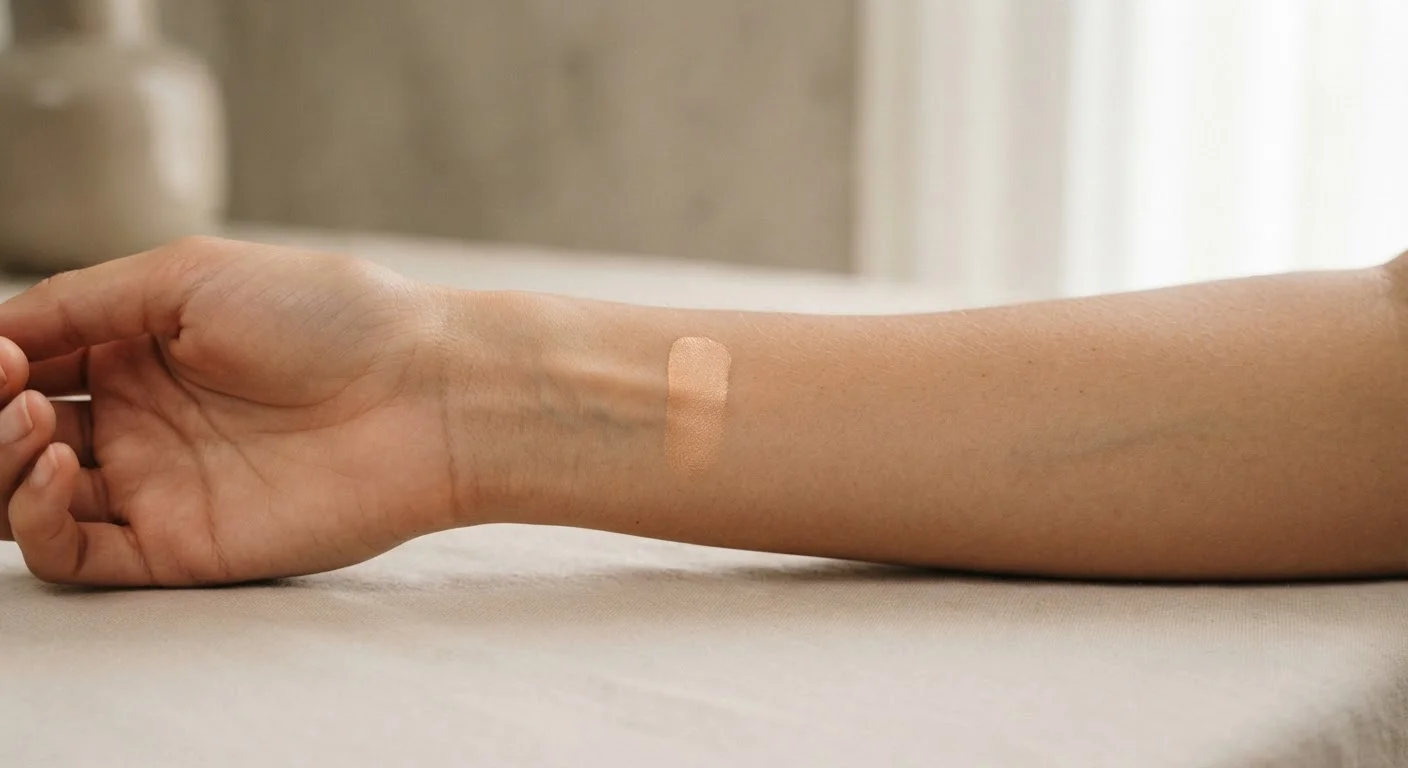
The core idea is simple: apply a small amount of product to a discrete skin area, leave it undisturbed for 48 hours, and observe what happens. Dermatologists commonly recommend this approach before introducing new topicals, particularly those containing active ingredients like retinoids, exfoliating acids, or highly fragranced formulas. If you're building your first skincare routine, making patch testing a habit from day one is one of the smartest moves you can make.
A reaction on your inner arm is manageable. The same reaction across your cheeks is not.
Clean water and gentle cleanser
Used to cleanse the test site before application, ensuring no residue interferes with the result.
Cotton pad or clean fingertip
For applying a controlled, small amount of the product to the patch site.
Timer or phone reminder
Set alerts at 30 minutes, 24 hours, and 48 hours so you don't forget to check the test site.
Small notebook or notes app
Log the product name, application time, and any observations at each check-in — invaluable if you're testing multiple products.
Your Complete Patch Test Checklist
Work through these steps in order. Each group takes only a few minutes of active time — the rest is simply waiting and watching.
Preparation
Application
Observation Window
Decision and Next Steps
Don't Rush to a Full-Face Application
Even if your 24-hour check looks clear, complete the full 48-hour window before applying a product to your face or a large body area. Some delayed hypersensitivity reactions don't peak until well past the 24-hour mark. Skipping the second day is where many people run into trouble.
Reading Your Results Accurately
Not every sensation means the same thing, and misreading a result can lead you to either ditch a product that's actually fine or keep using one that isn't.
Signs to take seriously
- Redness or visible inflammation that appears within hours or builds over 48 hours
- Itching, burning, or stinging that doesn't subside within a minute or two of application
- Hives, swelling, or raised bumps — stop use immediately and consult a healthcare professional if symptoms spread
- Blistering or skin peeling — discontinue and seek medical guidance
Signs that may be normal
- Mild, brief tingling from AHAs, BHAs, or vitamin C, lasting under 60 seconds and fading — often expected with low-pH actives
- Slight warmth at the site immediately after application of a warming mask or scrub
When in doubt, do not proceed. If a product causes a clear reaction during the patch test, it's worth checking the ingredient list — reading the ingredient label can help you pinpoint whether a specific component, like fragrance or a preservative, may be the culprit. That knowledge is useful for avoiding that ingredient class in future products too.
A Patch Test Is Not an Allergy Diagnosis
A negative patch test result means the product didn't visibly irritate a small skin area under those conditions — it does not guarantee you won't react when it's used on your face, over time, or in combination with other products. If you have a known history of severe allergic reactions or skin conditions such as eczema or rosacea, speak with a dermatologist before introducing new actives into your routine.
Once you've confirmed a product passes your patch test, introduce it into your routine one item at a time. Layering multiple new products simultaneously makes it nearly impossible to trace a reaction back to its source — a pitfall explored in why layering too many products often backfires. And if you're curious which ingredient combinations to watch out for regardless of patch test outcomes, ingredients that don't play well together is a useful companion read.
This article is for general informational and educational purposes only and does not constitute medical or dermatological advice. If you experience a severe skin reaction — including significant swelling, hives, or difficulty breathing — seek medical attention promptly.