

Key Takeaways
Option A
Chemical Exfoliants
The science-backed, deeper-working option.
Best for: Best for uneven tone, clogged pores, texture concerns, and sensitive skin that can't tolerate physical friction.
Option B
Physical Scrubs
The familiar, tactile quick-fix.
Best for: Best for occasional surface buffing on normal or oily skin when simplicity and immediate smoothness are the priority.
If you have sensitive, reactive, or acne-prone skin
Chemical Exfoliants
Low-concentration AHAs or BHAs offer controlled exfoliation without the physical abrasion that can aggravate inflammation or spread breakouts.
If you want to target dullness and uneven texture quickly
Chemical Exfoliants
AHAs like lactic acid dissolve the bonds holding dead cells on the surface, revealing brighter skin without manual scrubbing.
If you have normal or oily skin and prefer a simple weekly ritual
Physical Scrubs
A gentle, finely-milled scrub used once or twice a week can deliver satisfying texture results with minimal product complexity.
If clogged pores and blackheads are your main concern
Chemical Exfoliants
BHAs (salicylic acid) are oil-soluble and can penetrate inside the pore lining, which no surface scrub can replicate.
How Each Method Actually Works
Exfoliation is the process of removing accumulated dead skin cells from the outermost layer of skin. Both approaches accomplish this goal — but the mechanism couldn't be more different, and that distinction shapes everything about how each performs on different skin types.
Chemical exfoliants use acids or enzymes to break the bonds between dead skin cells and the healthy cells beneath them. The two most common categories are:
- AHAs (alpha-hydroxy acids) — water-soluble acids like glycolic acid and lactic acid that work on the skin's surface. They're commonly used to address dullness, fine texture, and uneven tone.
- BHAs (beta-hydroxy acids) — oil-soluble acids, most famously salicylic acid, that penetrate into the pore lining. They're particularly useful for oily or acne-prone skin.
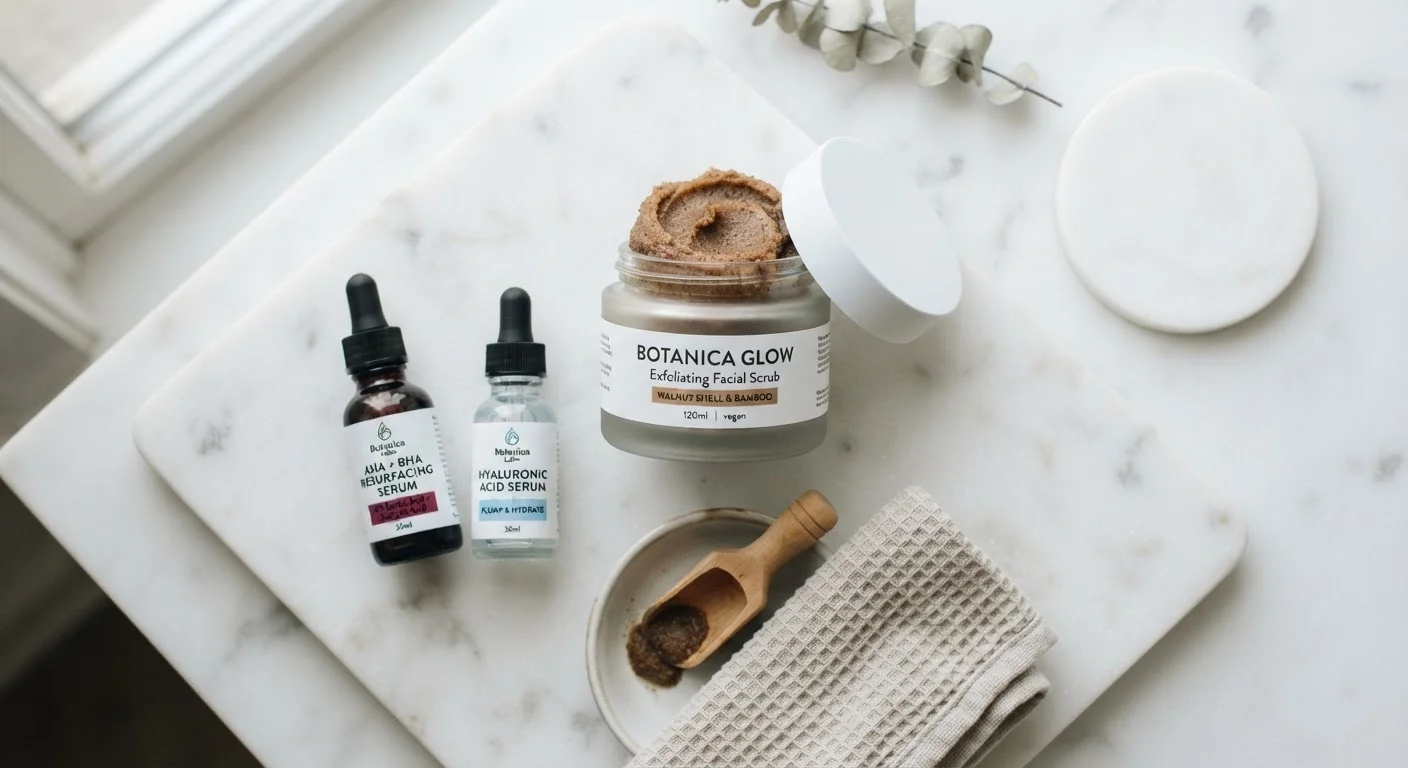
Physical scrubs rely on an abrasive material — sugar, salt, finely ground walnut shell, or synthetic microbeads — to manually buff dead cells off the surface. The result is immediate smoothness, but the process is entirely mechanical and stays at the very top layer of skin. For a deeper look at how these products fit into a larger routine, see what a skincare routine actually does to your skin.
| Criterion | Chemical Exfoliants | Physical Scrubs |
|---|---|---|
| Mechanism | Dissolves bonds between skin cells | Manually buffs cells via friction |
| Depth of action | Surface to within pores (BHAs) | Surface only |
| Key ingredients | Glycolic, lactic, salicylic acid | Sugar, salt, ground grains |
| Irritation risk | Low to moderate (concentration-dependent) | Moderate to high (pressure-dependent) |
| Best for | Texture, tone, clogged pores | Quick surface smoothness |
| Sensitivity-friendly | Generally yes, at low concentrations | Generally no |
| Acne-prone skin | BHAs well-suited | Not recommended |
| Ease of use | Requires patch testing and pacing | Simple, tactile, immediate |
The Risk Factor: Why Dermatologists Favor Chemical Options
Physical scrubs have a significant drawback that's easy to overlook: uneven pressure. When you rub a gritty product across your face, the friction is inconsistent, and particles with irregular shapes can create microscopic tears in the skin. This is especially problematic on inflamed, sensitive, or acne-prone skin, where abrasion can worsen irritation or push bacteria deeper into pores.
Chemical exfoliants, used at appropriate concentrations, tend to deliver more uniform results. They don't require any rubbing, and the exfoliation happens through a controlled chemical reaction rather than mechanical force. That said, they're not without risks — acids can cause redness, stinging, and photosensitivity, particularly at higher strengths. Starting with lower concentrations (around 5–10% for AHAs) and introducing them gradually is a standard approach for new users.
~70%
Dermatologists who recommend chemical over physical exfoliation
Surveys of board-certified dermatologists consistently show a preference for chemical exfoliants due to lower mechanical irritation risk.
2–3x/week
Maximum recommended exfoliation frequency
General dermatological guidance suggests most skin types should exfoliate no more than two to three times per week to avoid barrier damage.
One thing both types share: it's possible to overdo it. Exfoliating too frequently — regardless of method — can compromise the skin barrier, leading to dryness, irritation, and increased sensitivity. Most skin types do well with exfoliation two to three times per week at most, though individual tolerance varies. If you're still mapping your skin type, identifying your skin type is a useful starting point.
It's also worth noting that chemical exfoliants can interact with other active ingredients in your routine. Certain combinations — like AHAs alongside retinoids — can amplify irritation and are worth approaching carefully.
Sun Sensitivity After Chemical Exfoliation
AHAs in particular can increase your skin's sensitivity to UV radiation. It's generally recommended to apply chemical exfoliants in the evening and to use a broad-spectrum SPF of at least 30 daily when incorporating them into your routine. This applies even on cloudy days. See your product's instructions for specific guidance, and consult a dermatologist if you have concerns about sun sensitivity.
Choosing What Fits Your Skin and Your Life
The honest answer is that neither type is universally better — context matters. Someone with dry, dull skin may find that a lactic acid product dramatically improves radiance over time. Someone with normal skin who simply wants a weekly texture reset might find a gentle physical scrub perfectly adequate.
That said, physical scrubs with large, jagged particles (certain nut shell powders, for example) are widely considered too harsh for facial skin. If a physical scrub appeals to you, look for options with finely milled, rounded particles and use them no more than once or twice a week with light pressure.
If you're building a skincare routine from scratch, a low-concentration chemical exfoliant is generally the lower-risk entry point — it's easier to dose consistently and sidesteps the friction variable entirely.
As always, if you have a diagnosed skin condition, are pregnant, or are managing a condition that affects your skin, consult a qualified dermatologist before adding any exfoliant to your routine.
This article is for general informational and educational purposes only and does not constitute medical or dermatological advice. Consult a qualified healthcare professional for guidance specific to your skin concerns.