

Key Takeaways
Option A
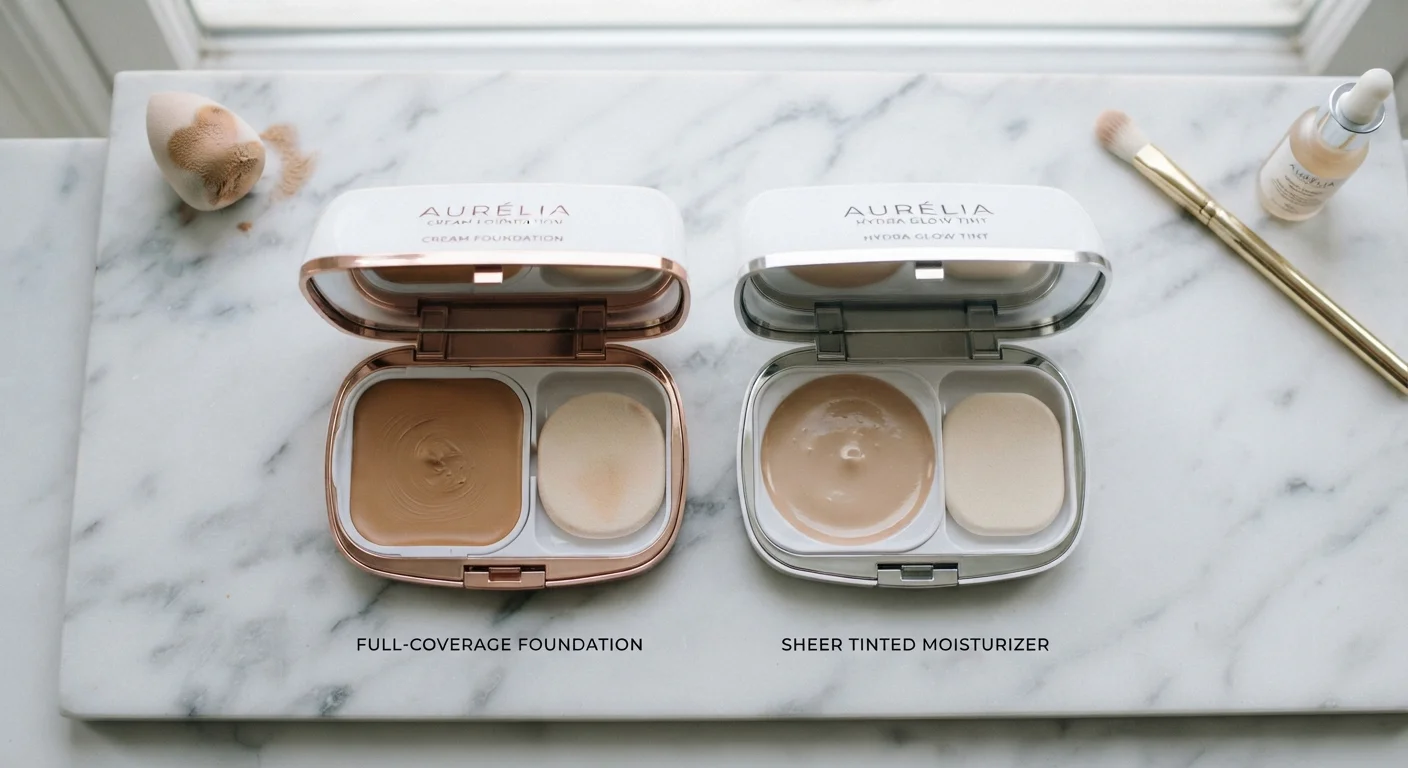
Foundation
The full-coverage, buildable workhorse of base makeup.
Best for: Anyone wanting to even skin tone, minimize the appearance of blemishes, or achieve a polished, long-wearing finish.
Option B
Tinted Moisturizer
The skin-first, sheer-coverage everyday essential.
Best for: Those who prefer a natural, lightweight feel that blurs minor unevenness while keeping skin hydrated throughout the day.
If you want to minimize blemishes or redness with a polished finish
Foundation
Foundation's higher pigment load and film-forming formulas provide the coverage needed to even out significant discoloration or texture concerns.
If you prefer a 'your skin but better' everyday look with minimal effort
Tinted Moisturizer
Tinted moisturizers blend quickly, feel lightweight, and often combine hydration and light SPF in one step — ideal for low-fuss mornings.
If you have dry or dehydrated skin and want comfort throughout the day
Tinted Moisturizer
The moisturizing base helps prevent the dry or flaky appearance that some foundations can emphasize on parched skin.
If you have oily or combination skin and need extended wear
Foundation
Many foundations include oil-control technologies and set more firmly, helping manage shine and staying power through long days.
If you're new to base makeup and want something forgiving to learn with
Tinted Moisturizer
Sheer formulas are more forgiving of blending mistakes and streaks, making them a gentle entry point into base makeup application.
What Each Product Is Actually Doing
Base makeup is a broad category, and the gap between foundation and tinted moisturizer is wider than many people realize. Understanding what each formula is engineered to do makes the choice far more intuitive.
Foundation is formulated primarily as a color-correcting and coverage product. It uses higher concentrations of pigment suspended in a variety of bases — water, silicone, or oil — to create a film over the skin that masks unevenness, discoloration, and visible texture. Most foundations are designed to wear for several hours and resist fading through sweat, humidity, or facial movement.
Tinted moisturizer, by contrast, is skincare-forward. The primary goal is hydration; the pigment is secondary and deliberately sheer. These formulas often contain ingredients you'd expect in a moisturizer — humectants like glycerin or hyaluronic acid, emollients, and sometimes broad-spectrum SPF. The result is a wash of color that makes skin look more even without masking it.
Think of it this way: foundation is about coverage with skincare as a bonus. Tinted moisturizer is about skincare with a hint of coverage built in. See our guide to what a skincare routine actually does to understand why that distinction matters beneath your base.
| Criterion | Foundation | Tinted Moisturizer |
|---|---|---|
| Coverage level | Sheer to full (varies by formula) | Sheer to light |
| Primary purpose | Color coverage and wear | Hydration with light color |
| Typical finish | Matte, satin, or dewy (varies) | Natural to dewy |
| Skin feel | Noticeable to substantial | Light and comfortable |
| SPF inclusion | Sometimes included | Often included |
| Skincare ingredients | Varies; not always present | Commonly present (humectants, etc.) |
| Wear duration | Typically longer-wearing | Moderate; may need touch-ups |
| Best skin types | Oily, combination, or any | Dry, normal, or sensitive |
| Application ease | Requires more blending skill | Very forgiving and fast |
Coverage, Finish, and Skin Feel: The Practical Differences
Coverage is the most obvious dividing line, but finish and skin feel are just as important for day-to-day satisfaction.
Coverage levels typically fall into three buckets — sheer, medium, and full. Tinted moisturizers nearly always land in the sheer range, offering a translucent veil that reduces the appearance of minor redness or dullness without obscuring pores or freckles. Foundations span the full spectrum; lighter fluid foundations can be sheered out, while thicker formulas build to full coverage with additional layers.
Finish describes how skin looks once the product settles. Tinted moisturizers almost universally deliver a natural or dewy finish that mimics healthy, well-hydrated skin. Foundations vary dramatically — from satin to matte to luminous — depending on the formula. Matte foundations are engineered to reduce the appearance of shine; dewy foundations enhance radiance. Neither finish is inherently better — it depends entirely on skin type and personal preference.
Skin feel is where tinted moisturizer often wins for daily comfort. Because the formulas are thin and humectant-rich, most people barely notice them on the skin. Foundations, especially full-coverage versions, can feel more substantial — which some people find reassuring and others find uncomfortable by midday.
~60%
Base makeup users who skip SPF separately
Consumer surveys on makeup habits suggest a significant share of base makeup users rely on tinted products for their only daily SPF — underscoring why built-in SPF formulas matter for everyday use.
3–5 min
Average application time saved with tinted moisturizer
Beauty routine time studies suggest sheer base products require noticeably less blending time than full-coverage foundations, contributing to their popularity in streamlined morning routines.
One factor worth noting: applying either product over a solid skincare base — specifically a moisturizer and SPF — matters more than the product itself. Skipping that base layer can affect how evenly either formula applies and wears. This connects directly to why layering too many products can backfire — more steps don't always improve results.
Matching the Right Formula to Your Skin and Lifestyle
The ideal choice comes down to three factors: your skin type, how much coverage you actually want, and how much time you have in the morning.
Skin Type Considerations
- Dry or dehydrated skin: Tinted moisturizer's built-in hydration tends to look more comfortable and cohesive. Some foundations — particularly those with a matte or powder-heavy formula — can settle into dry patches and make skin look flaky.
- Oily or combination skin: Foundations with oil-control formulas often perform better through the day. Some tinted moisturizers can slip or lose definition on oilier skin types, though many newer formulations have improved significantly.
- Sensitive or reactive skin: Tinted moisturizers with minimal ingredients and added SPF can reduce the number of products touching the skin. However, both categories include formulas with potential irritants — reading ingredient lists matters. Our guide to ingredients that don't play well together is a useful reference here.
Lifestyle and Routine
A quick everyday look with minimal setup time? Tinted moisturizer's one-and-done versatility is hard to beat. A long day with back-to-back commitments where you want your look to hold? Foundation's staying power makes more sense. Many people keep both on hand and choose based on the day — and that's a completely valid approach.
A Note on SPF in Base Makeup
Many tinted moisturizers list SPF on the label, which is a genuine bonus — but dermatologists generally note that most people don't apply enough product to achieve the labeled SPF level in practice. If sun protection is a priority, applying a dedicated sunscreen beneath your base is the more reliable approach. This is general educational information; consult a dermatologist for personal skincare guidance.
Finally, don't overlook hygiene habits around whichever product you choose. Makeup hygiene habits that are easy to overlook — like cleaning your application tools regularly — affect both skin health and how well any base product performs.